


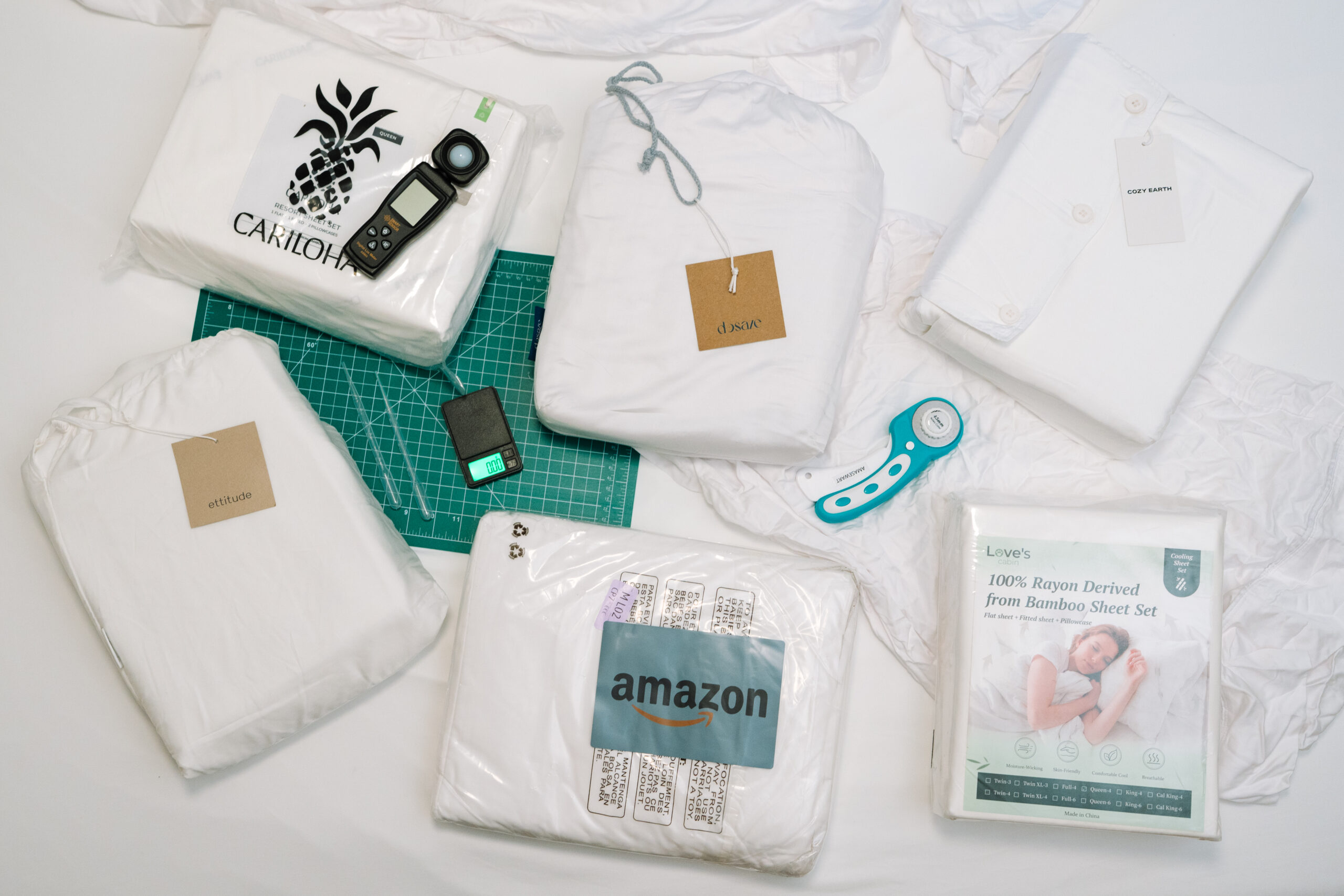
Dosaze is owned by SBLY Media, which also publishes Home Hacks. We bought every set at retail and ran the same tests on each.
Every sheet set in the bedding aisle is “bamboo” now. Silky, cooling, eco, softer every wash. You can’t check any of that from a product photo, and the fabric label usually tells you more than the box does. So I bought five well-known bamboo sets, from a $40 Amazon set up to a $359 ettitude set, plus one plain cotton set for comparison, and ran the same four tests on every one. I cut squares out of them and weighed them, hung them in front of a light panel, dripped dyed water on them and rubbed them against a rough piece of fabric.
What I want from sheets is pretty simple. They should pull sweat away from me instead of holding it against my back, and they should feel the same after a year of washing as they did the first night. A set that feels like silk out of the package and is covered in little fuzz balls by spring doesn’t count.
What Actually Makes a Good Bamboo Sheet
- An honest label: “bamboo” sheets are almost always rayon, viscose or lyocell made from bamboo. The care label tells you which one, and whether anything else got mixed in.
- Moisture control: a good sheet pulls a drop of water in and spreads it out so it can dry, instead of letting it sit on top or run straight through to your mattress. You can see the difference between sets in about a minute.
- Coverage without bulk: hold a sheet up to a light and you find out fast whether it’s dense or just shiny. GSM (grams per square meter) puts a number on the weight.
- Fabric that holds up: pilling is what ruins most bamboo sheets, usually within a few months. A close look at the weave after rubbing shows you which way a set is headed.
- Trial and returns: you have to sleep on sheets for a while to judge them. Free returns take the risk off you.
Things to Avoid
- Thin weaves you can see through: in front of the light panel, two of the six sets showed the bright square of the panel straight through the fabric.
- Fabric that lets water straight through: a $308 set left a blue stain the size of a quarter on the paper underneath it.
- Fabric that beads water: one set held the dye in a tight bead for the full minute instead of soaking it up.
- Fabric that pills: five of the six sets had pills after 50 rubs against rough fabric.
After testing them all, here’s how they ranked:
🏆 Best Bamboo Sheets, Tested
(Check Out the Full Analysis Below)
In-Depth Review and Process
“Bamboo” isn’t a fabric. It’s a plant, and turning it into something you can sleep on means dissolving it and spinning the pulp into a new fiber: viscose, rayon or lyocell. The FTC requires sheets to say which one on the label, so I started there, read every label, and then tested what the fabric actually does.
All six sets were Queen and white so the photos compare cleanly, and every test was run the same way on every set.
I scored each set on:
- Build quality: what the label says, what the fabric weighs, and how see-through it is.
- Moisture control: how far a drop of dyed water spreads in a minute, and whether any of it gets through.
- Durability/Pill test: how the weave looked after rubbing, up close.
- Trial and warranty: what happens if you don’t like them.
- Value: the price of a white Queen set.
The overall rating on each card also weighs how the sheet felt in the hand, which a bench test can’t measure.
The GSM (weight) check
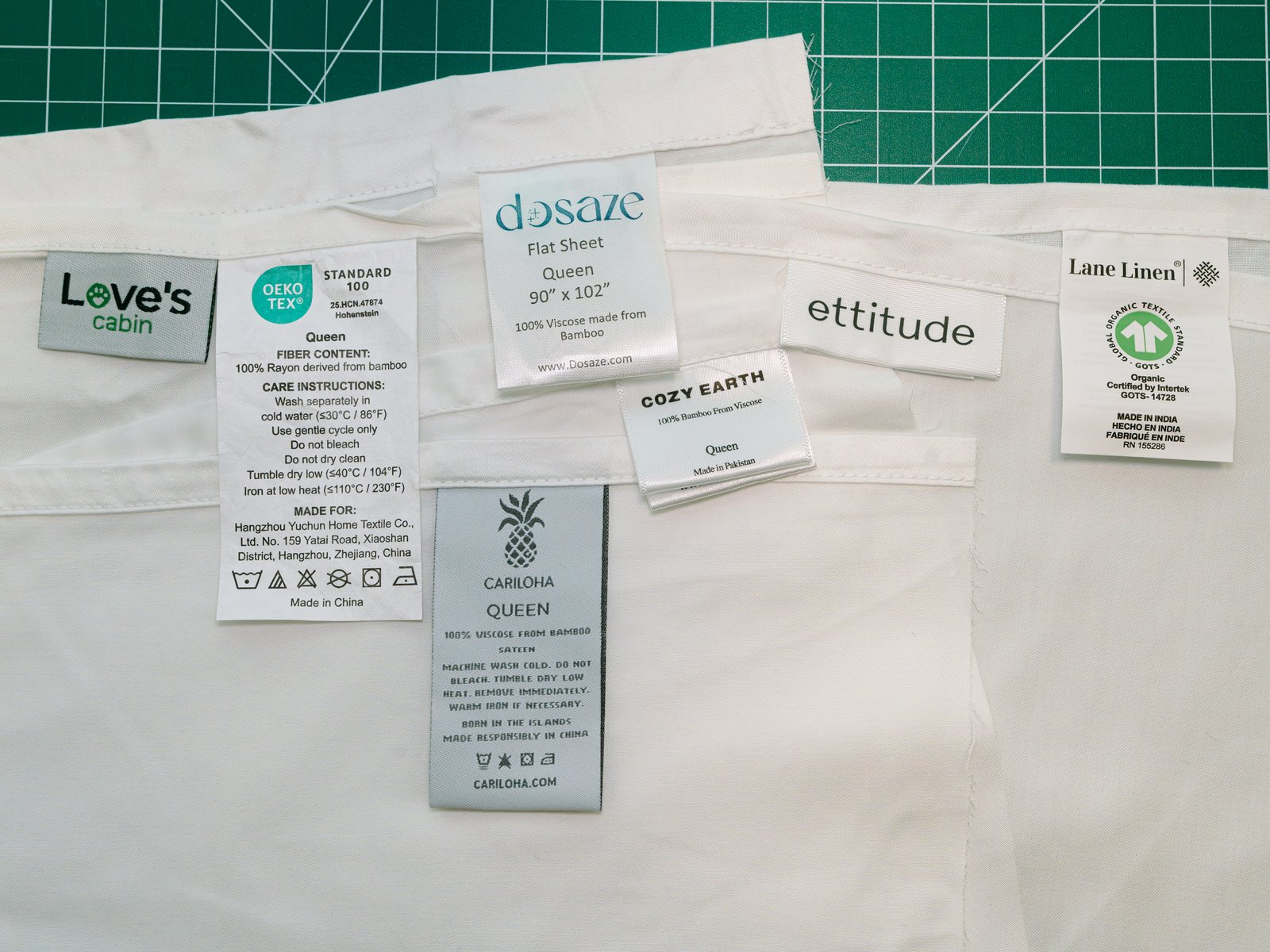
We checked the actual GSM of each sheet set – GSM refers to grams per square meter. I.e., a higher GSM indicates a fabric with more material. More material per square meter generally means a sheet that feels more substantial and drapes better, rather than thin or flimsy.
The label check
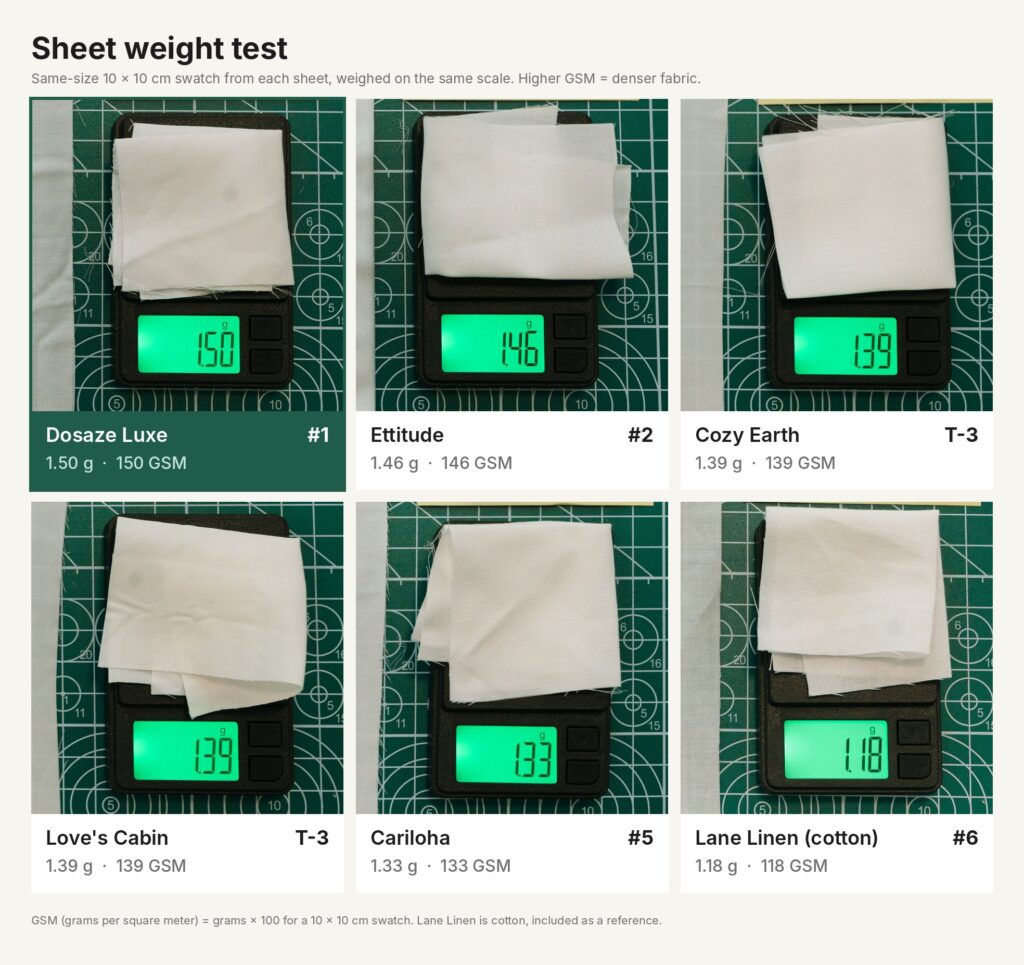
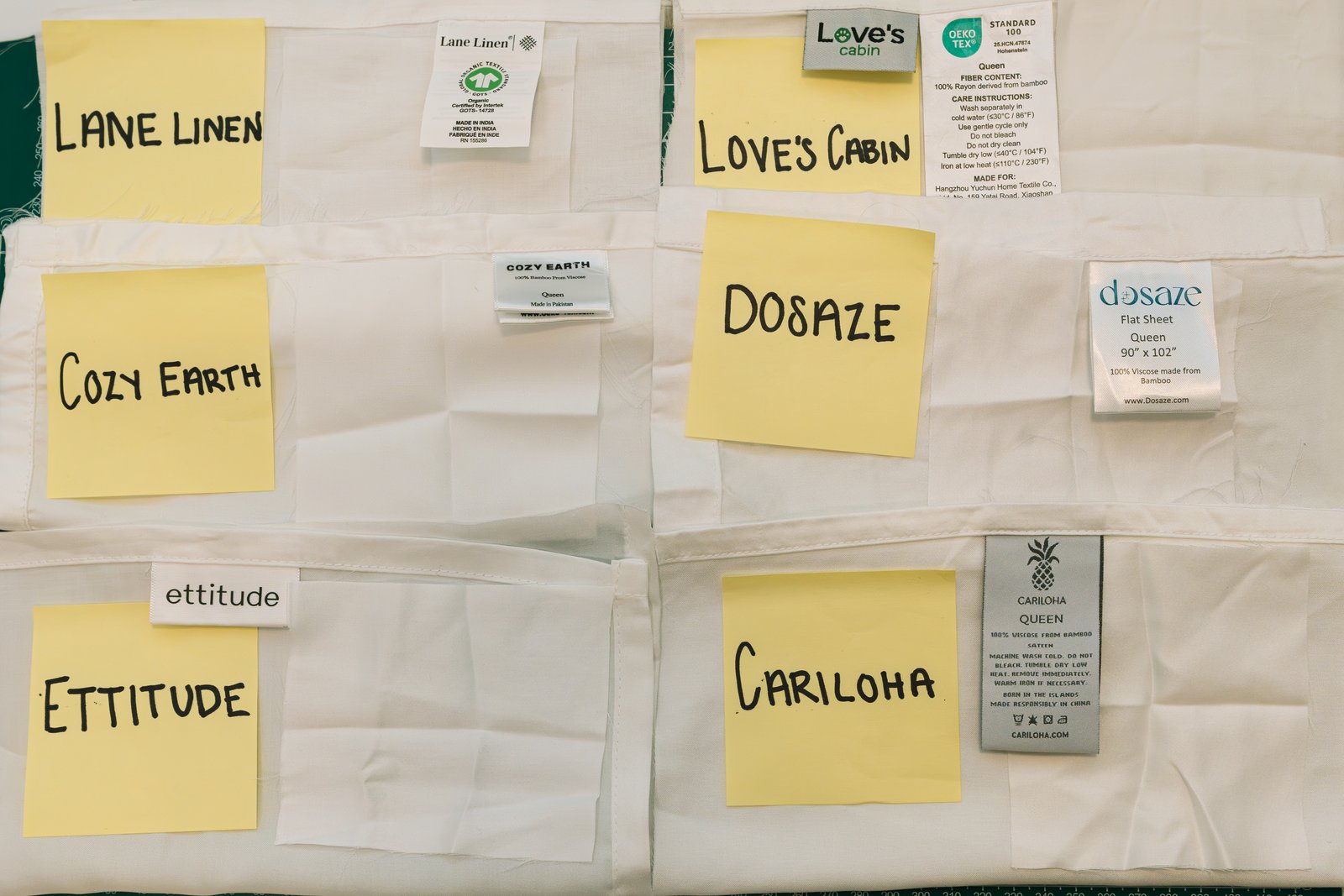
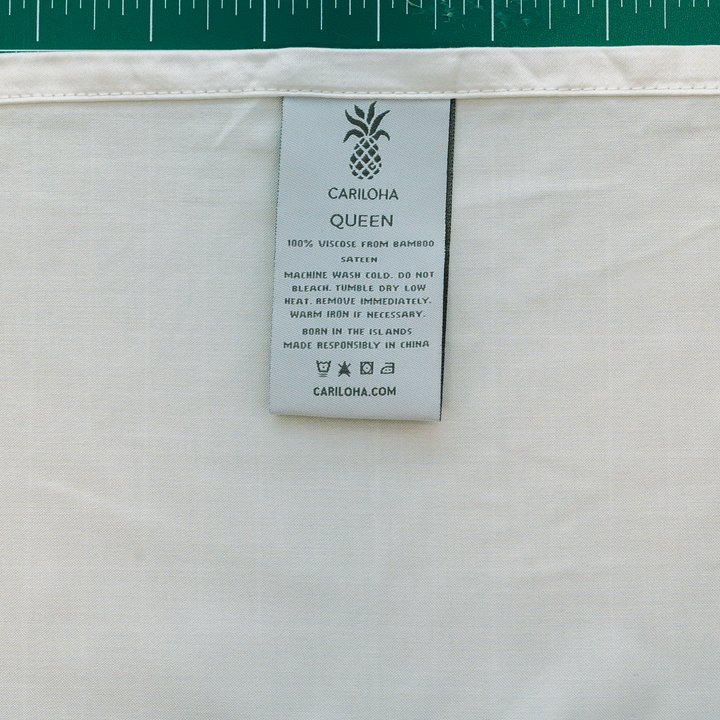
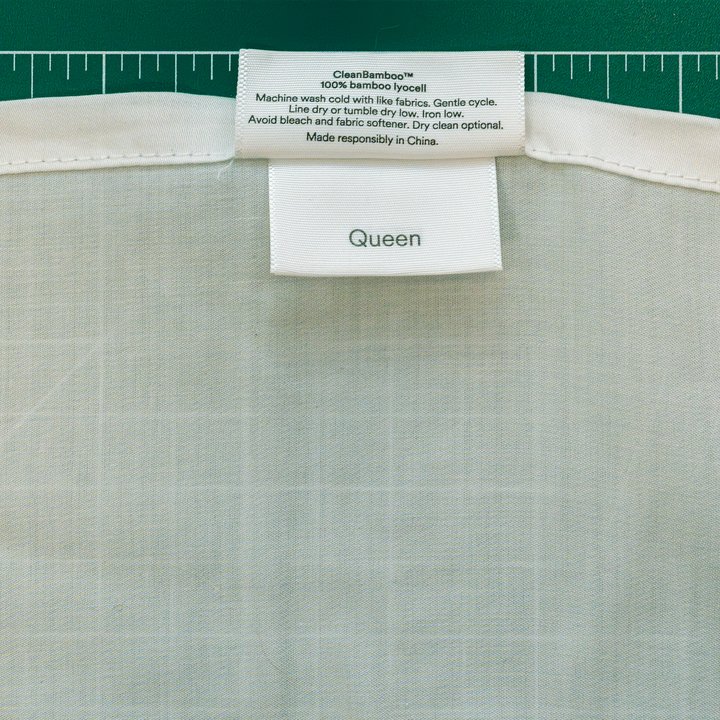
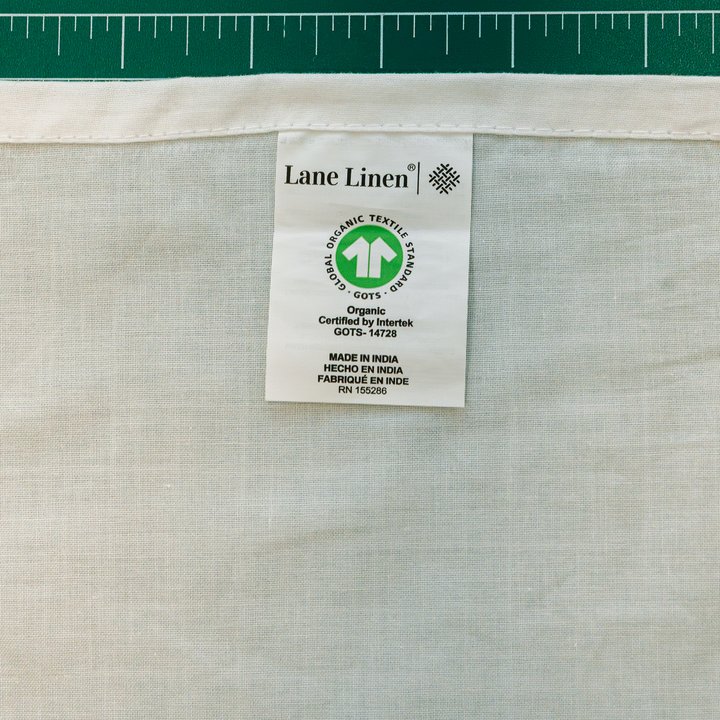
I read the care label on every set before cutting anything. Three say viscose from bamboo in some word order (Dosaze, Cozy Earth and Cariloha). Love’s Cabin says “100% Rayon derived from bamboo,” which is the same family of fiber under an older name. ettitude’s tag reads “CleanBamboo™ 100% bamboo lyocell,” a different fiber made in a closed-loop process. Lane Linen is the cotton control: its label carries a GOTS organic certification, and Lane Linen sells it as 100% organic cotton percale.
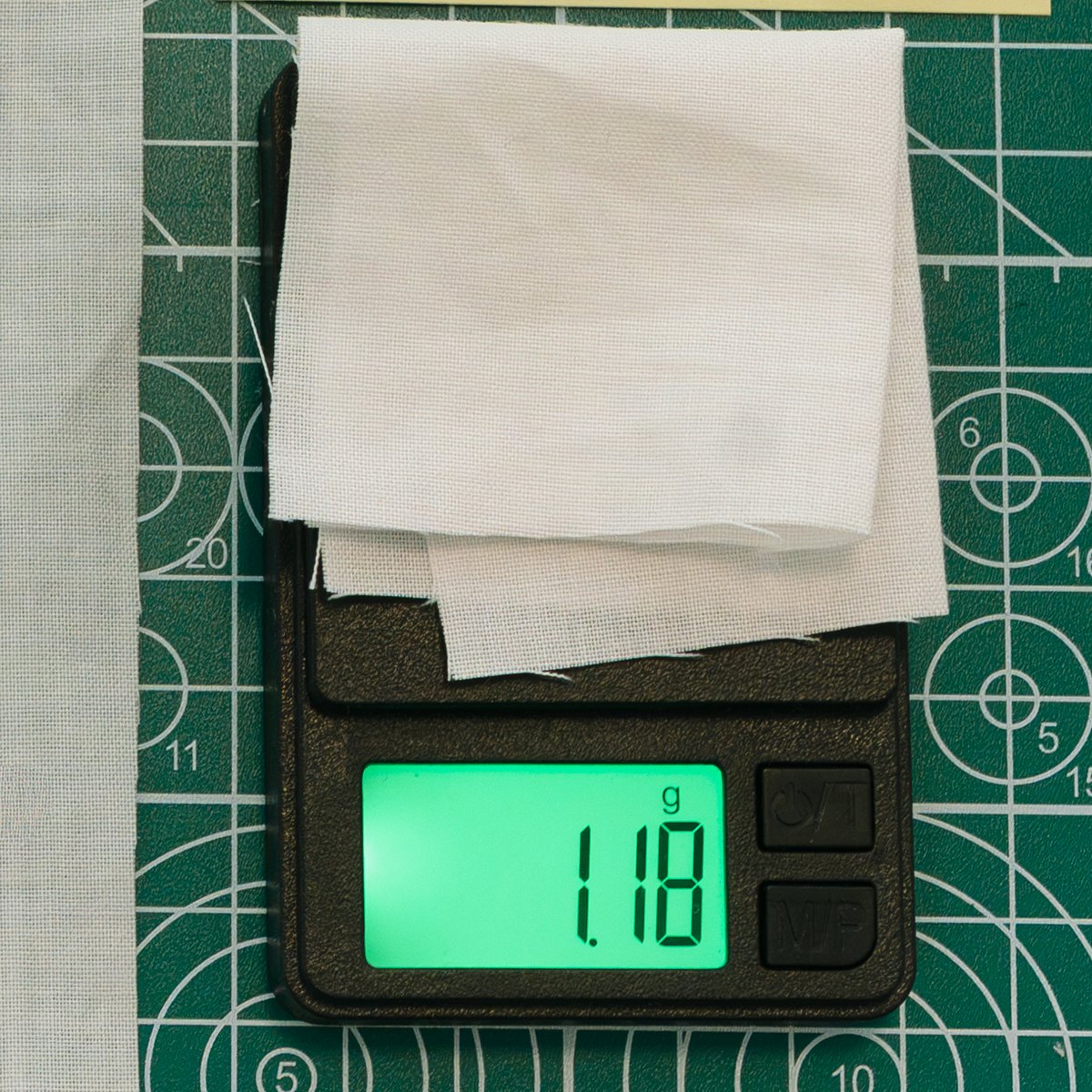
The weight test
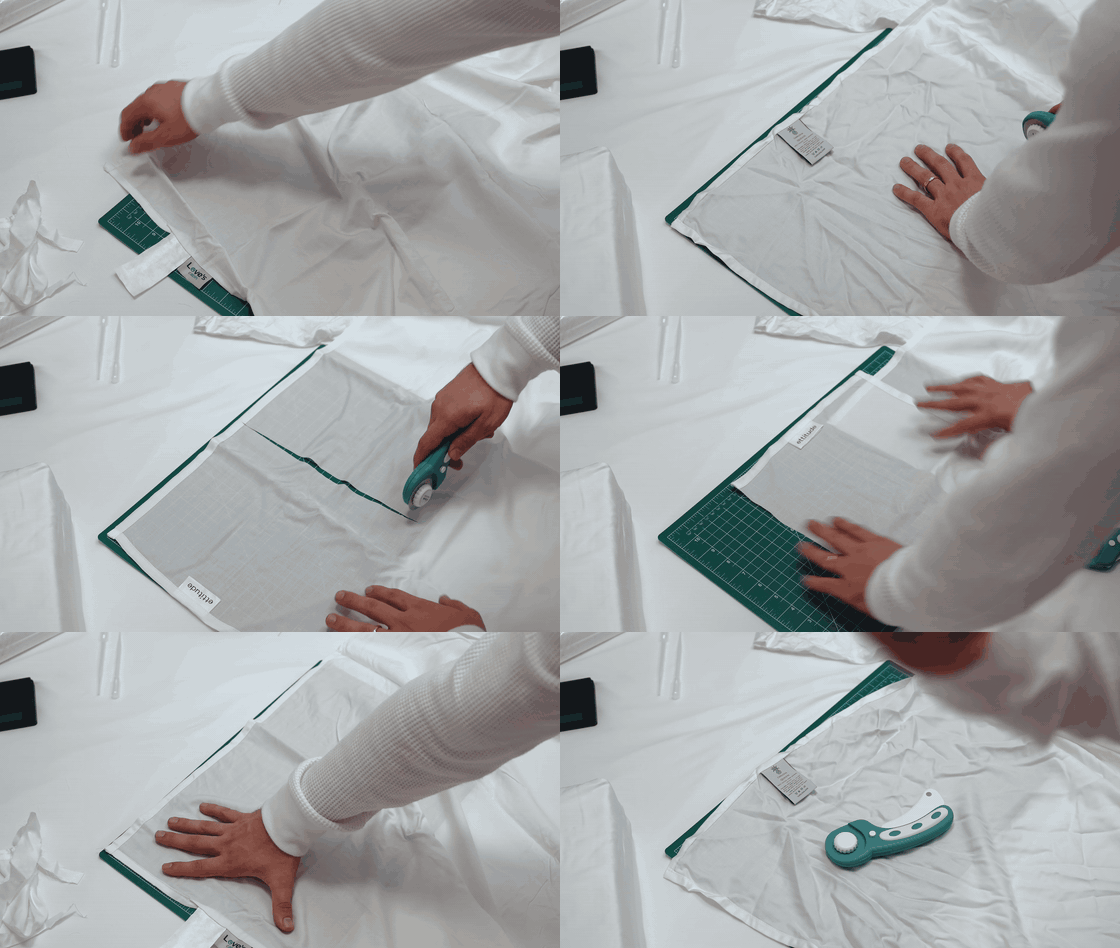
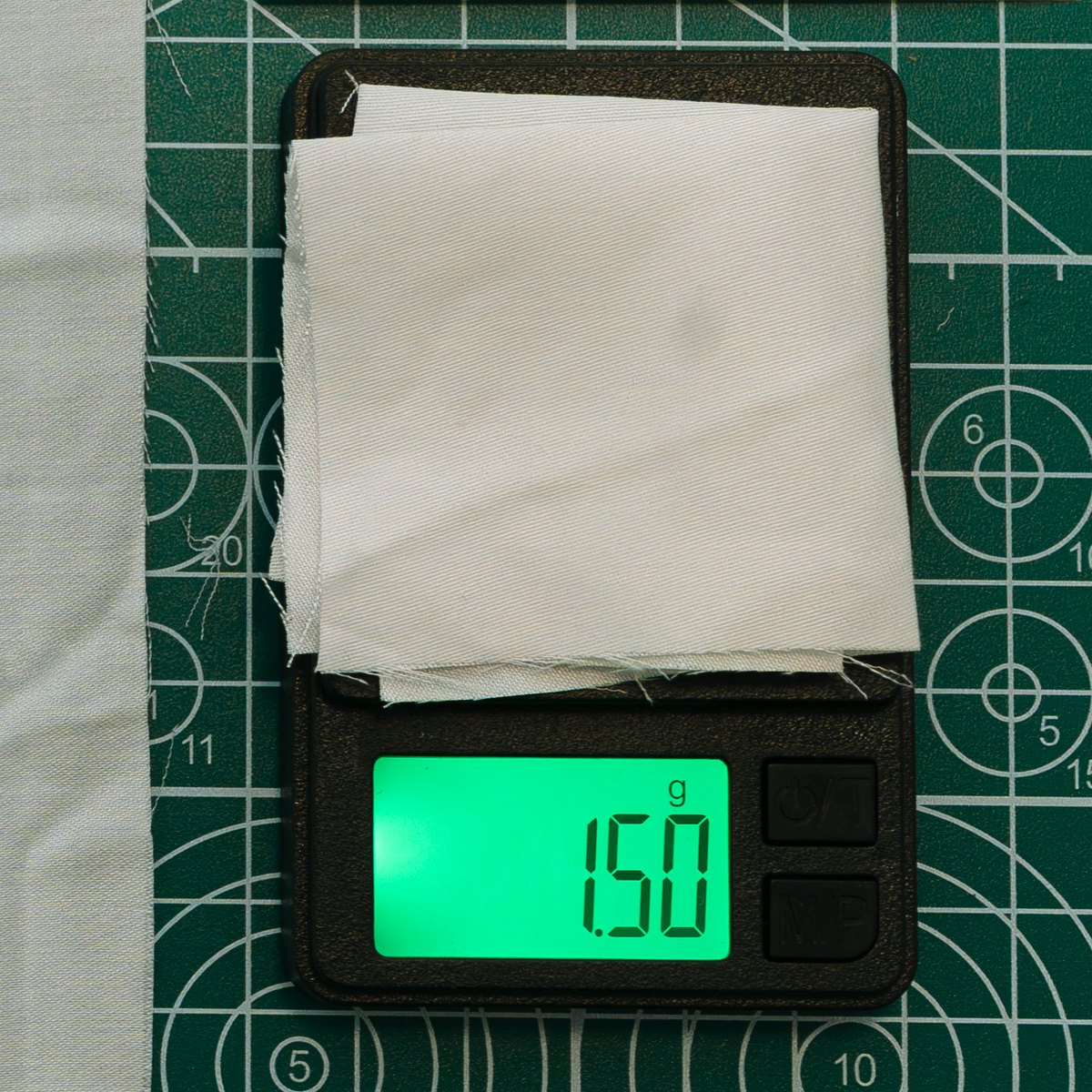
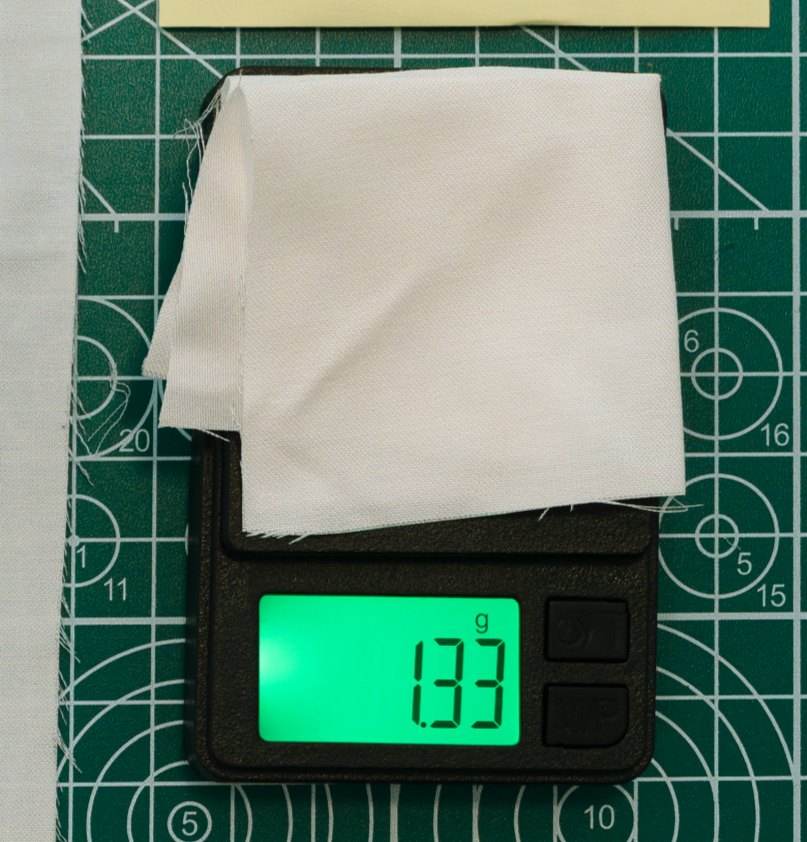
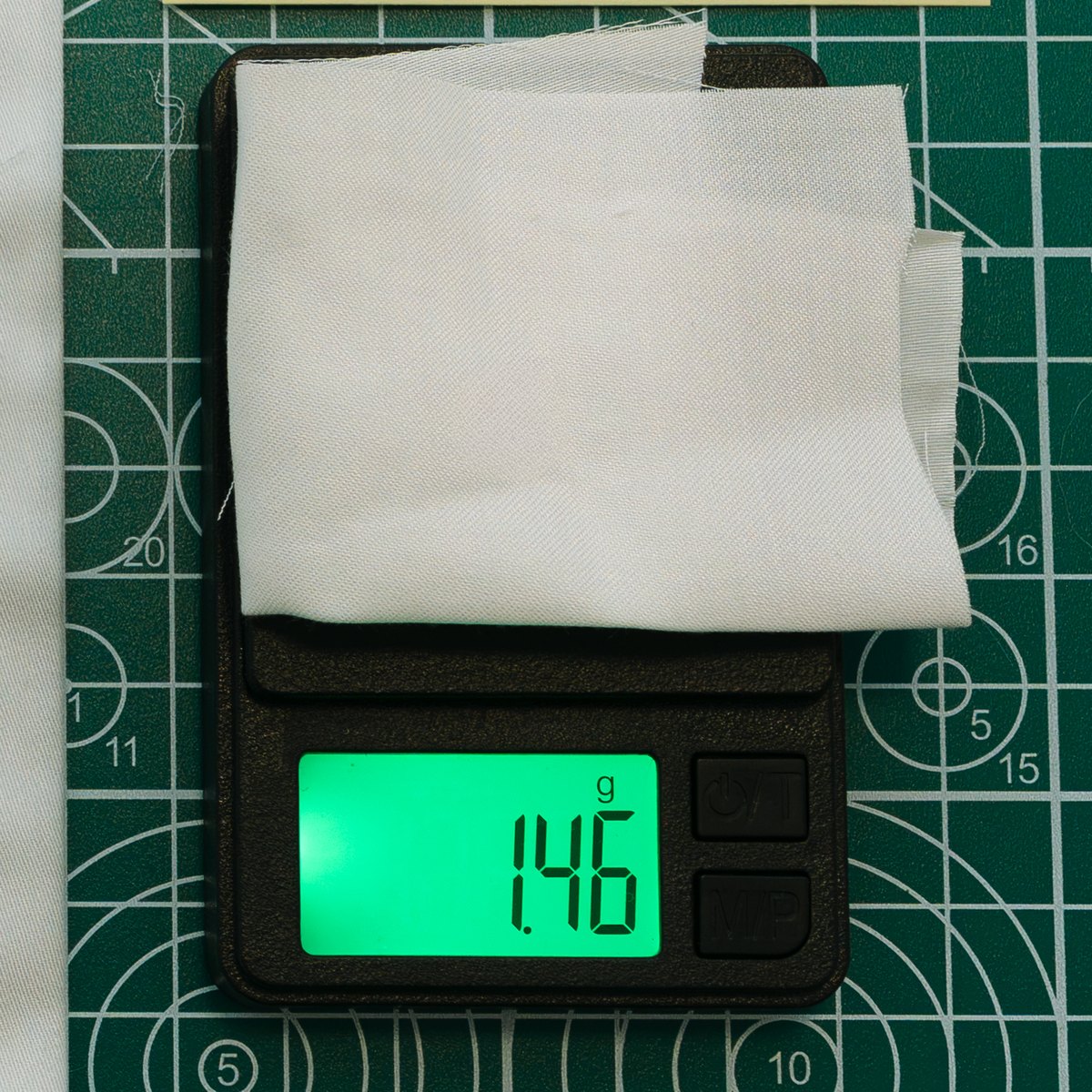
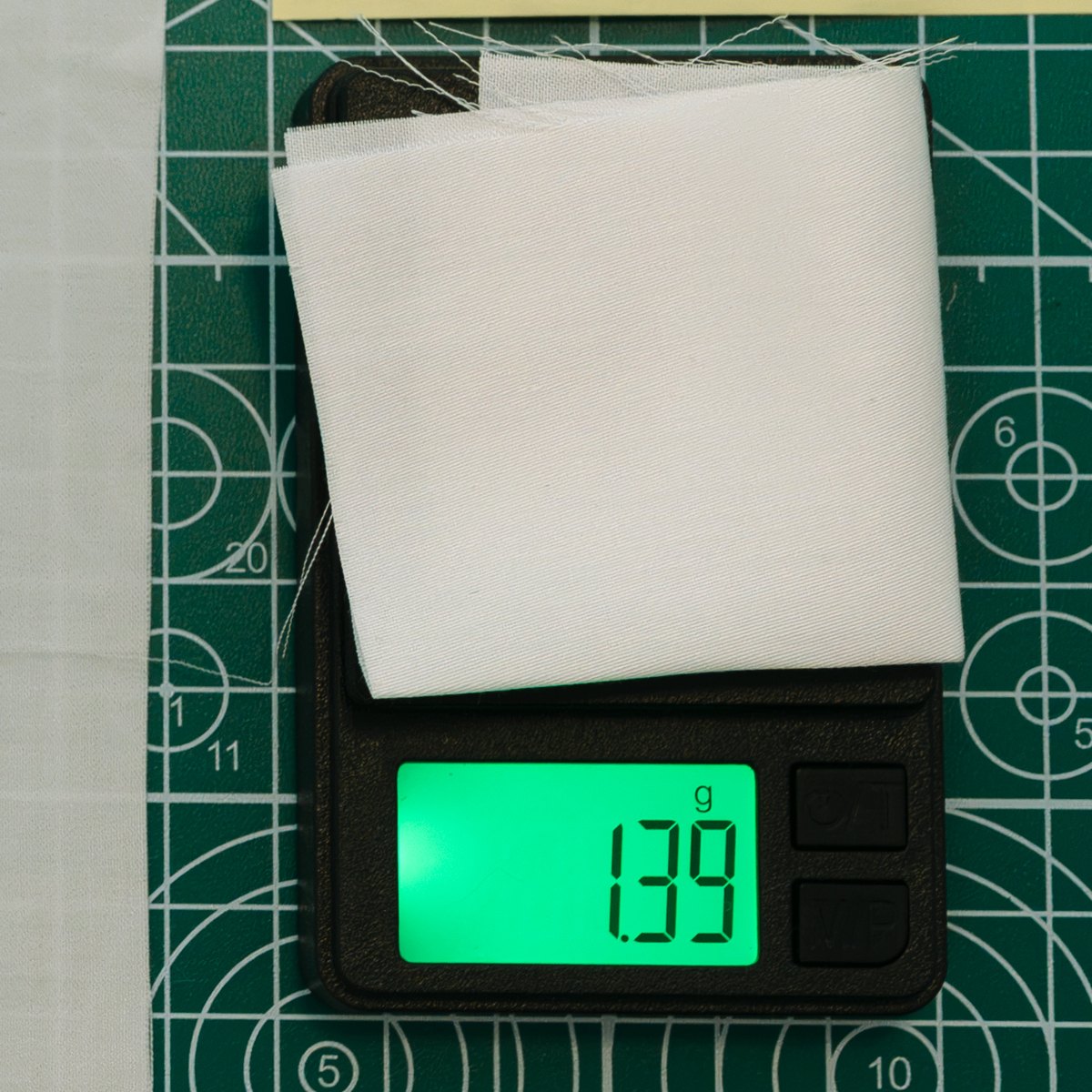
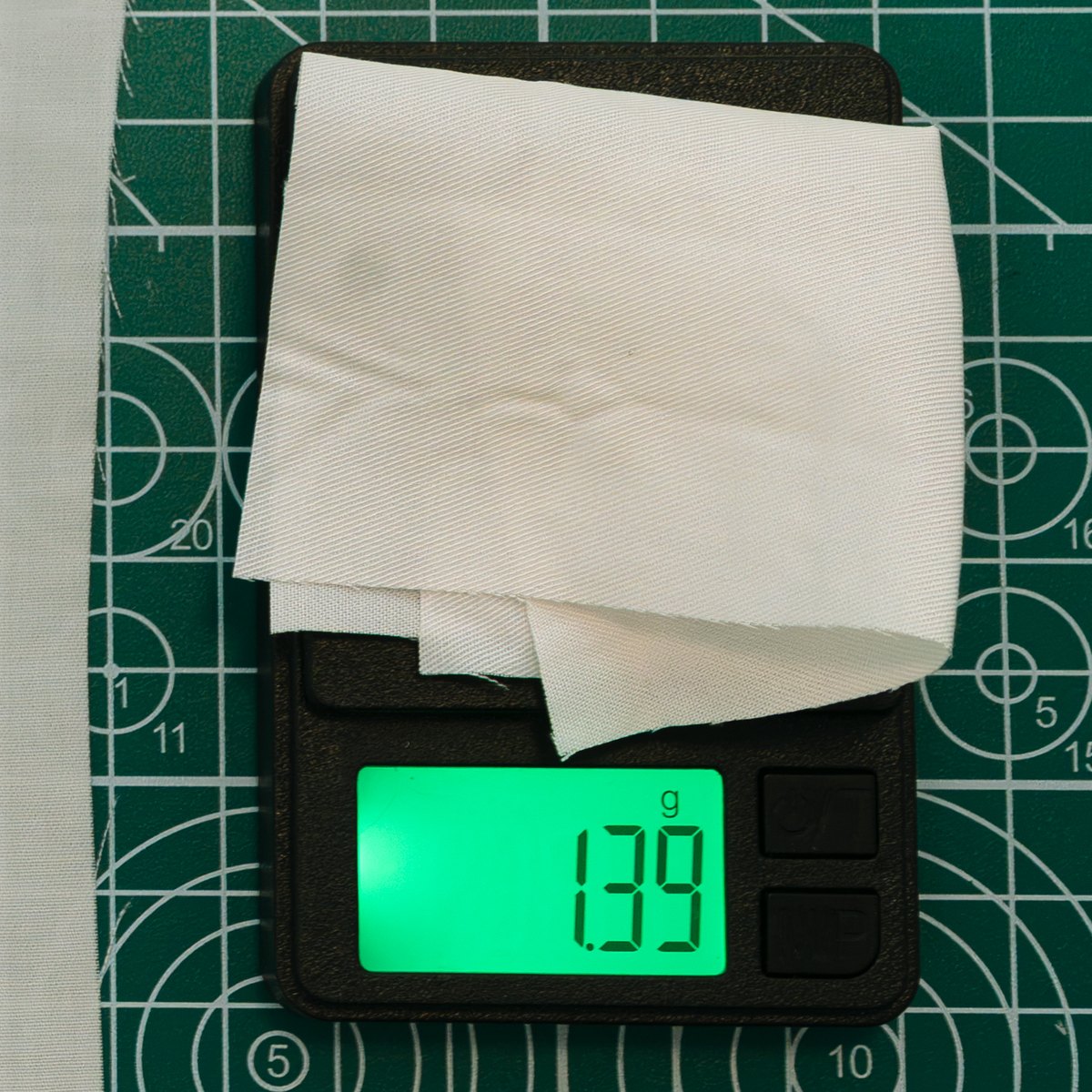
I cut a 10 x 10 cm square from each flat sheet with a rotary cutter and a template, then weighed it on a jeweler’s scale. A square that size makes the math easy: grams times 100 is the GSM. Dosaze came out heaviest at 150 GSM, just above the 145 it lists. ettitude was close behind at 146, then Cozy Earth and Love’s Cabin at 139 each and Cariloha at 133. The cotton Lane Linen was the lightest by a wide margin at 118.
The see-through test
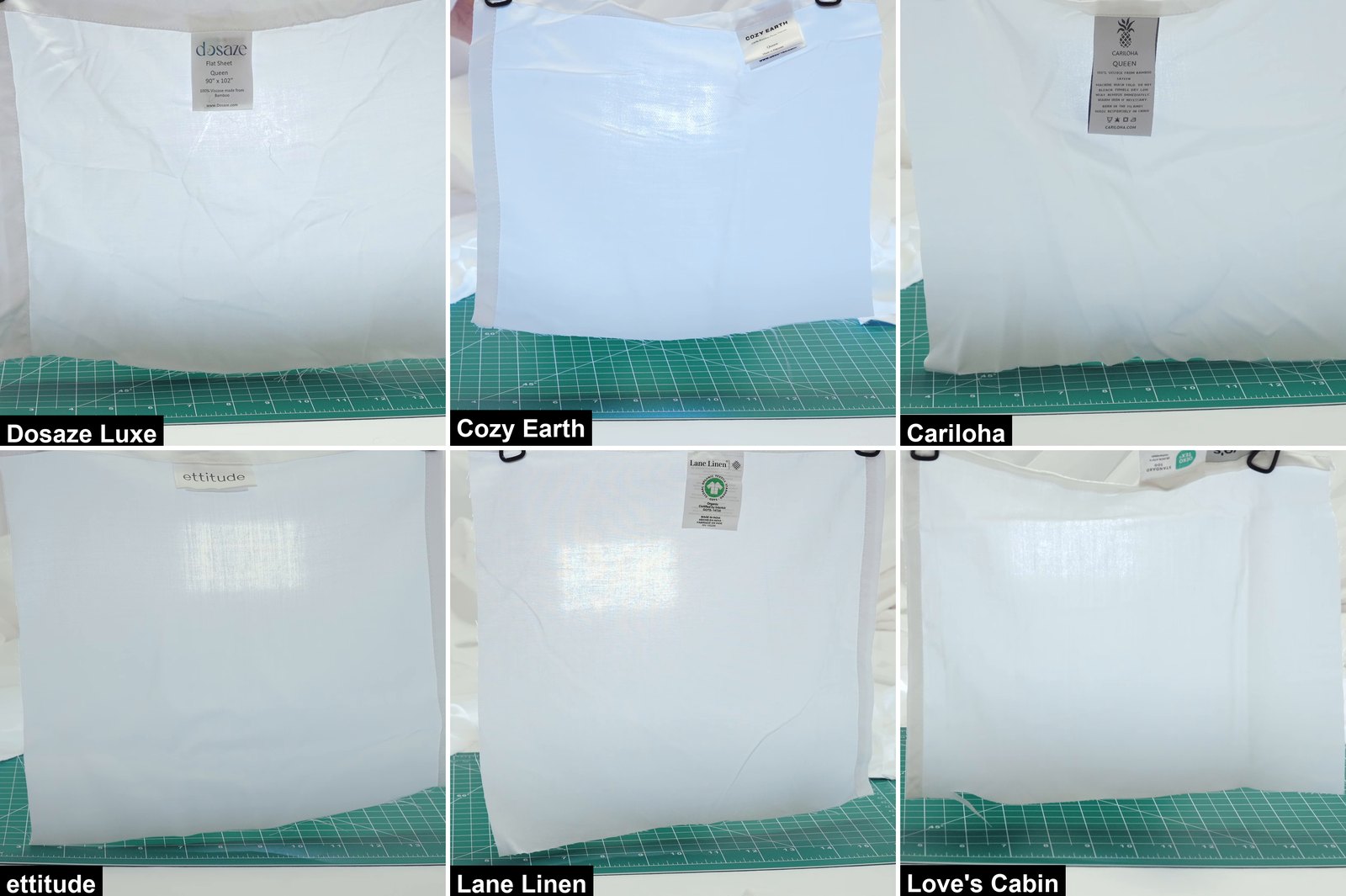
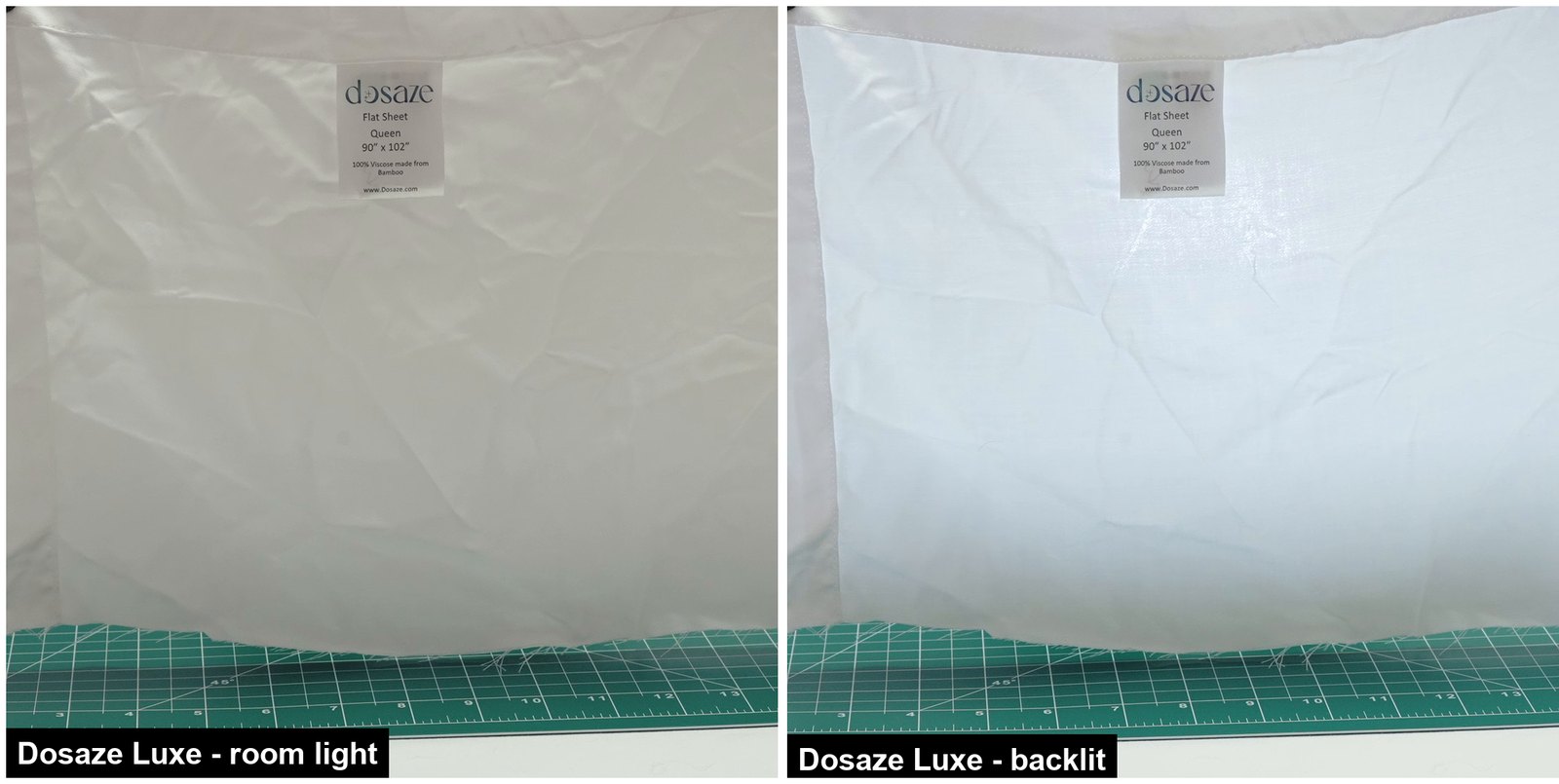
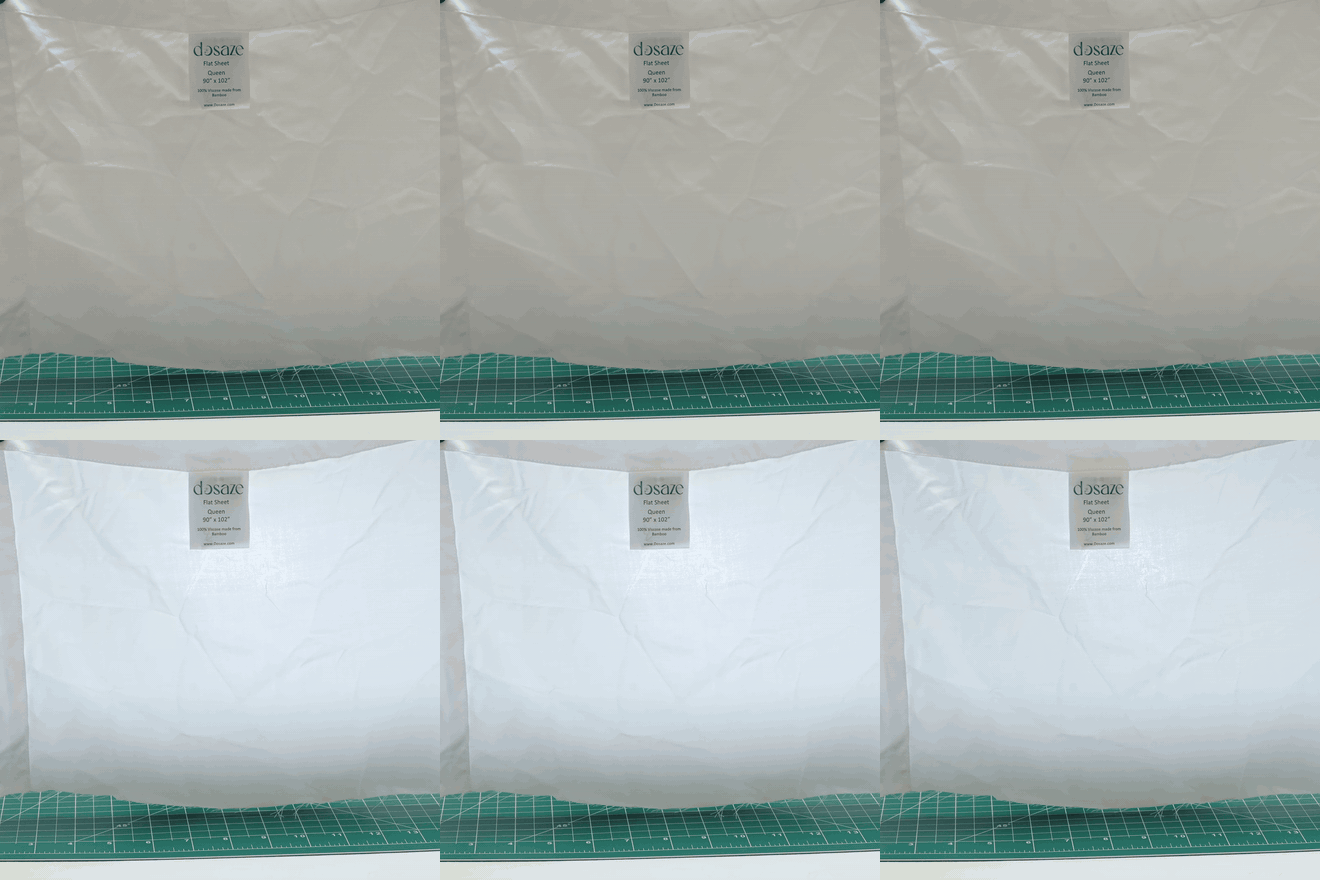
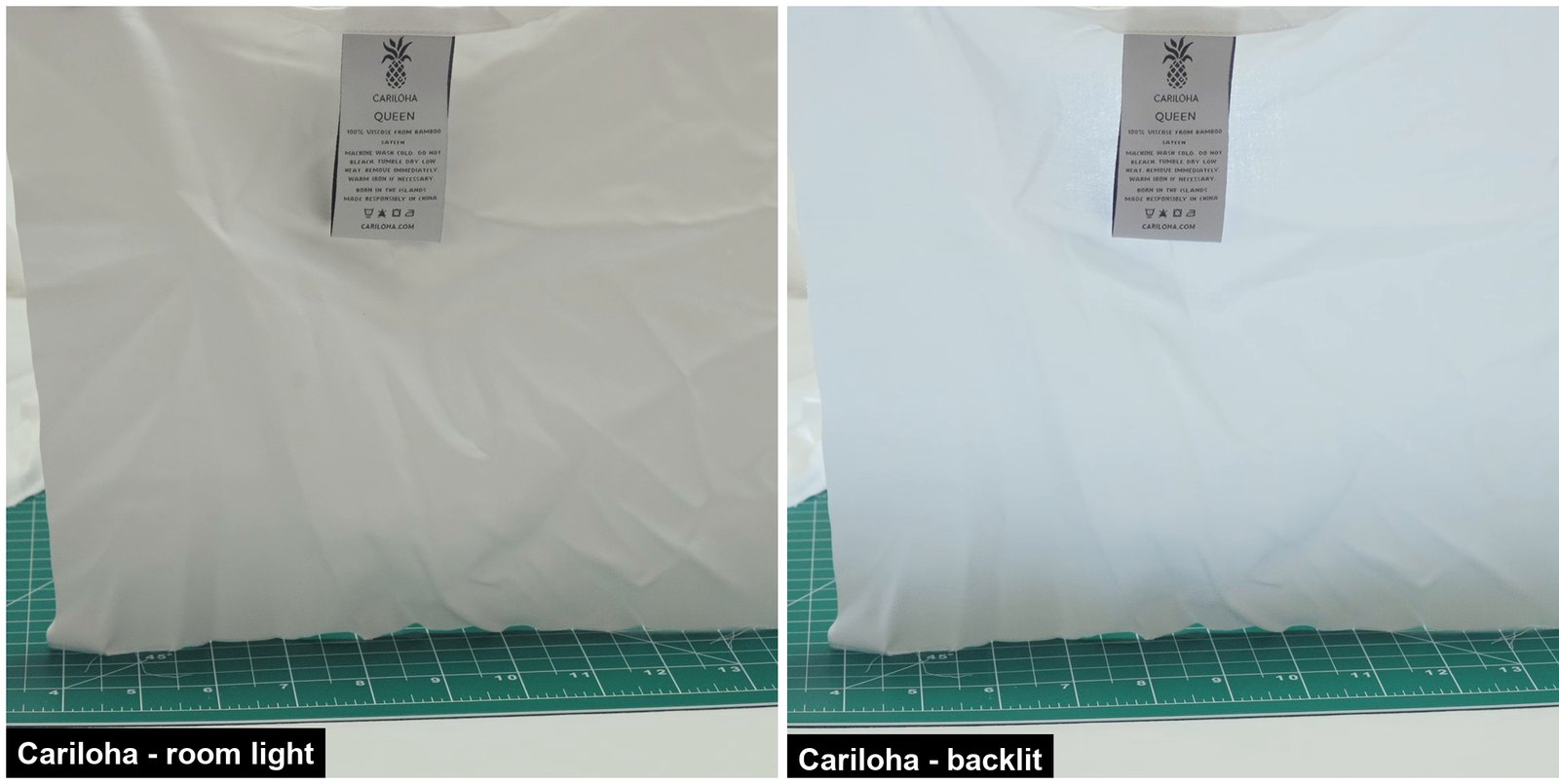
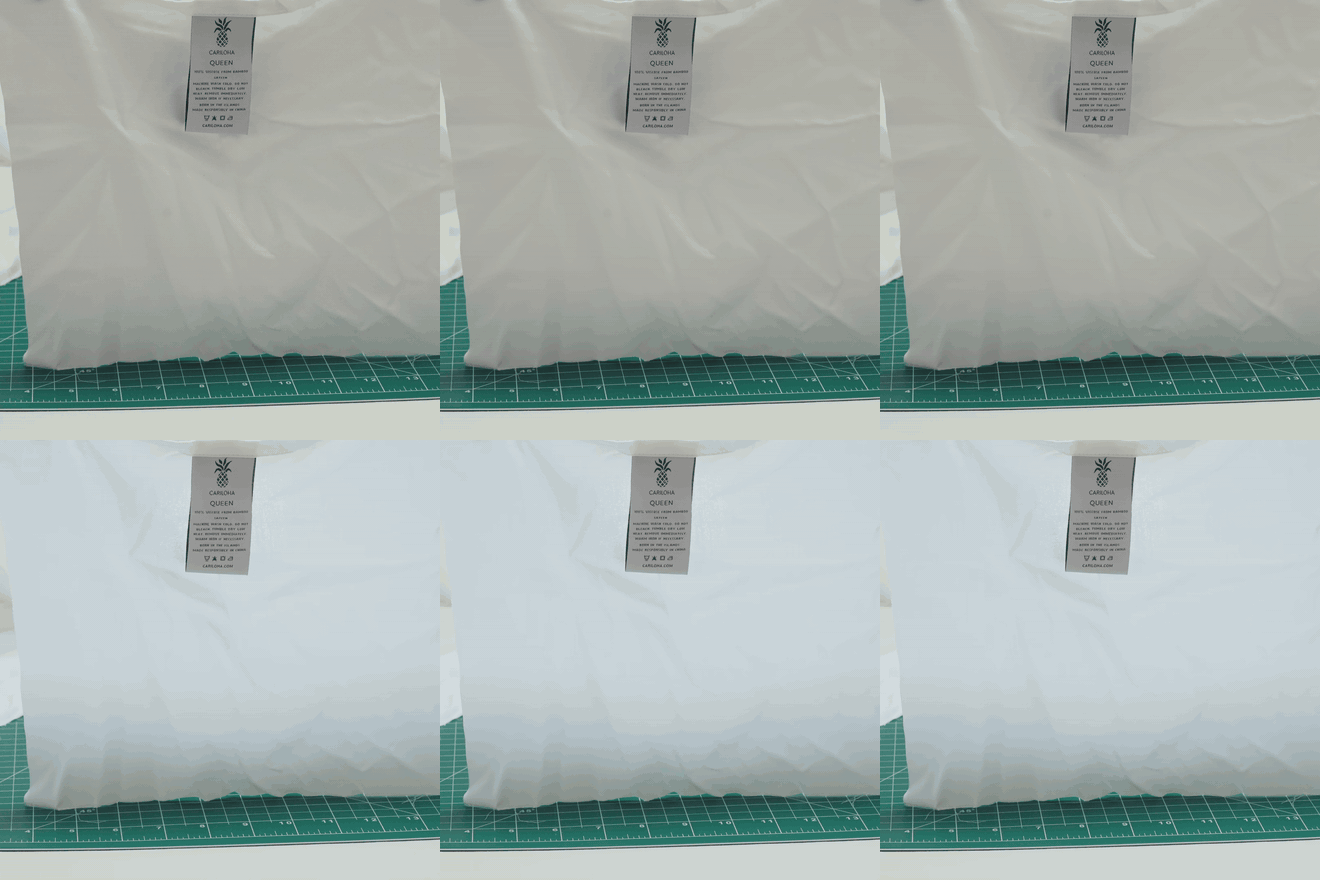
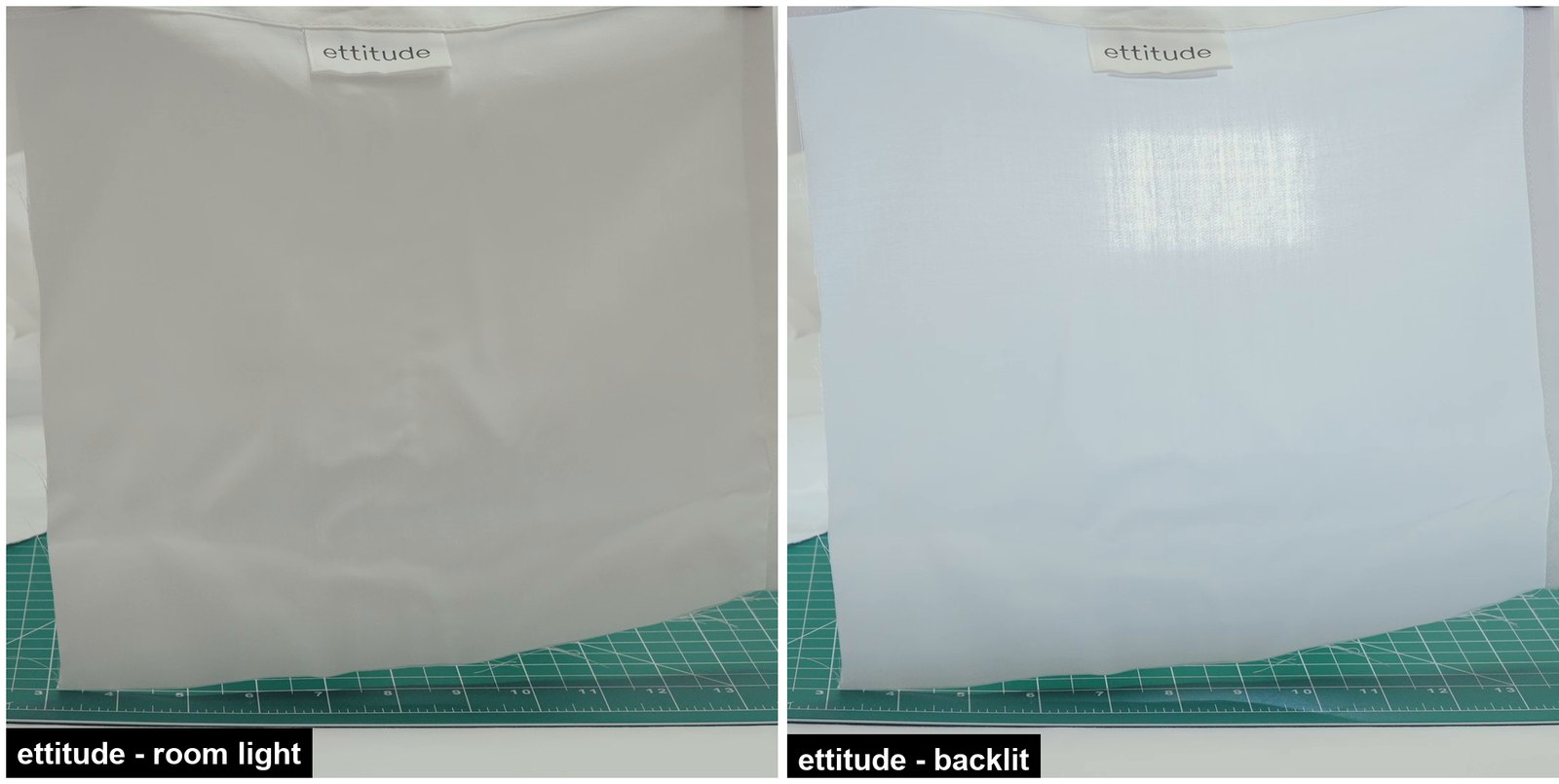
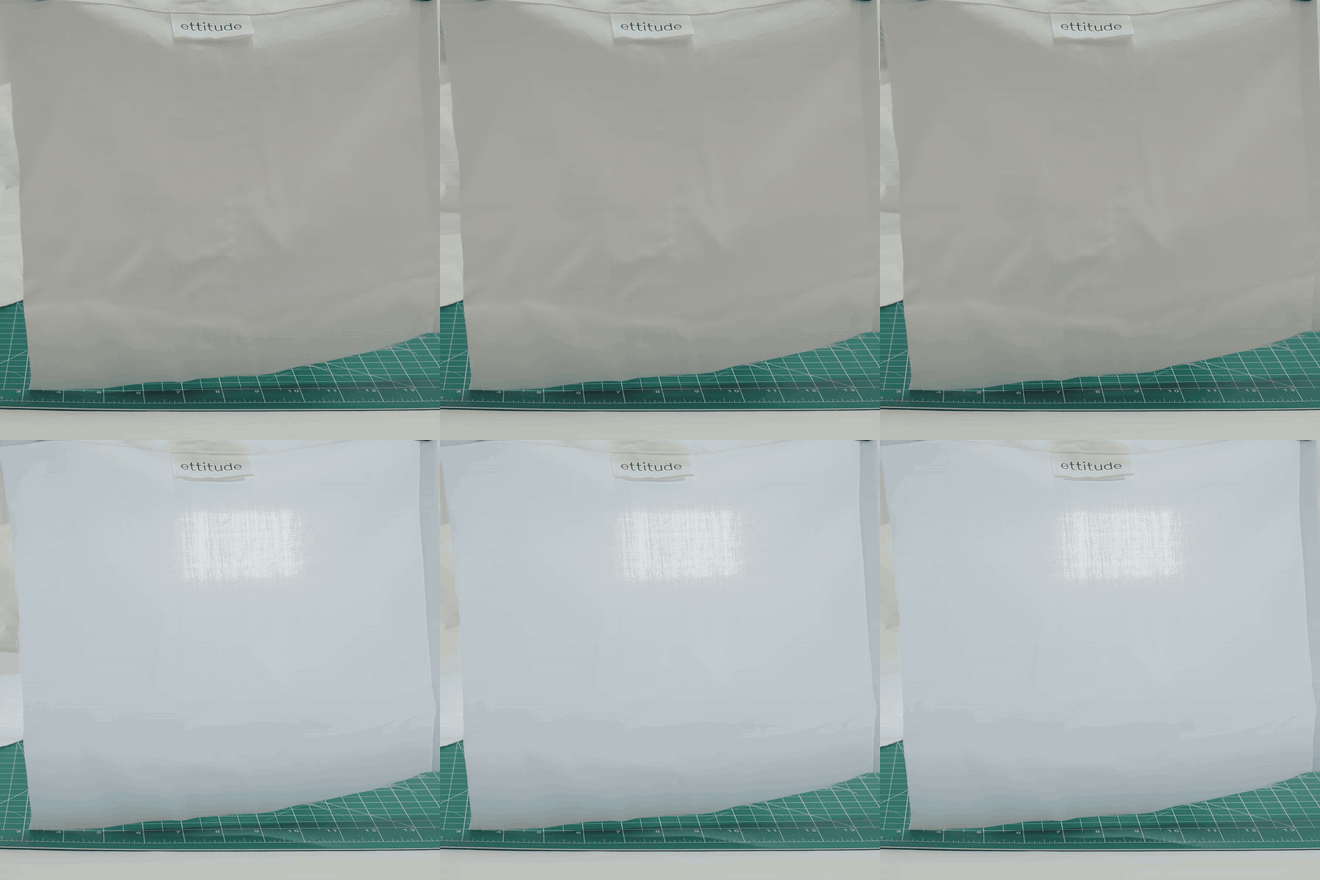
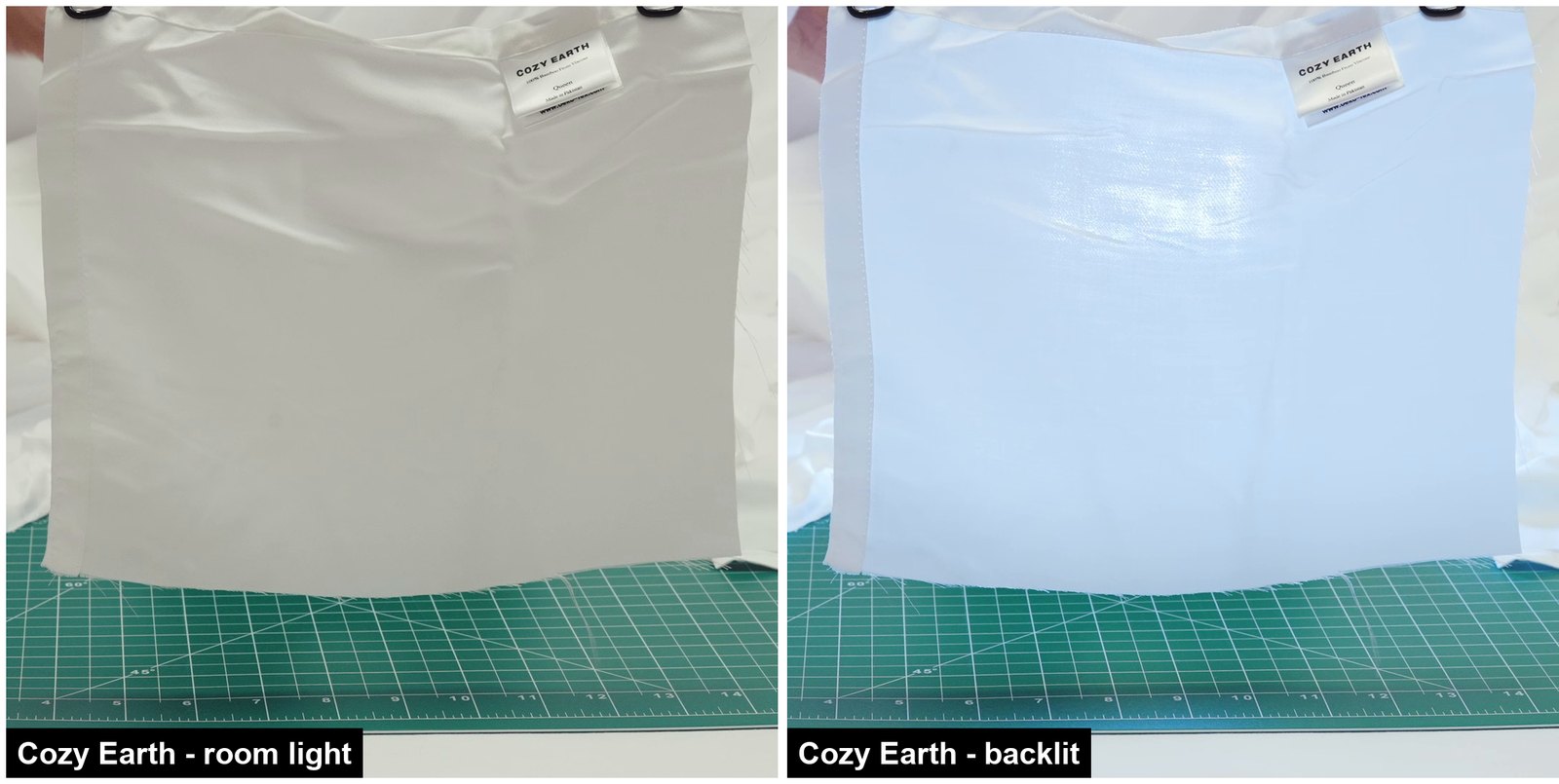
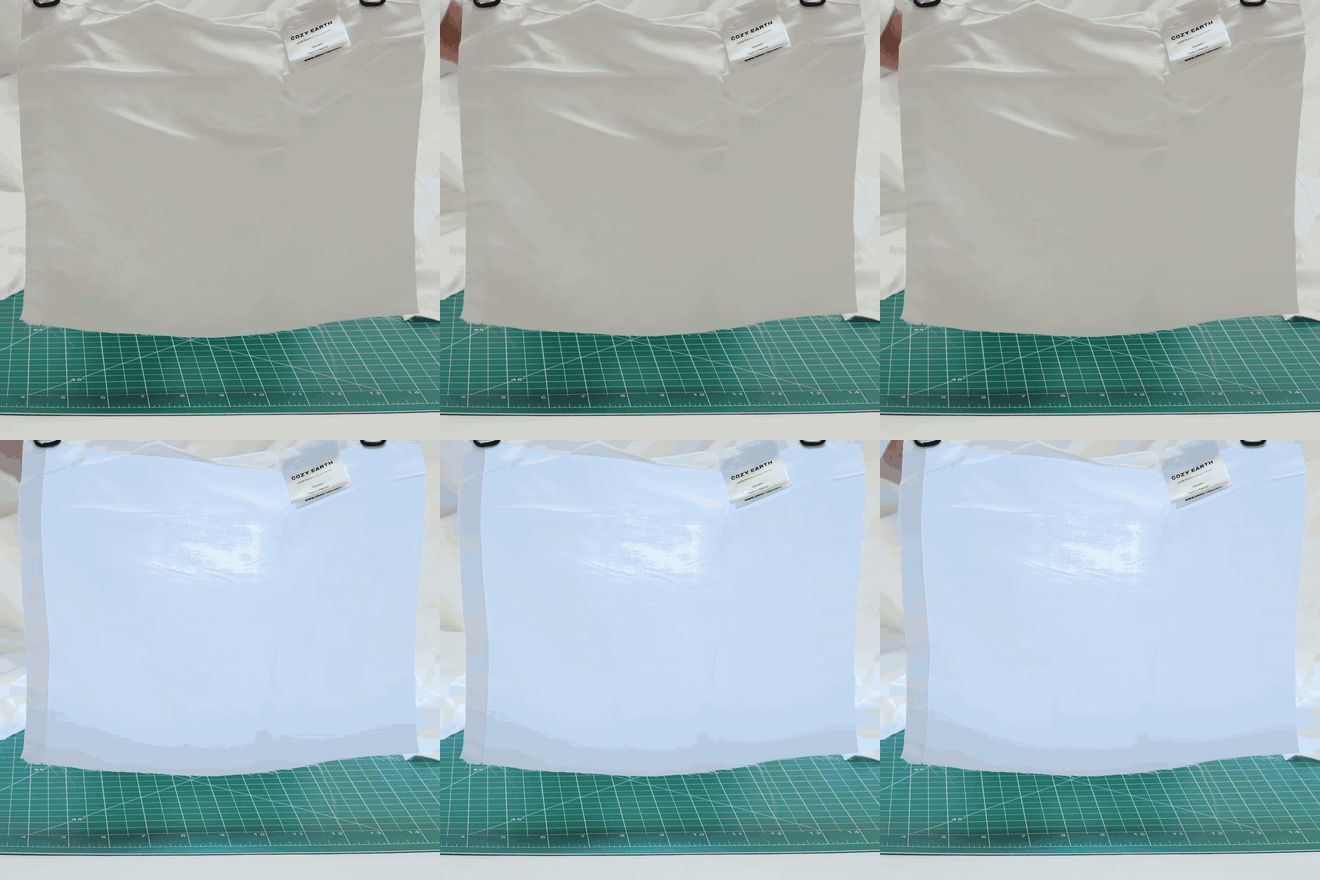
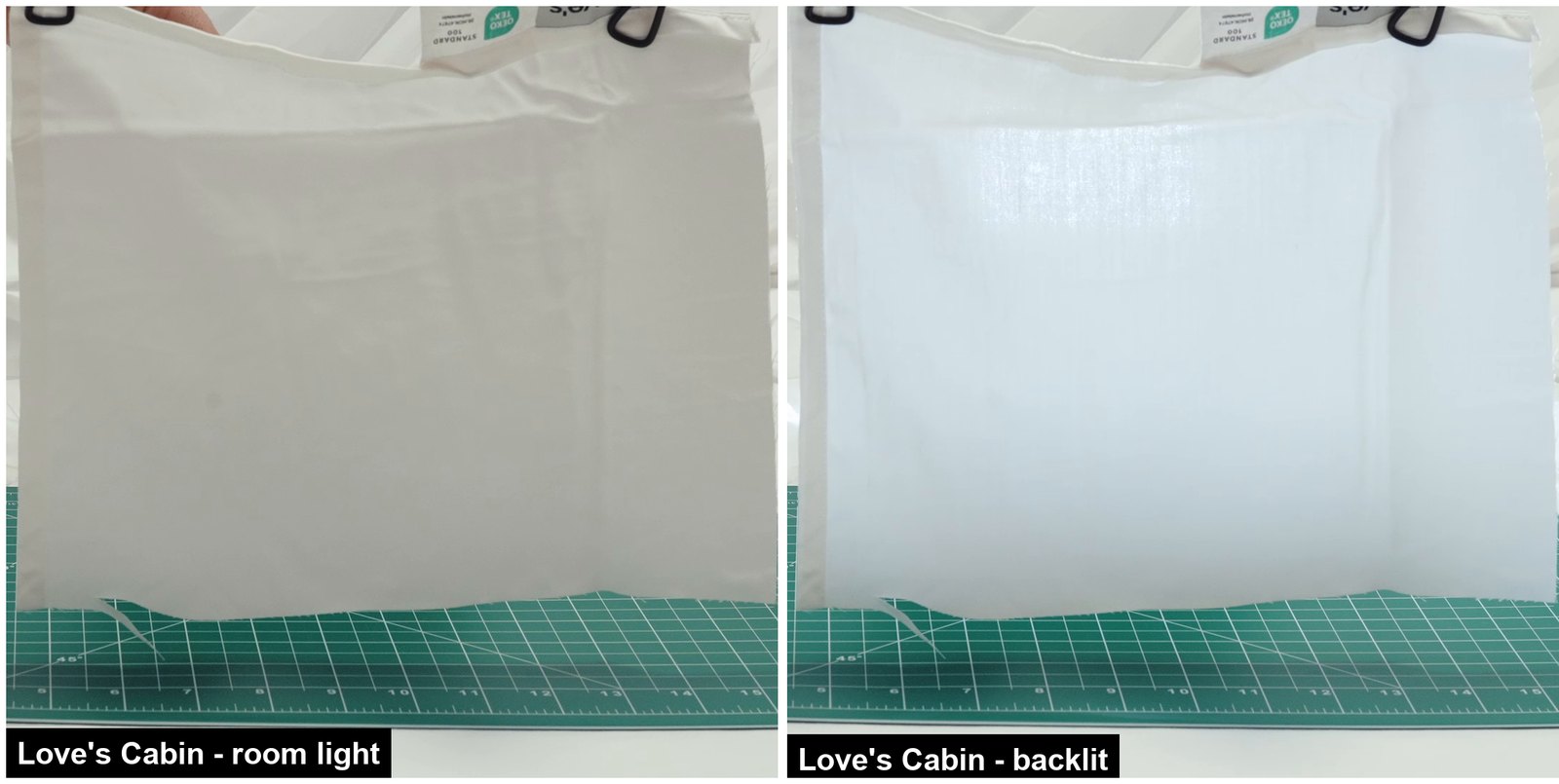
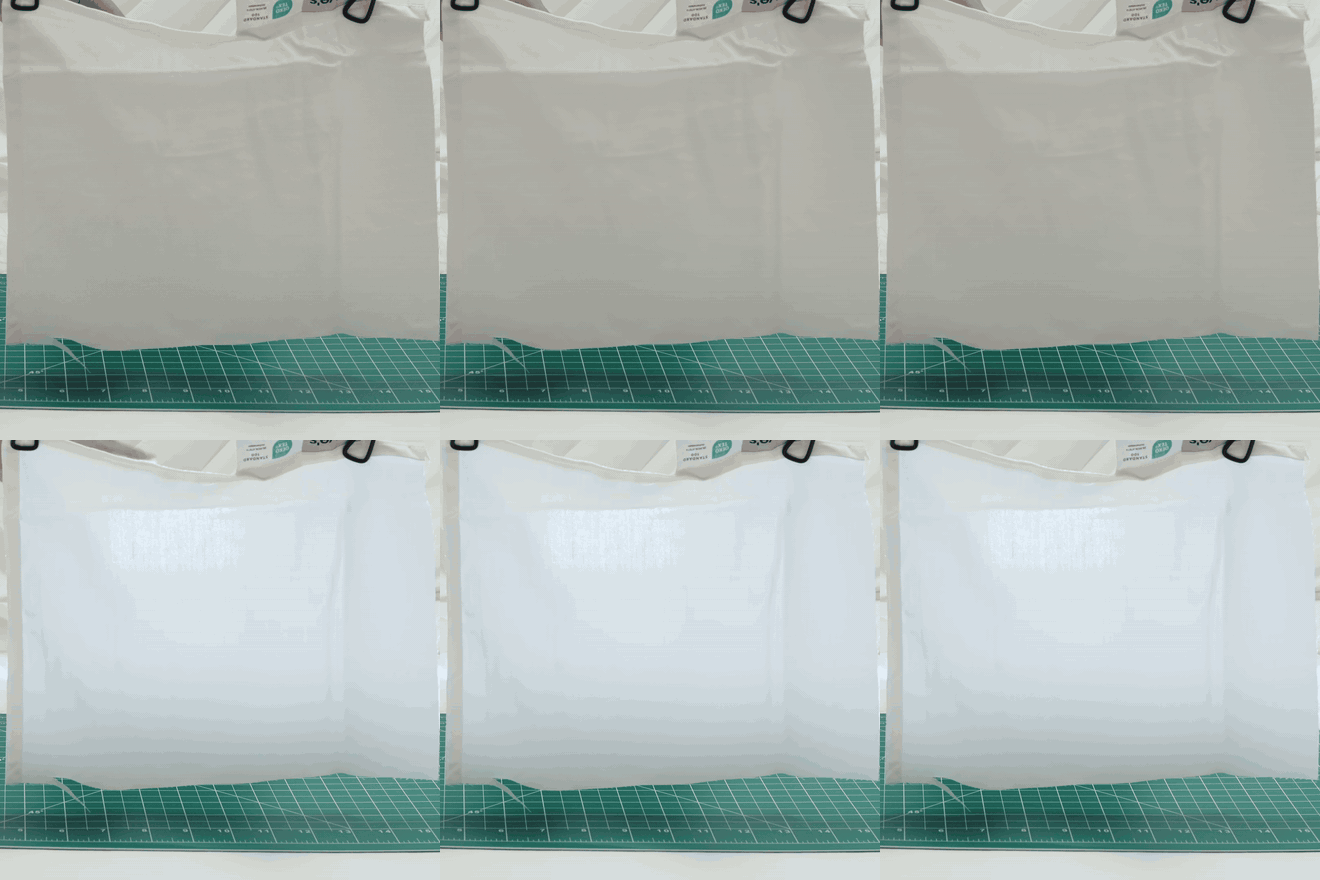
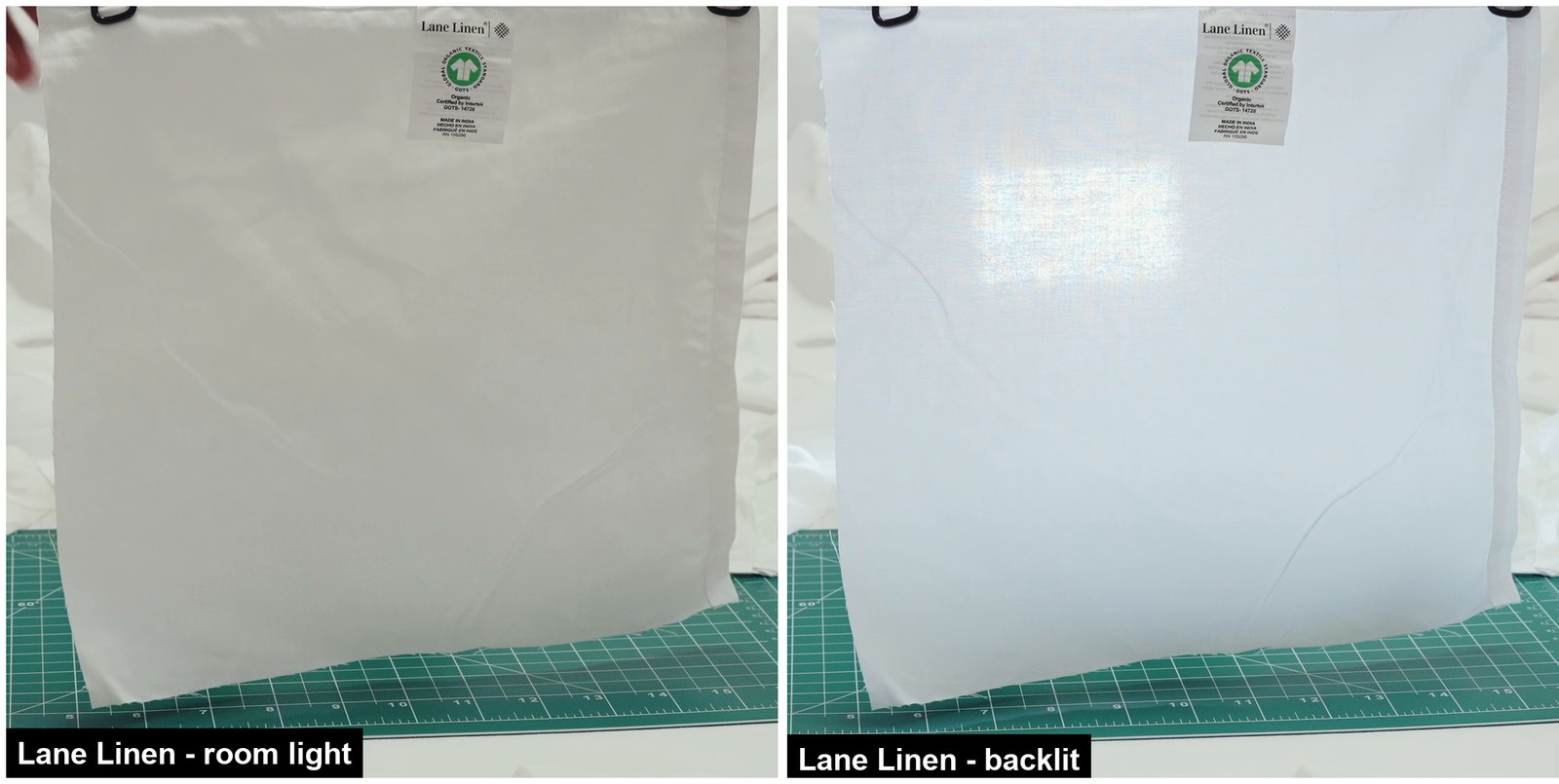
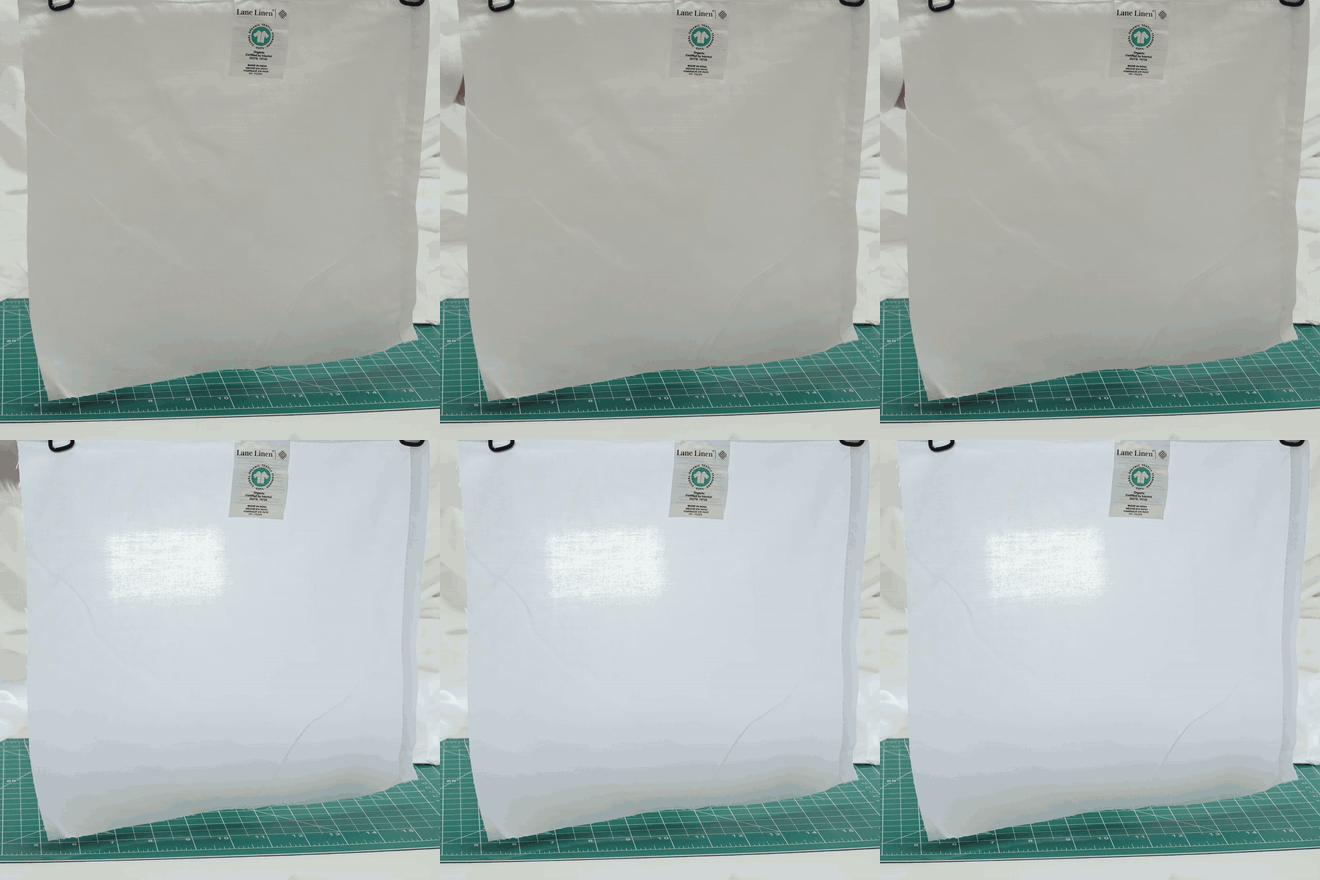
Each sheet hung in front of the same LED panel in a dark room. The differences were obvious right away. On the ettitude and the Lane Linen, you can see the bright square of the panel through the fabric. On the Dosaze and the Cariloha, the light spreads out into an even glow with no edges. Cozy Earth and Love’s Cabin landed in between.
Moisture wicking test
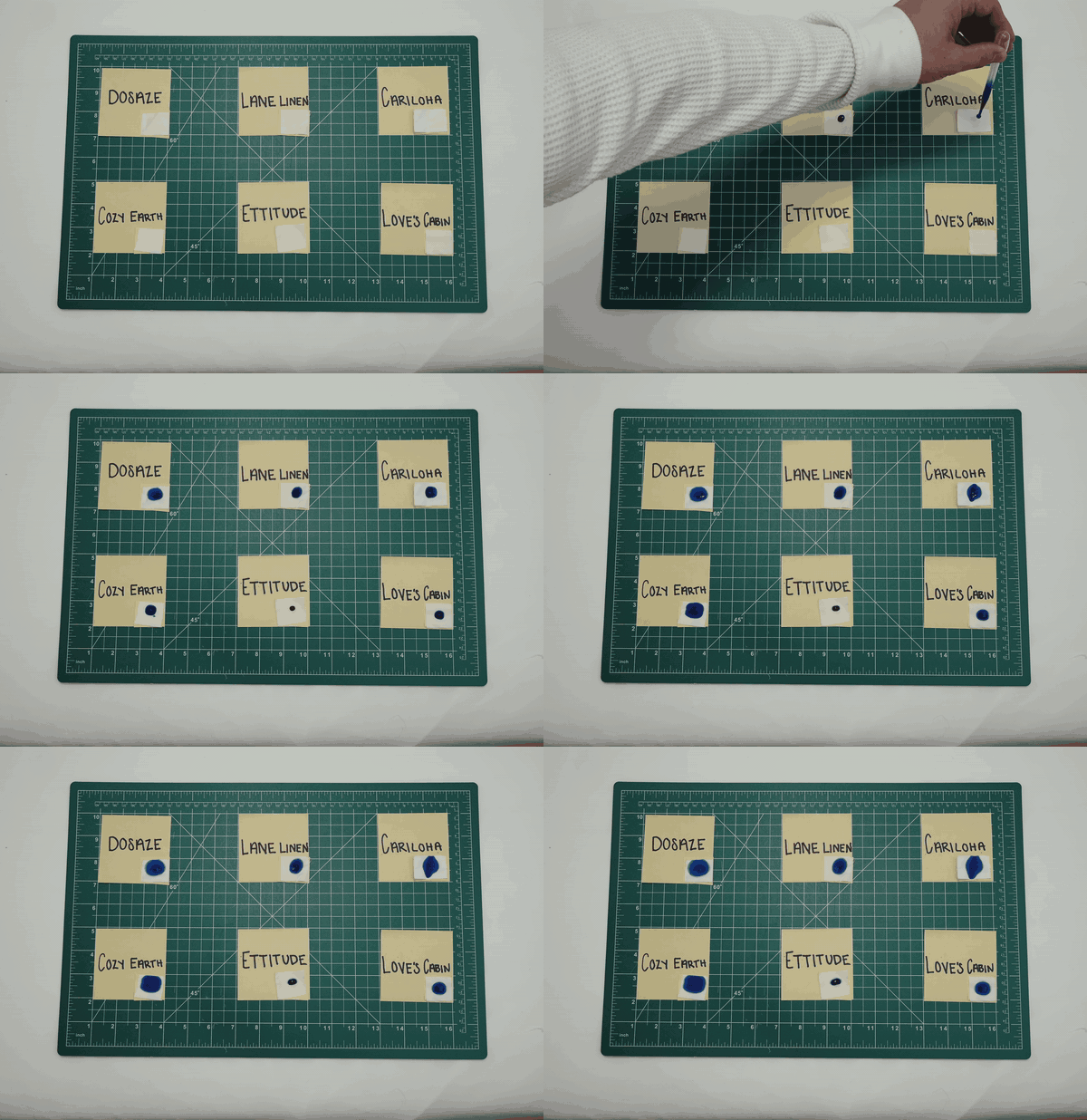
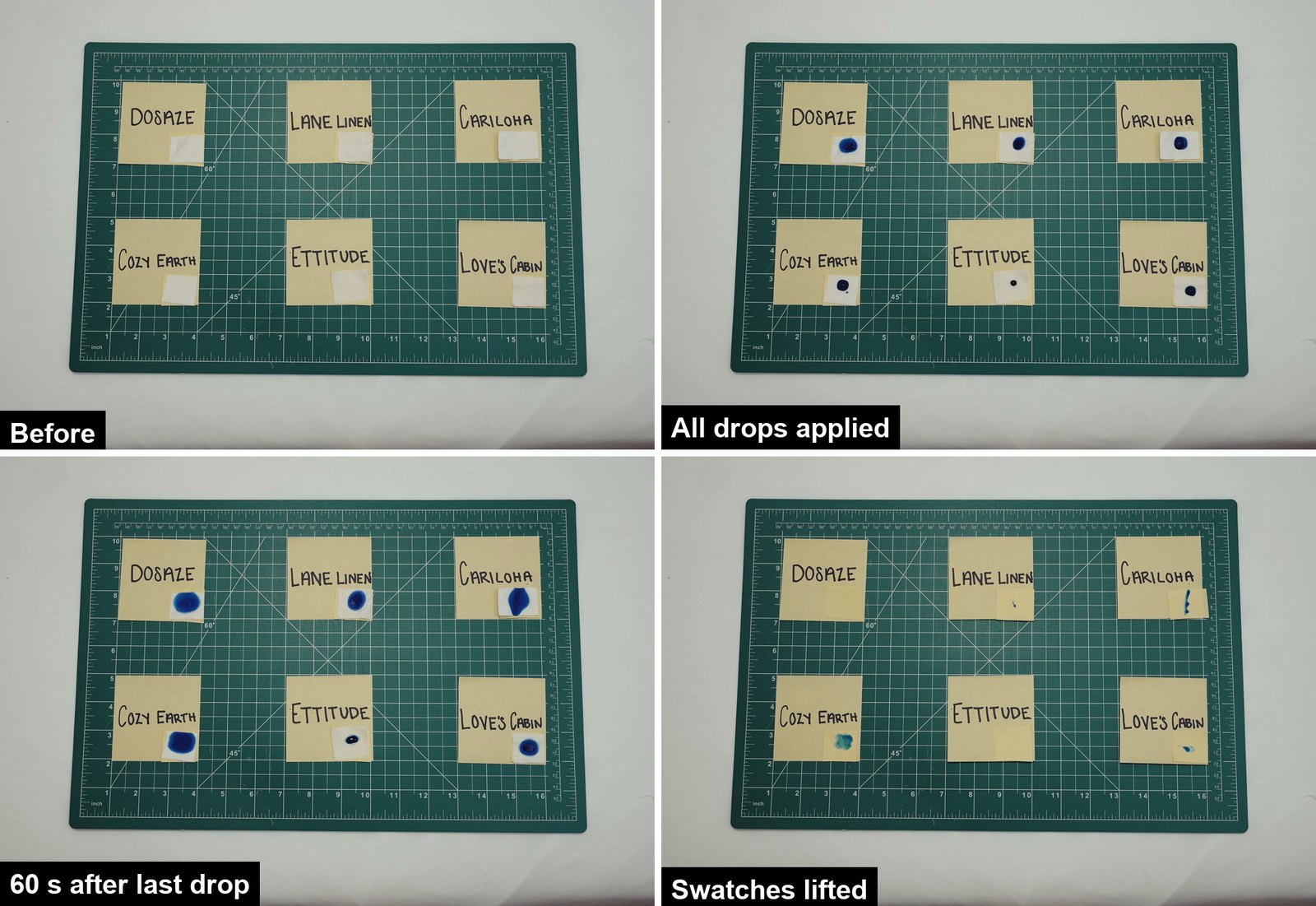
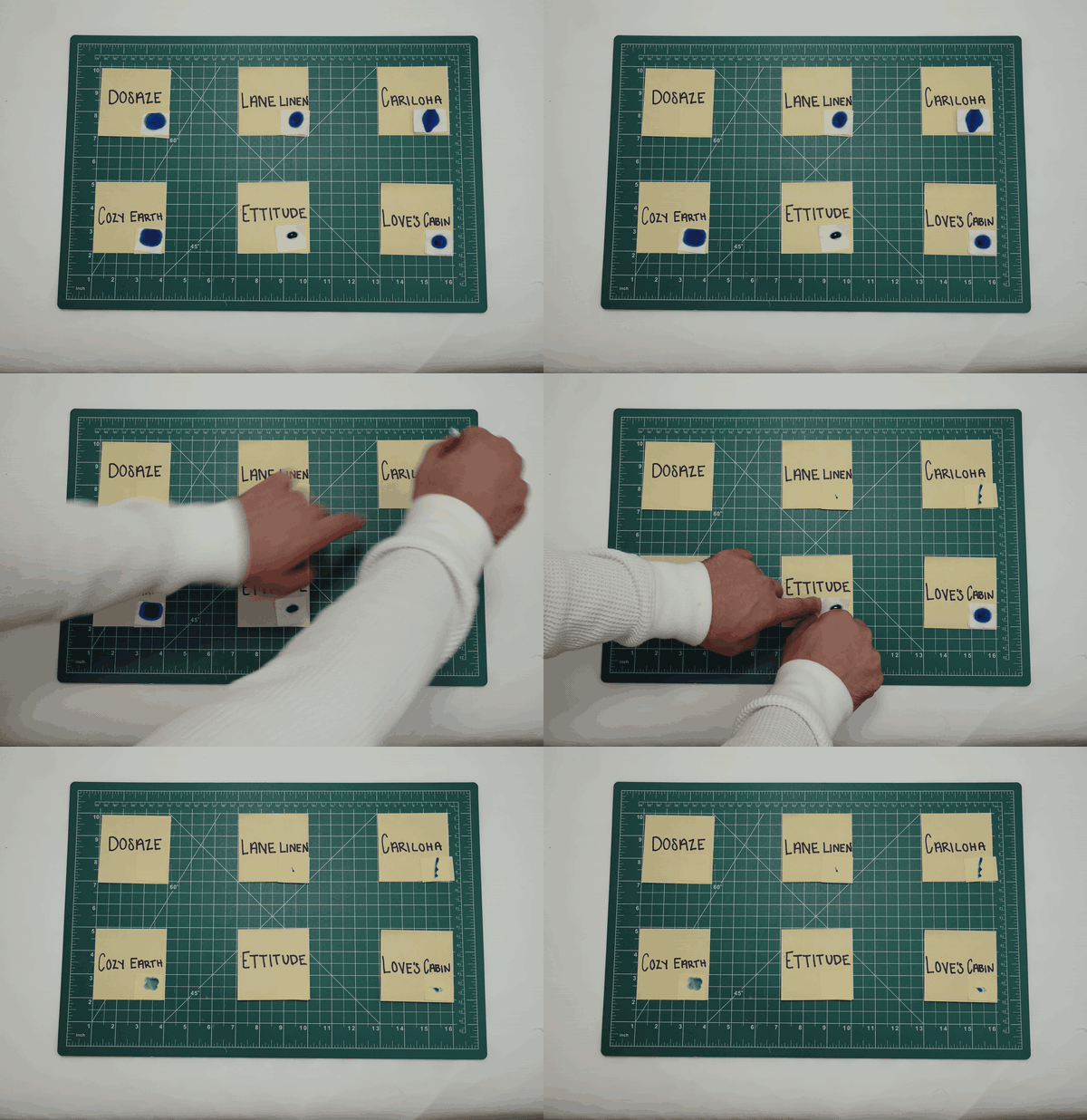
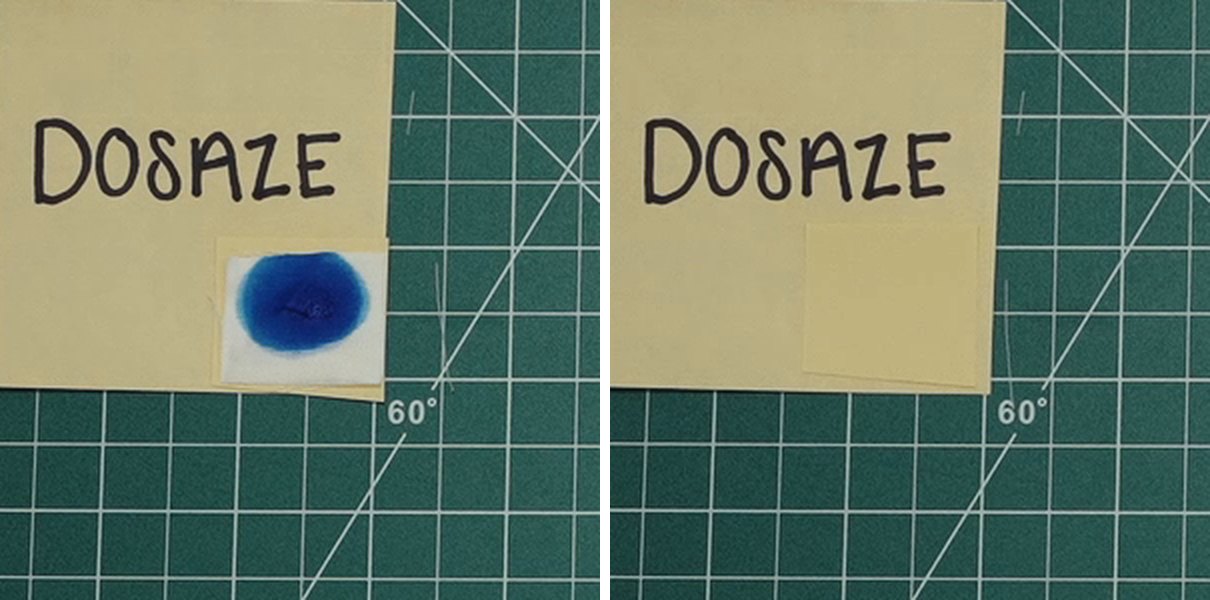
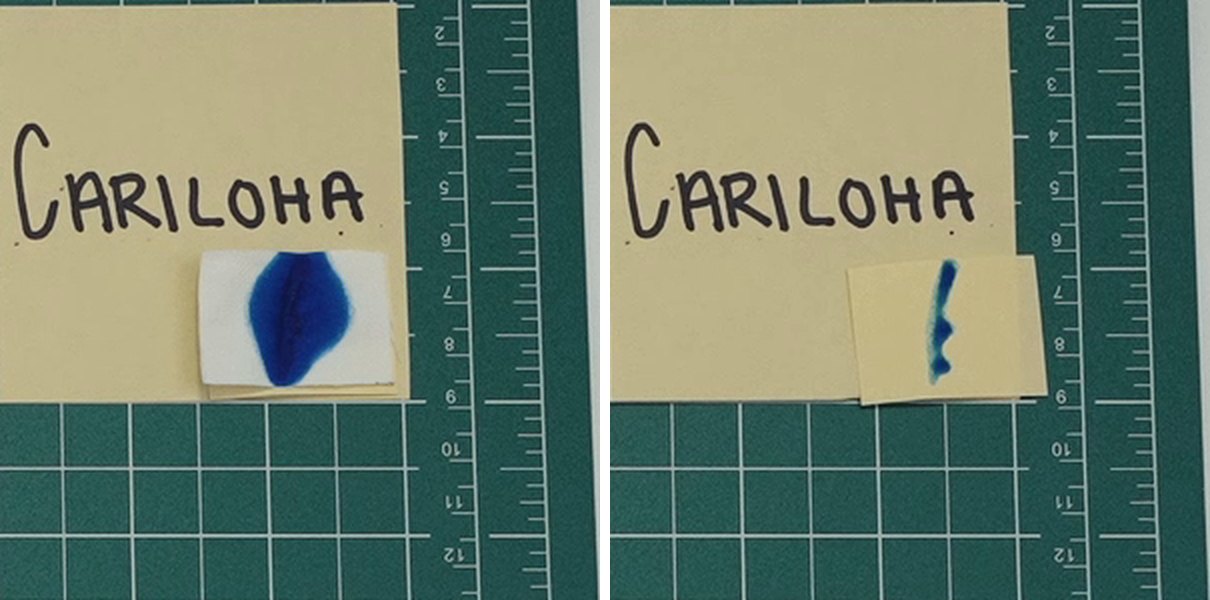
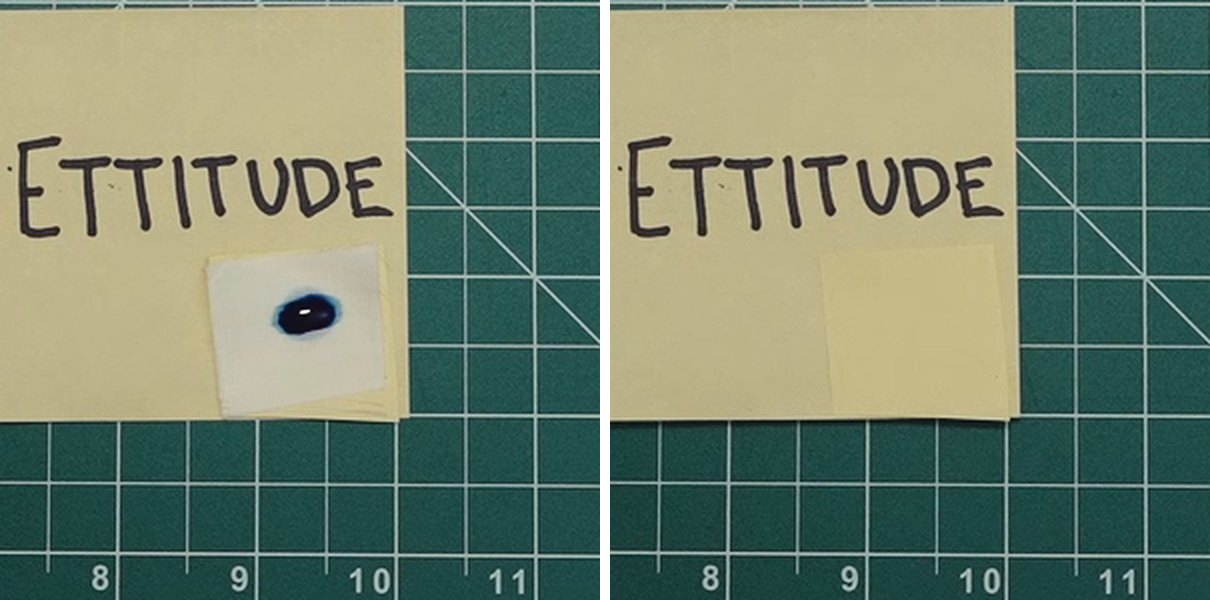
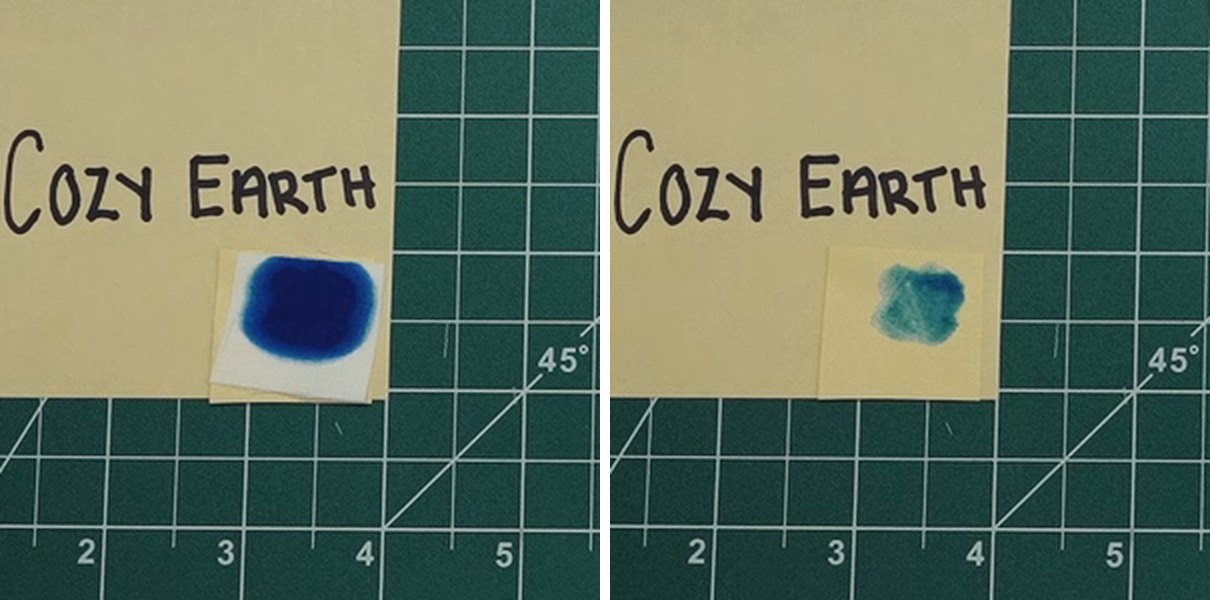
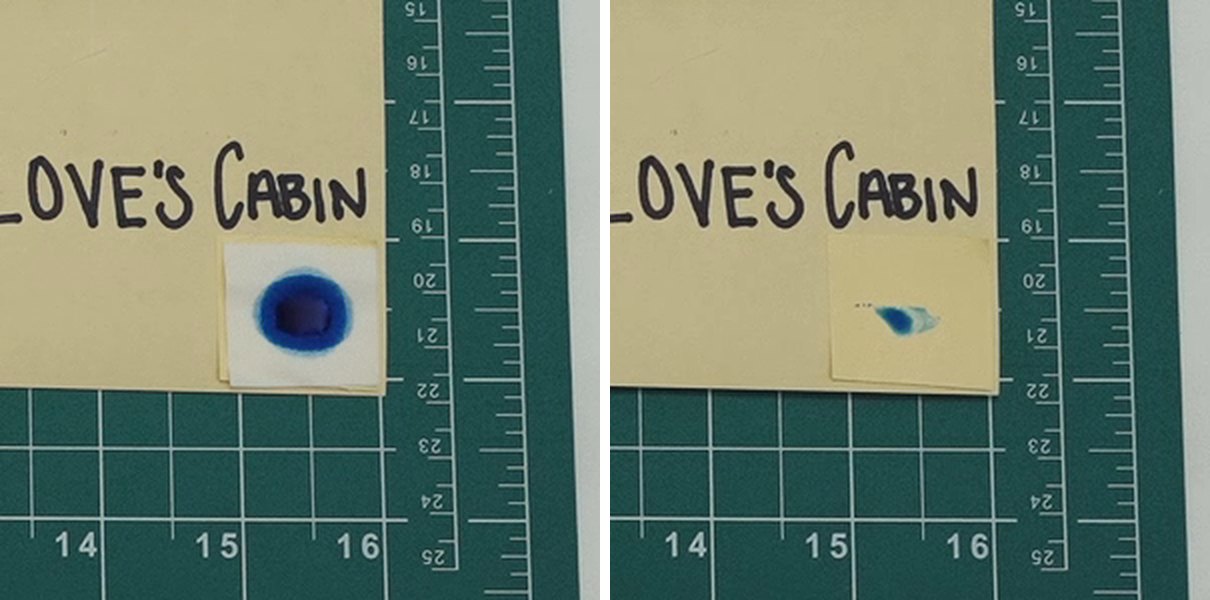
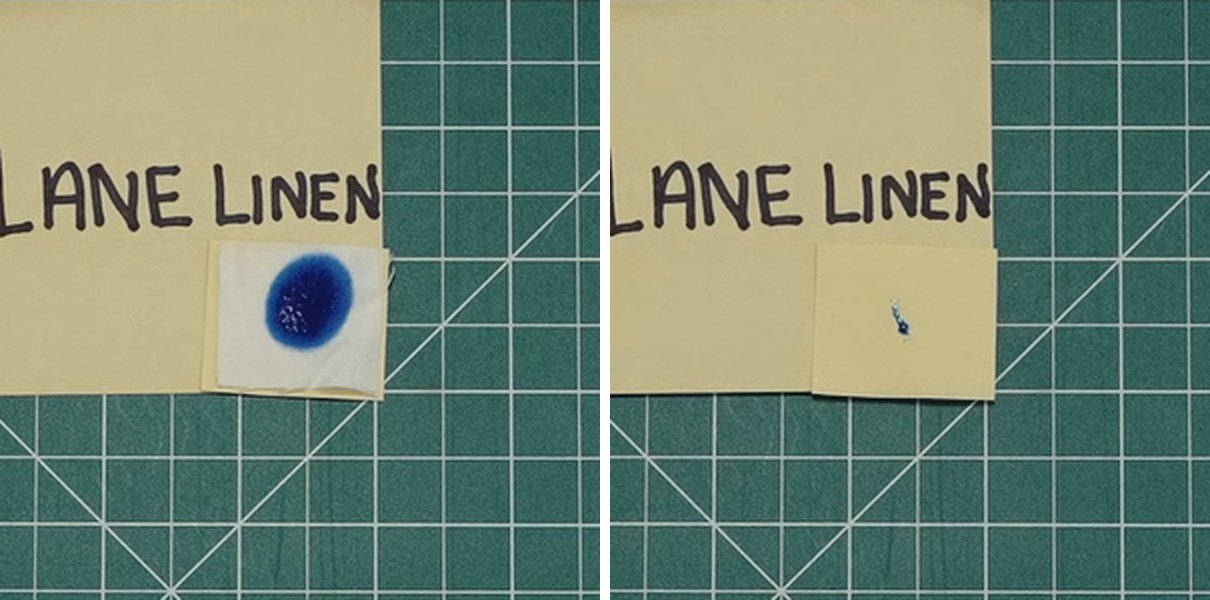
I cut a square from each set, laid them on sticky notes, and put one drop of blue-dyed water on each. After a minute I photographed the spread, then lifted every square to see what had soaked through onto the paper. That second step turned out to be the more telling one.
We put a single drop of dyed water on each swatch and timed exactly 60 seconds. The Luxe had pulled the drop in and spread it across the largest area of the swatch, among the widest in the test, and the paper underneath stayed clean. Cozy Earth spread about as far but bled through to the paper, and Ettitude’s drop was still sitting on the surface.
Dosaze wicked the moisture away the fastest (which also helps the material dry the fastest), without letting anything bleed through.
The rub test
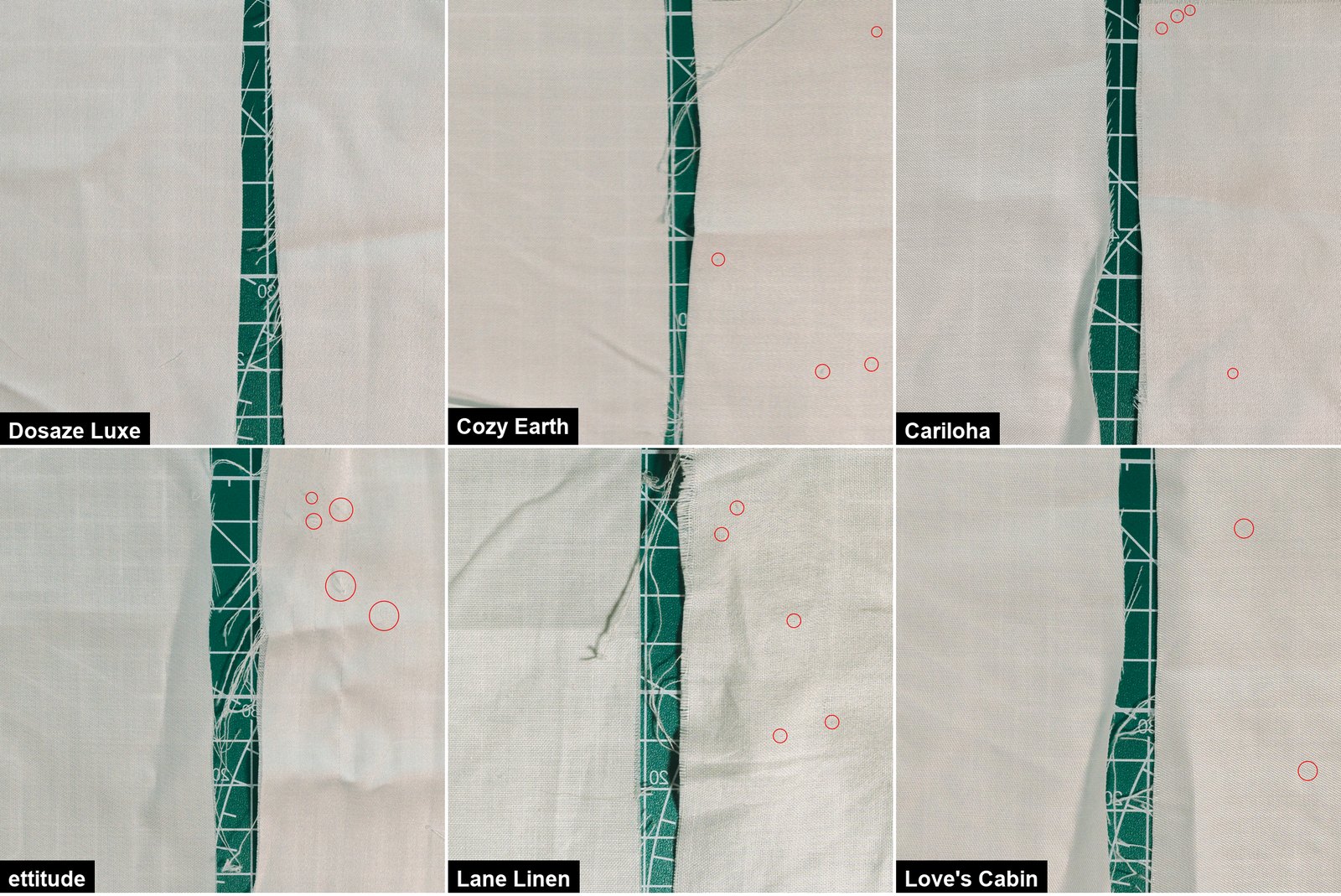
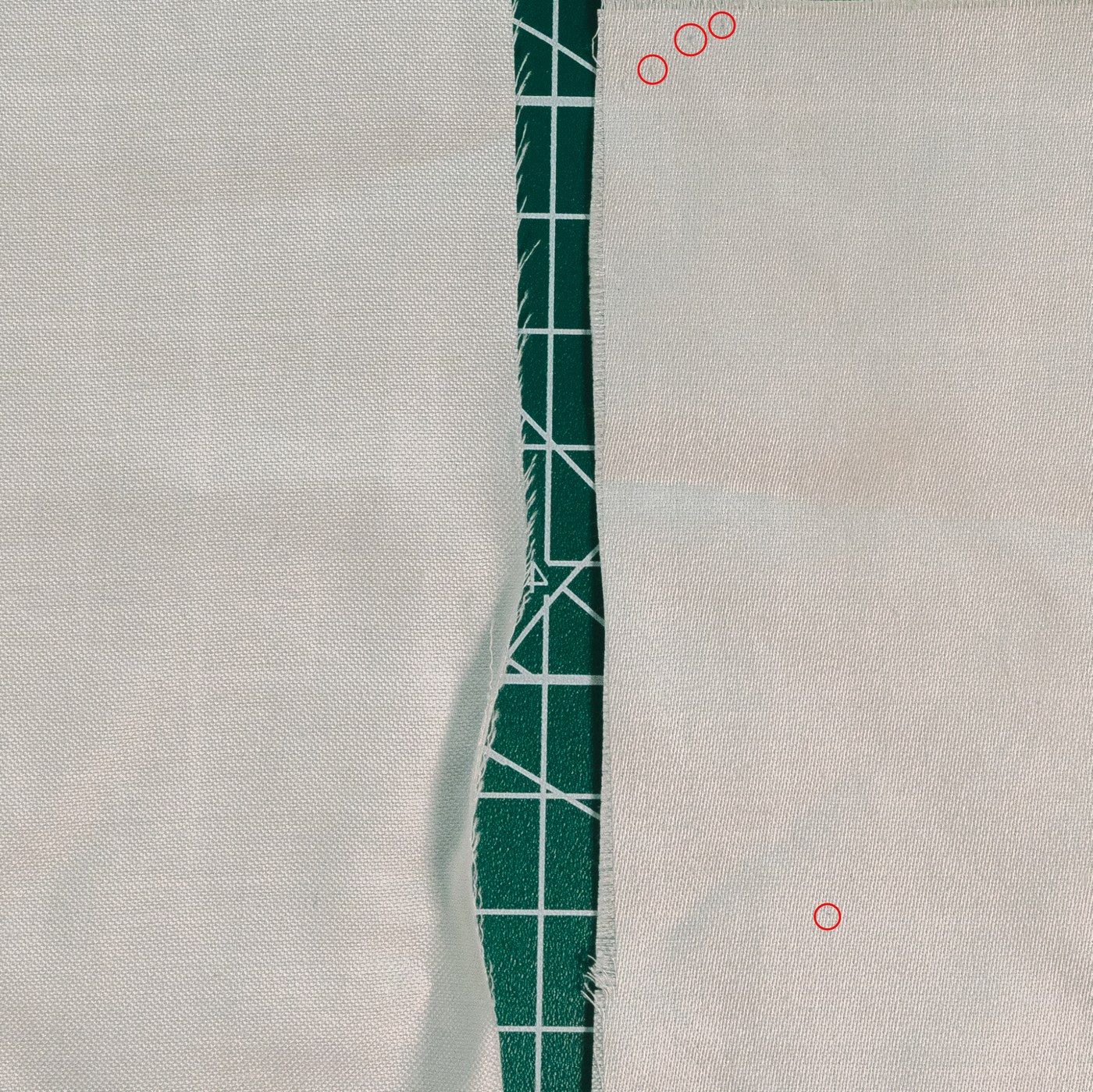
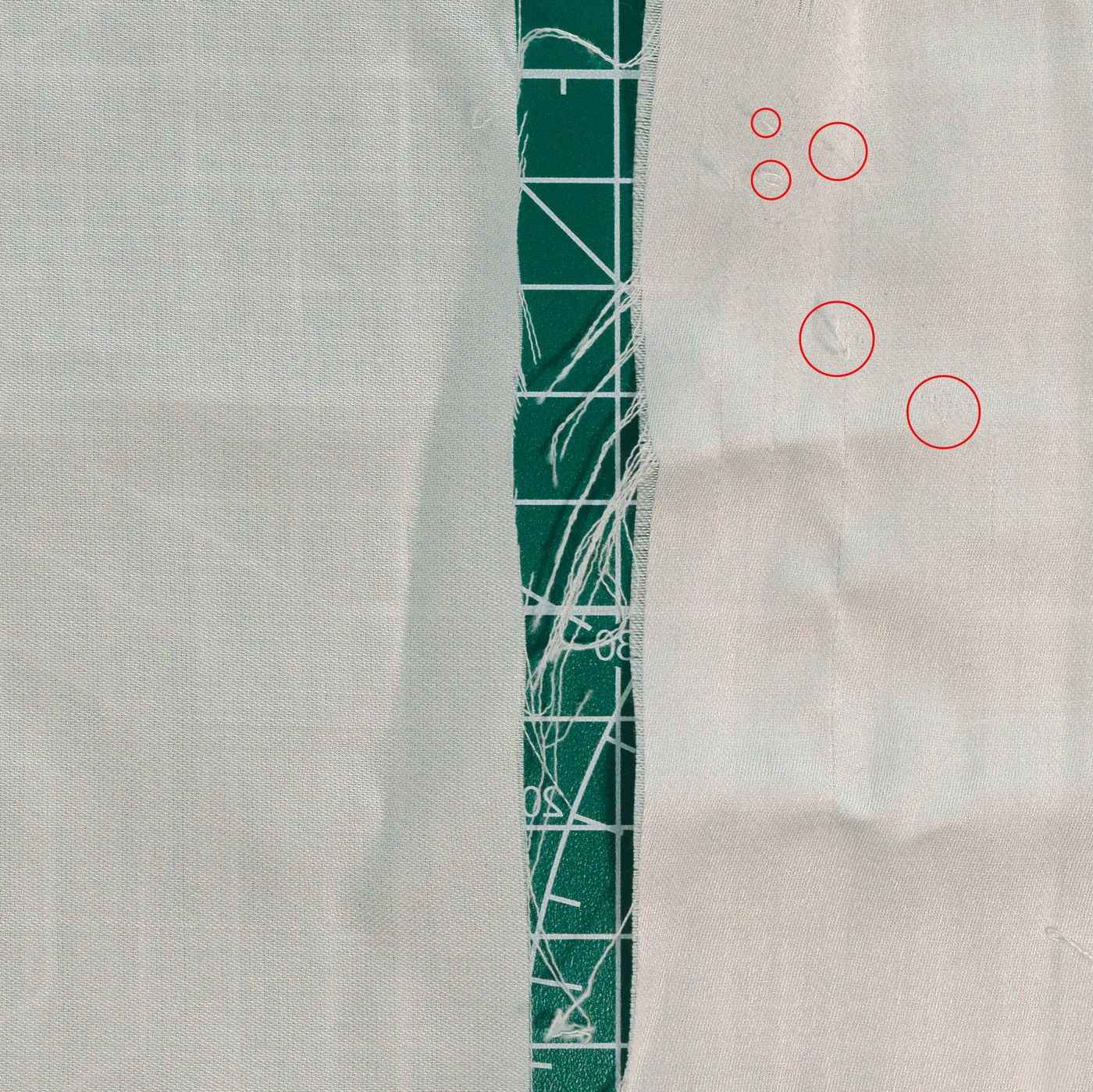
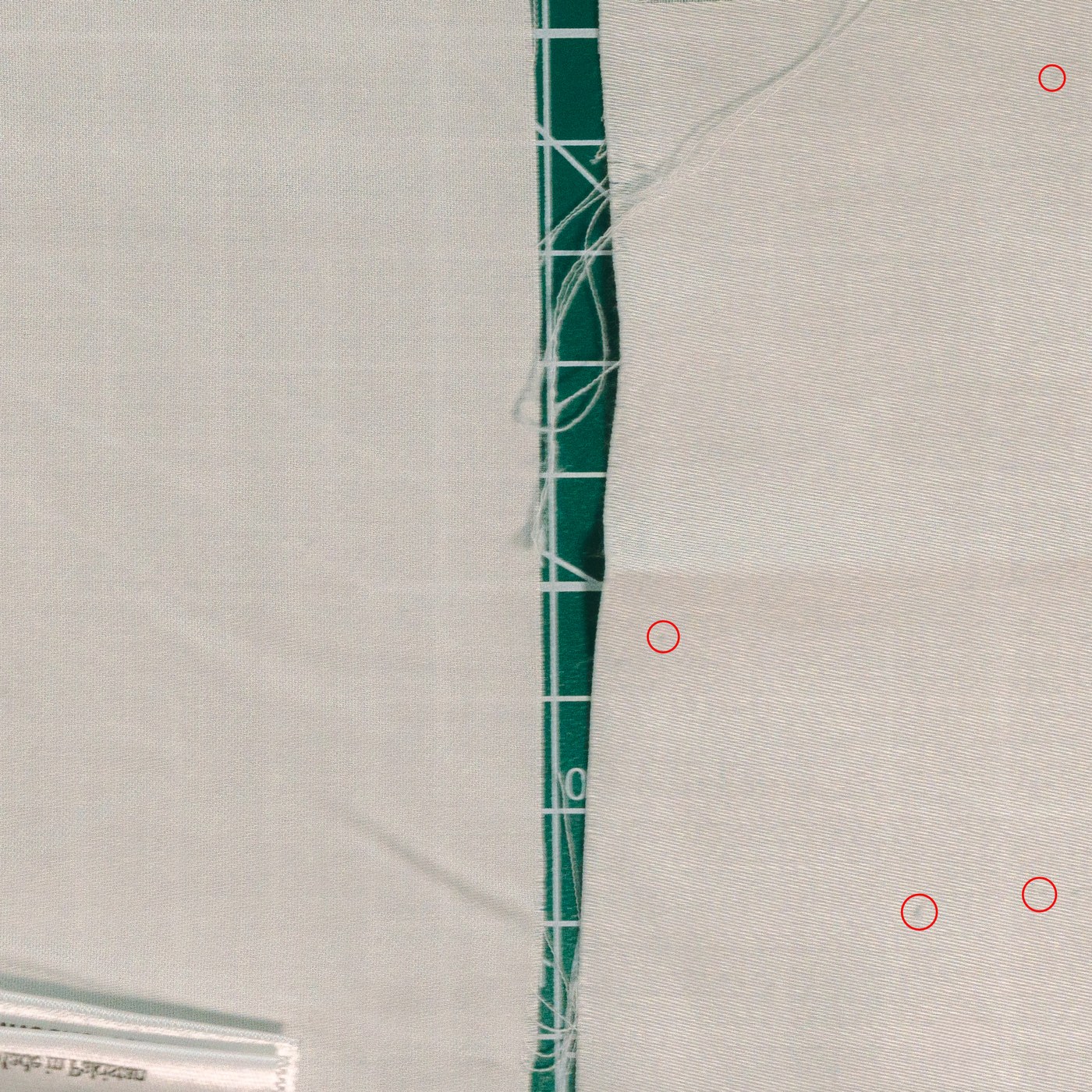
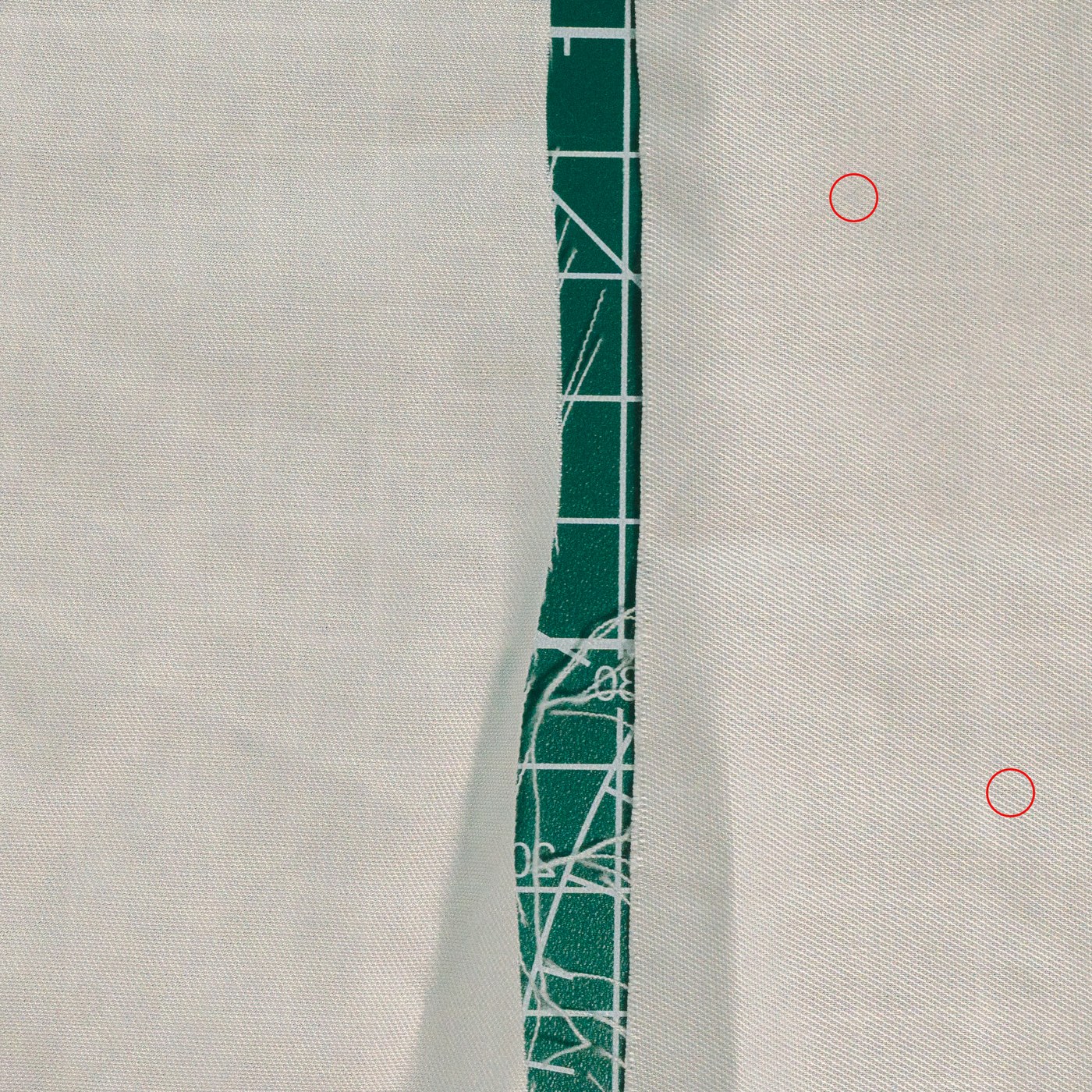
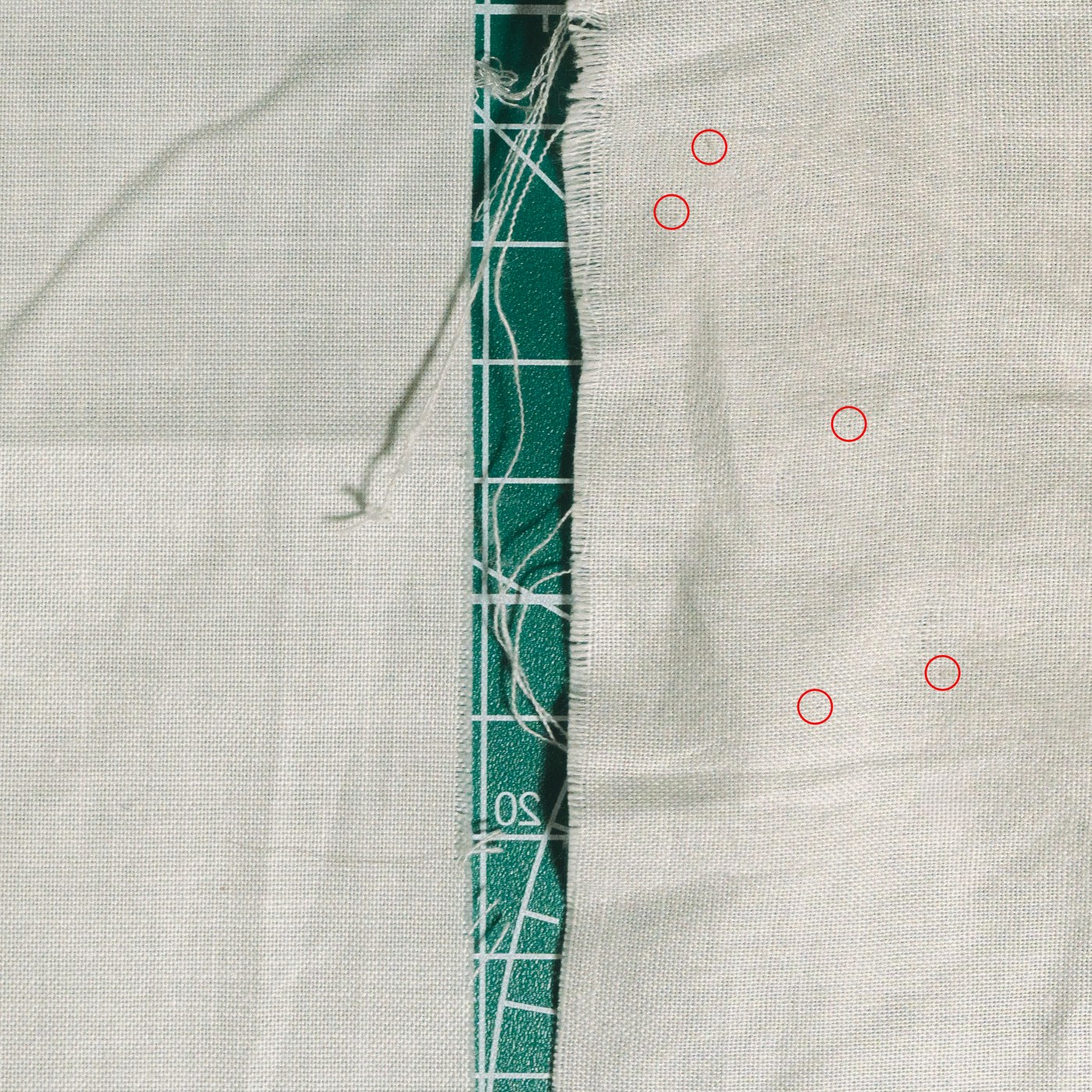
This one mimics sheets rubbing against your pajamas, or against themselves in the wash. I held a square from each set flat and taut, then rubbed a piece of rough fabric firmly across it in 50 circles with steady pressure. Then I looked across the surface at an angle and circled every pill I could find. In the photos, before is on the left and after is on the right. The Dosaze was the only set with none. Love’s Cabin had two, Cariloha and Cozy Earth four each, and the Lane Linen and ettitude five apiece, with a few of the ettitude’s noticeably bigger than the rest.
Our Top Choice
Current offer: the Dosaze Luxe Bamboo Sheet Set is buy one, get one free, which works out to $135 a set on a Queen.
After testing all six, the Dosaze Luxe Bamboo Sheet Set came out on top because it did well on every test instead of winning one and falling apart on another. Here’s how it did.
Test 1: Build
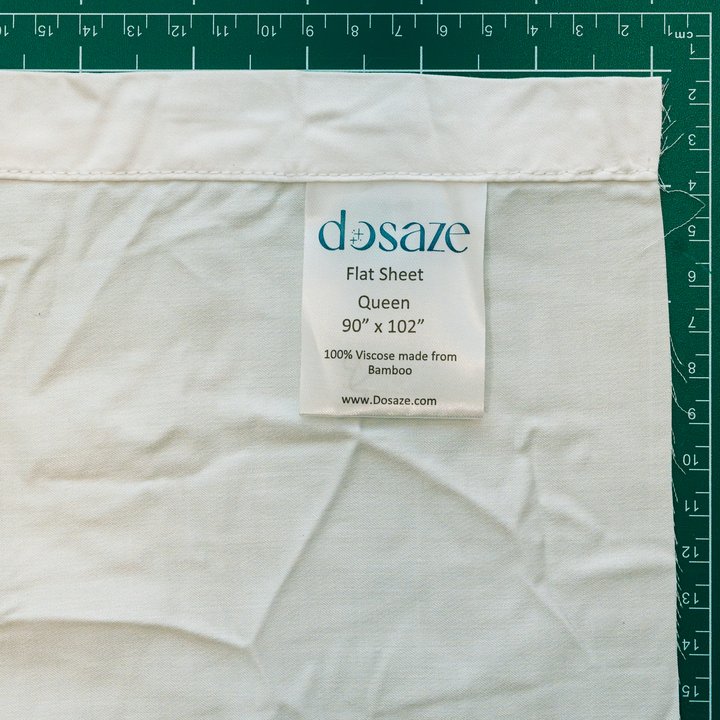
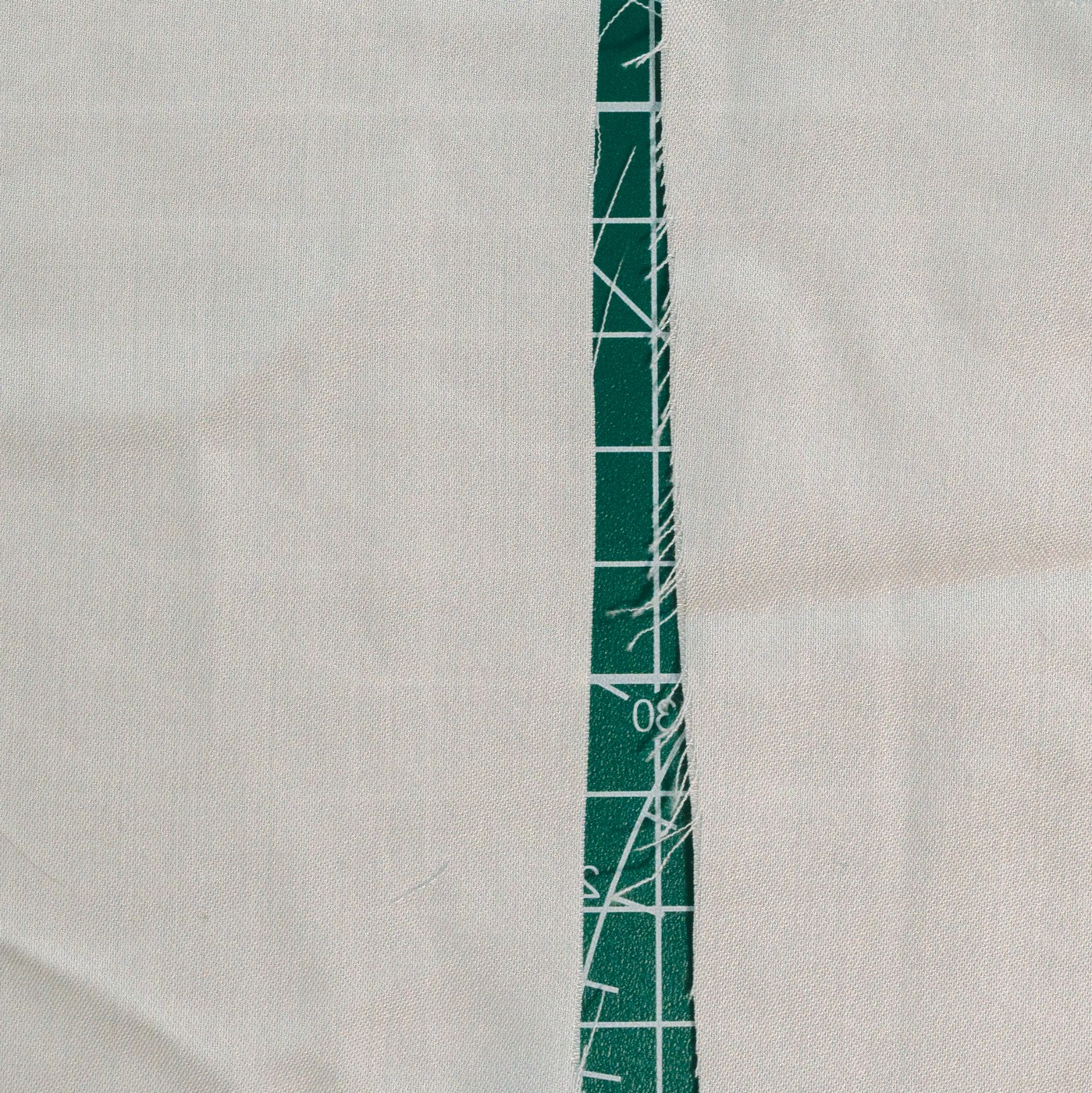
The label reads “100% Viscose made from Bamboo,” which is the wording the FTC wants and matches what Dosaze prints on the product page. The 10 cm square weighed 1.50 g, which works out to 150 GSM: the heaviest of the six sets and a touch above the 145 Dosaze lists. In front of the light panel it was one of the two most opaque sheets in the test. The light came through as a soft, even glow, and I couldn’t make out the edges of the panel behind it.
Test 2: Moisture
The drop spread into one of the widest circles on the board within a minute, which is what you want: the wider the spread, the faster a damp patch dries. Then I lifted the square, and the sticky note under it was clean. Every bit of the water had stayed in the fabric. Only one other set did that, and it did it by barely absorbing the drop at all.
Test 3: Durability
After rubbing, I couldn’t find a single pill on the swatch, even up close. The sateen surface looked the same as the untouched sheet next to it, and it was the only one of the six I can say that about.
Dosaze also gives you 60 nights to try the sheets with free returns, plus a 10-year warranty. For a set I’d be sleeping on every night, that matters more to me than an extra few dollars either way.
Verdict: The most balanced set in the test. If you wake up sticky, this is the sheet that pulled water in and kept it off the mattress, and it did that while blocking more light than sets that cost more. With the 60-night trial and 10-year warranty on top, it’s the easiest recommendation here.
CURRENT OFFER: Dosaze is running buy one, get one free on the Luxe Bamboo Sheet Set. Check current deals on Dosaze Luxe here.
⭐ Why We Picked Dosaze as the Best
It was the only set that spread a drop of water wide and still kept all of it in the fabric, the only one that didn’t pill in the rub test, and one of the two most opaque sheets in front of the light panel. Add in the 60-night free trial, free returns and a 10-year warranty, and nothing else in the test made it as easy to say yes.
👉 Check current deals on Dosaze Luxe sheets here
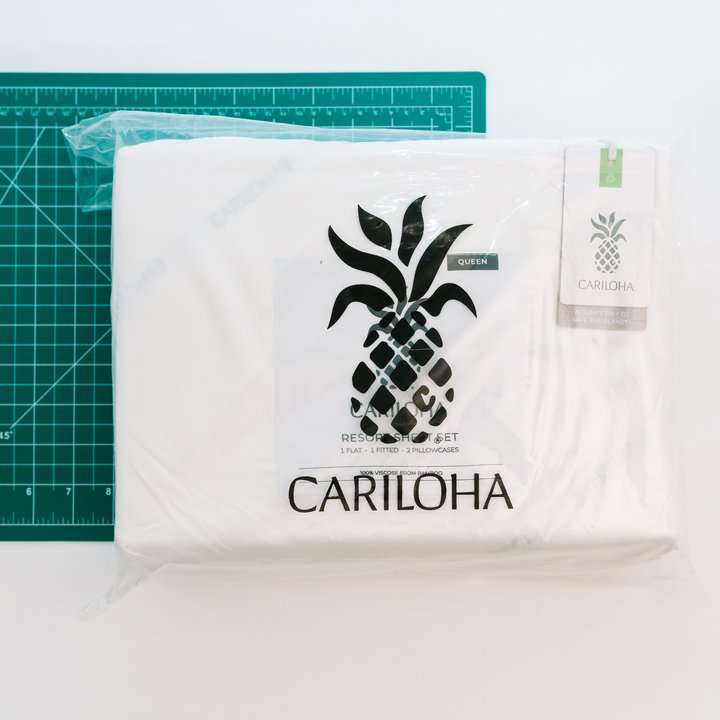
You’ve probably walked past a Cariloha store in a mall or a beach town. Its label spells everything out: 100% viscose from bamboo in a sateen weave, wash cold and tumble dry low. It matched the Dosaze in front of the light panel, which is why it’s second, and came up short on the drop board.
Test 1: Build
Next to the Dosaze, this was the other sheet where the light panel disappeared into an even glow. If see-through sheets bother you, it’s one of the two safest picks here. On the scale it came in at 133 GSM, fifth of the six, so the coverage comes from the weave more than the weight.
Test 2: Moisture
The drop didn’t spread in a circle. It ran into a long oval, following the direction of the weave, and when I lifted the square there was a blue streak on the note underneath.
Test 3: Durability
Four small pills came up after rubbing, three of them bunched near the top edge of the swatch.
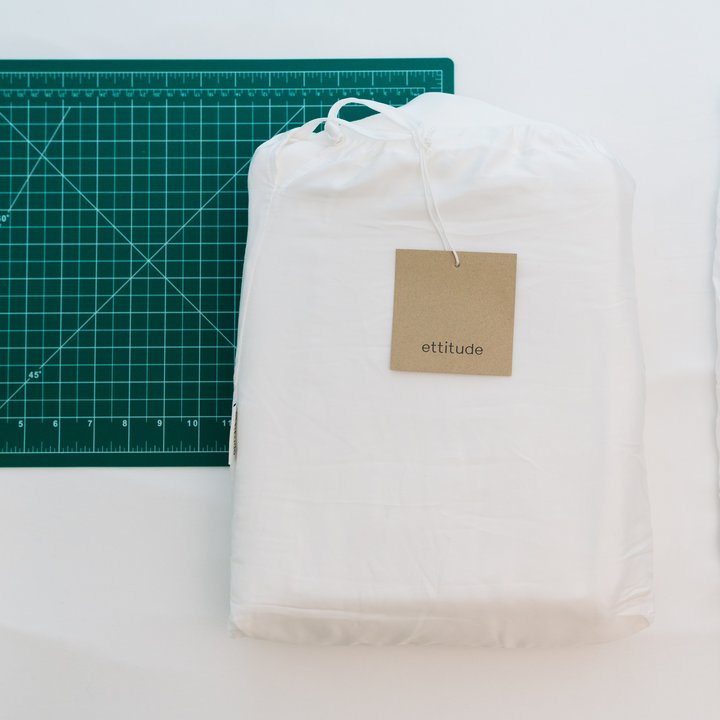
ettitude is the only lyocell set here. Its tag reads “CleanBamboo™ 100% bamboo lyocell,” a different fiber from viscose even though both start as bamboo pulp. Out of the package it’s one of the nicest-feeling sheets here: smooth, substantial and noticeably high-end in the hand. If you specifically want lyocell, it’s the one to look at. It also had the most unusual result on the drop board of any set in the test, so go in knowing where it fell short.
Test 1: Build
Along with the Lane Linen, this was one of the two sheets where the light panel showed clearly through the fabric as a bright square. That surprised me, because on the scale it came in at 146 GSM, second only to the Dosaze. Weight alone didn’t make it opaque.
Test 2: Moisture
The drop barely moved. After a full minute it was still a tight, dark bead sitting on the surface, the smallest spot on the board by a wide margin. Nothing came through to the paper, but that’s because the water never really went in. For a sheet you’re supposed to sweat into, that’s the wrong way to stay dry.
Test 3: Durability
This one pilled the most. Five pills formed after rubbing, and a few were noticeably bigger than anything on the other swatches.
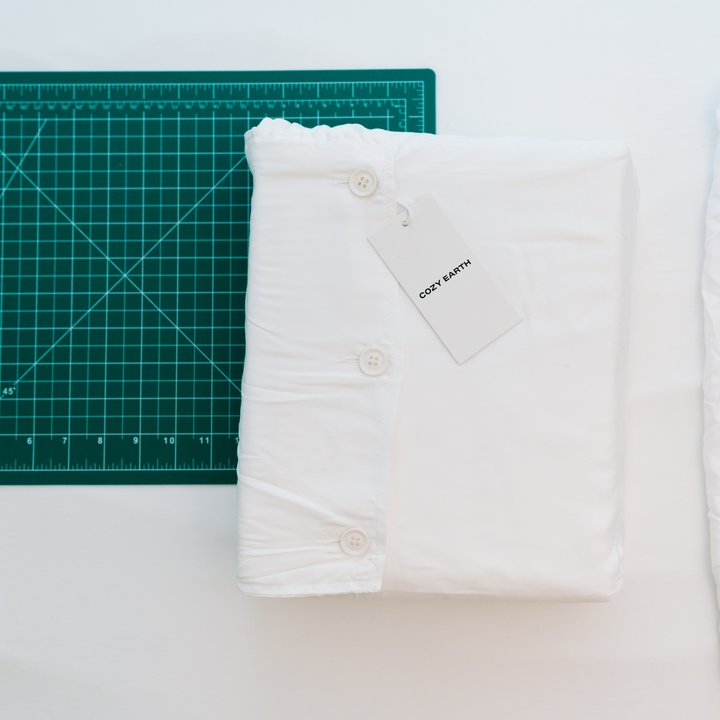
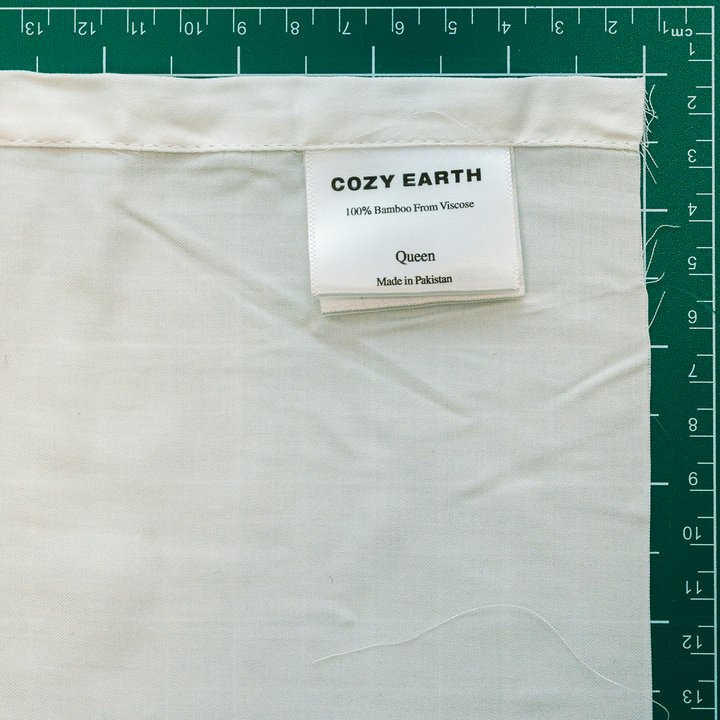
Cozy Earth is the set people buy when they want the expensive one, and at $308 for a white Queen it’s one of the priciest here. The label reads “100% Bamboo From Viscose,” the same fiber as the Luxe with the words in a different order. The drop test is where it showed a difference I didn’t expect.
Test 1: Build
Against the light panel, the Cozy Earth glowed brighter than the Dosaze, with a shiny patch where the panel sat behind it. On the scale it came in at 139 GSM, lighter than the Dosaze and tied with the Love’s Cabin set that costs a fraction as much.
Test 2: Moisture
The drop spread fast and wide, close to what the Dosaze did. Lifting the square told a different story. It left the biggest blue stain on the board, a blotch about the size of a quarter, so a good share of that water went straight through the fabric. On a bed, that’s the mattress protector or the mattress.
Test 3: Durability
Four pills formed, scattered across the rubbed swatch. For a $308 set I expected it to match the Dosaze here, and it didn’t.
If price isn’t a factor and you love the feel, it’s a lovely sheet. You’re paying more than double the Luxe’s per-set price for something that didn’t beat it on the bench.
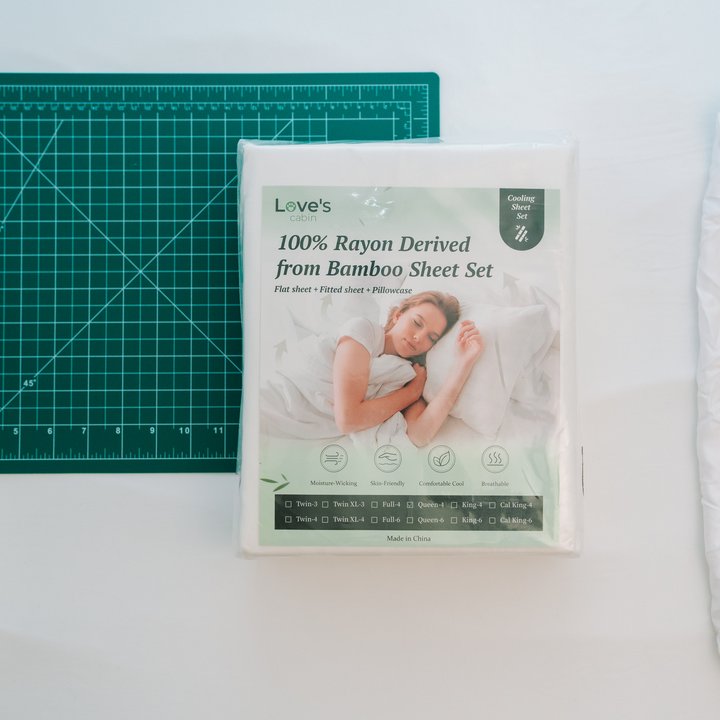
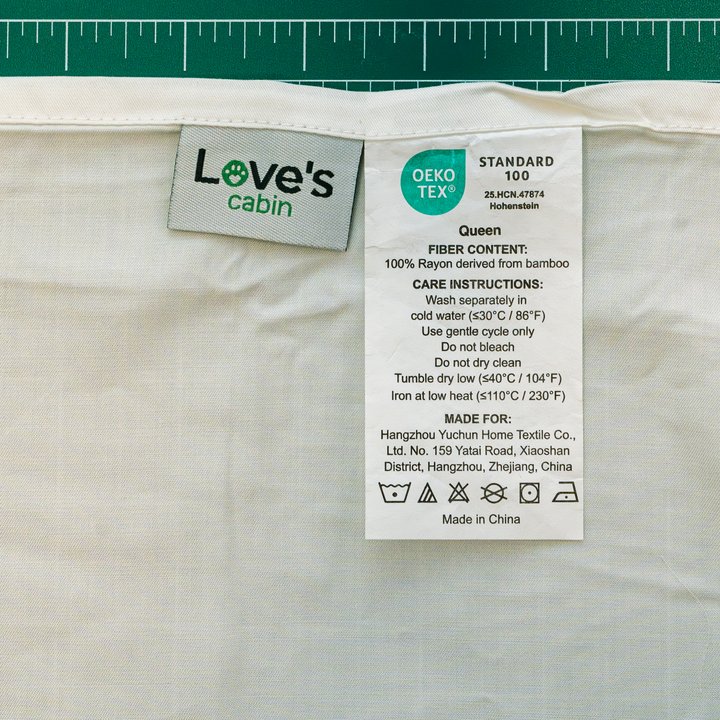
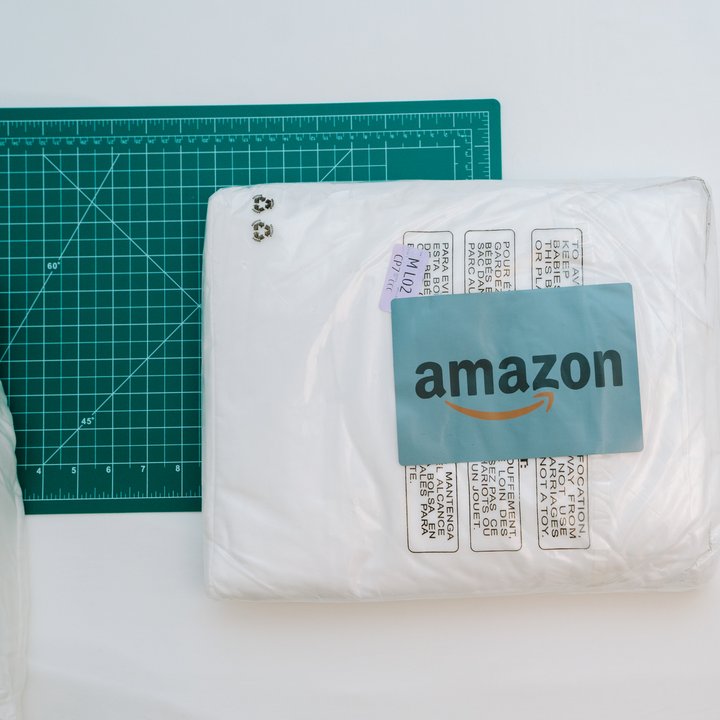
This is the Amazon pick, about $40 for a 4-piece Queen. I expected the label to give it away, but it reads “100% Rayon derived from bamboo” with an OEKO-TEX tag, which is exactly what it should say. So the bench had to separate it from the others, and for the price it held up better than I thought it would.
Test 1: Build
In front of the panel it gave a soft glow, and you could just make out where the panel sat. That puts it in the middle of the pack, behind the Dosaze and the Cariloha. On the scale it came in at 139 GSM, tied with a Cozy Earth set that costs about seven times as much.
Test 2: Moisture
The drop spread into a ring but stayed dark in the middle after a minute, as if the center hadn’t fully soaked in yet. Lifting it left a small smear on the paper.
Test 3: Durability
I half expected the cheapest set to fuzz up first. It held up better than that: two pills after rubbing, the fewest of any set except the Dosaze.
This one isn’t bamboo, and it doesn’t pretend to be. Lane Linen sells it as 100% GOTS certified organic cotton in a percale weave, and I added it as a control: the kind of cotton set a lot of people already have on the bed, for about $45. It shows what the bamboo sets are being measured against.
Test 1: Build
This was one of the two sheets where the bright square of the light panel showed clearly through the fabric. On the scale it came in at 118 GSM, the lightest in the test by a clear margin, which fits what the panel showed.
Test 2: Moisture
The drop spread into a medium circle, smaller than the Dosaze or Cozy Earth, and left just a pinpoint of blue on the paper when I lifted it.
Test 3: Durability
Five pills came up on the cotton percale, tied for the most in the test, and the cut edge shed a lot of loose threads.
What These Tests Actually Revealed
- The label matters, but it doesn’t settle anything. Three sets say the same fiber, viscose from bamboo, and they still behaved differently on every test.
- A wide spread is only half of moisture control. The fabric also has to hold the water instead of passing it to whatever’s underneath, and only the Dosaze did both.
- Weight and coverage aren’t the same thing. The ettitude was nearly as heavy as the Dosaze and still let the light panel show through.
- Pilling shows up fast. Fifty firm circles against rough fabric was enough to raise pills on five of the six sets, and the only clean swatch was the Dosaze.
- Price didn’t predict performance. The two priciest sets, ettitude and Cozy Earth, had two of the worst drop-test results and both pilled, while the $40 Love’s Cabin had fewer pills than three sets that cost several times as much.
The Bottom Line
Dosaze Luxe came out on top because it was the only set that pulled a drop of water in, spread it wide and kept all of it in the fabric, and the only one that came through the rub test without a single pill. It was also one of the two most opaque sheets in front of the light panel. If you sleep warm and want sheets that keep the damp off you and off your mattress, that’s the one to get. If you want to feel a set in a store before you buy, Cariloha is a solid alternative. Everything else asked you to give something up.
