


Last updated: October 2026
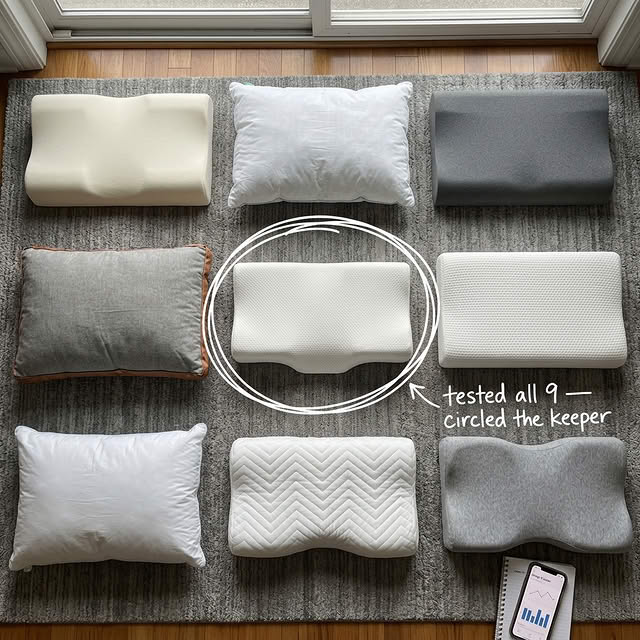
After decades of sleeping on run-of-the-mill department store pillows, I decided to systematically test the top pillows in America to determine which was TRULY best for all sleepers. Here’s the short version — my full notes and photos for every pillow are below.
My Rankings: The 9 Best Pillows of 2026
Which Pillow Is Right for You?
- Best overall: Dosaze Contoured Orthopedic Pillow — the only pillow that worked for me in every position.
- Combination sleepers (side and back, as most people are!): Dosaze — sleep on the higher edges on your side and roll into the center contour on your back.
- Side sleepers: Dosaze, whose higher edges fill your shoulder gap. If you want a firm feel and never sleep on your back, the Tempur-Pedic is a great pillow for side sleepers too.
- Back sleepers: Dosaze’s center contour. If you sleep only on your back, the Sutera nook works, but watch its return fee.
- Stomach sleepers: Dosaze — stomach sleepers can just sleep in the contour.
- Hot sleepers: Purple Harmony — the grid is breathable, and I slept cooler throughout the night.
- Adjustable: Coop for general use, or Marlow if you want no mess and a 365-day return window.
- Budget: EPABO is relatively inexpensive and okay for back sleeping, but there’s no warranty and only a 30 day trial.
How They Compare
Here’s how my top pick stacks up against the pillows people ask me about most.
Prices are per pillow, based on buying two. Marlow, Saatva, Layla, EPABO and Sutera are in the full rankings and reviews below.
Why I Tested 9 Pillows
For decades, I had been sleeping on whatever pillow I found at the department store. Usually, these pillows were just run-of-the-mill designs with standard qualities, but I just wasn’t getting what I really needed out of them.
Every time I would sleep on a pillow, my head would be at a weird angle (and give me headaches), my hand would go numb from the pressure on my shoulder, or I would wake up uncomfortable because the pillow was just plain unsuited for me. My sleep was impacted, and I needed something to change.
After testing so many pillows, I realized I require a specific type of pillow.
How I Tested
A Quick Note: Is It Worth It To Consider Pillows Under $50?
Dosaze Contoured Orthopedic Pillow
Pros
Cons
The Bottom Line
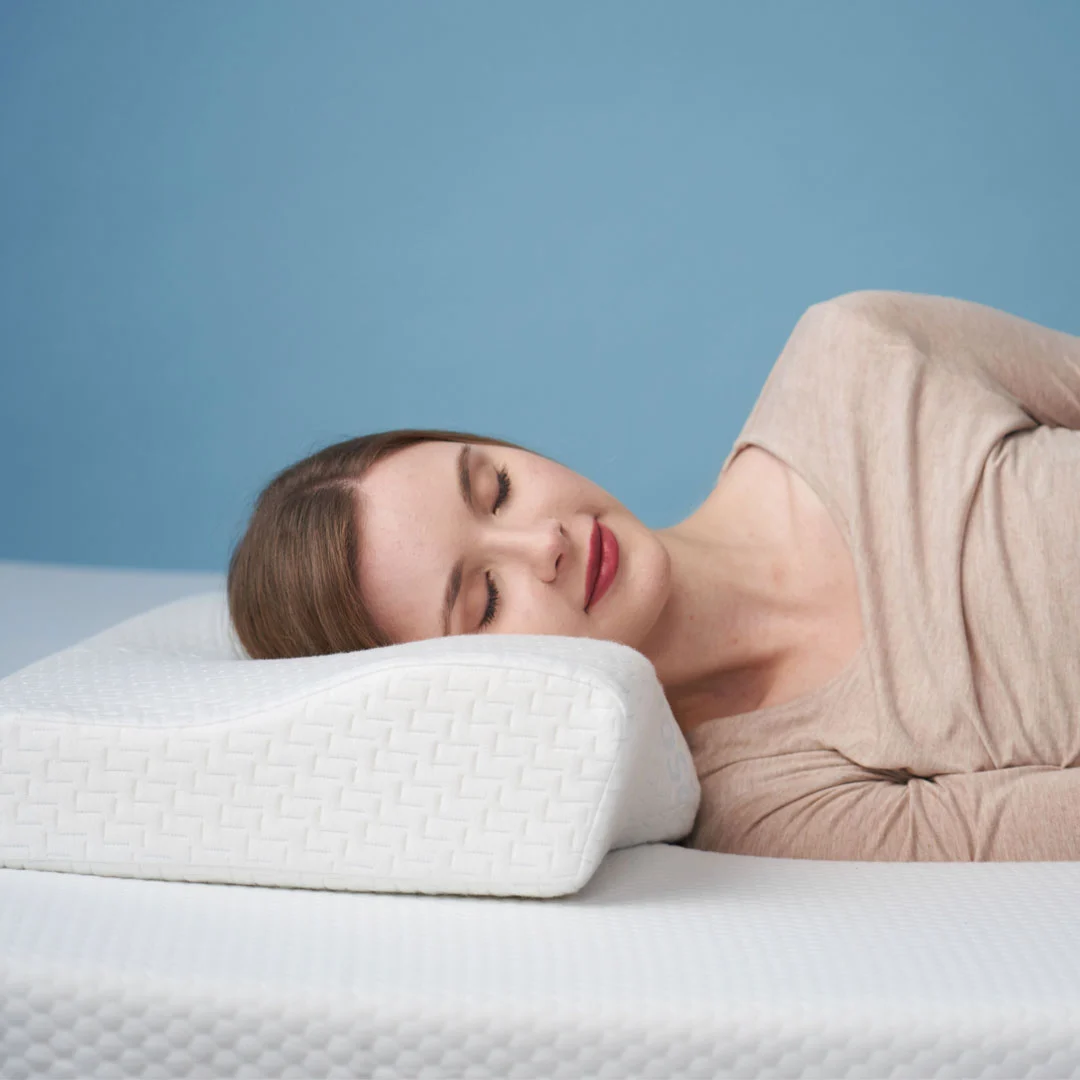
This pillow is the top of the top, crème de la crème. I used to think it was normal to toss and turn in the middle of the night, but the Dosaze Contoured Orthopedic Pillow changed everything for me. The contoured shape worked wonders to keep my neck and back aligned, and I was so surprised by how much deeper my sleep was with this pillow and how quickly my neck pain faded after just a week of use. I use a sleep score tracker, and my score jumped from a 68 to a 96!Read My Full Dosaze Review
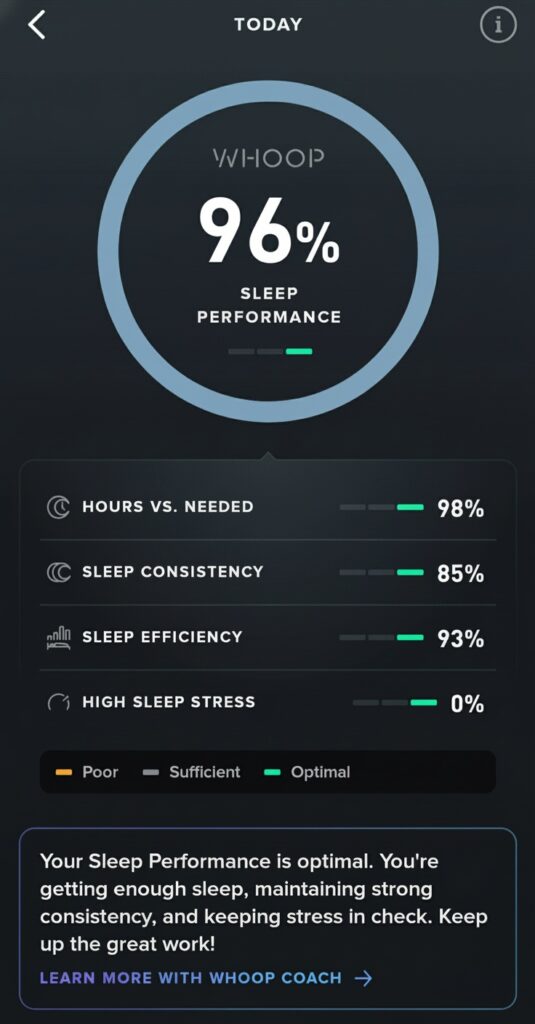
The Dosaze Contoured Orthopedic Pillow is one of three “contoured orthopedic pillows” that I tried – (I also tried Epabo and Sutera) and Dosaze was by far the best one. No other pillow increased the score above 90 consistently. The Dosaze Pillow distinguished itself quickly after a week’s worth of testing on each.
The contour was the perfect depth (it wasn’t too deep or shallow) for me, as I found the Sutera to be bit too deep and the Epabo to be too shallow. The Dosaze pillow was also a bit larger than the others, which made it easier to sleep on and stay on. I felt that the Dosaze Pillow provided the most support, yet was also the most comfortable. It was the perfect combination of comfort and support – the foam isn’t too firm nor is it too soft. I would describe it as firm enough to support my head (so my neck stays aligned and my head doesn’t sink too much into the pillow), but also soft enough so that my ears do not hurt when I use it.
As a combination sleeper, I was able to sleep in the center using my back or stomach (which usually require lower pillow heights) or on the edges of the pillow (which are higher) using my side. If you are a combination sleeper as well, this might also work nicely for you because you can sleep on the edges of the pillow when side sleeping or roll to the center of the pillow when sleeping on your back. I had a hard time doing this on other pillows, like the Sutera pillow (due to the “wings”).
I think the Dosaze brand really shines in four ways: (1) the construction quality (2) the fine-tuned shape of the contour (3) its compatibility with all sleep positions and (4) its strong customer experience.
Quality Materials – The foam in this pillow is CertiPUR-US certified (unlike many other pillows, including Sutera) which ensures that it is free of harmful chemicals like mercury, lead, formaldehyde, flame retardants, and a whole array of other nasties you don’t want anywhere near your face. It also ensures low VOC emissions, which means that it produces minimal off-gassing and is better for indoor air quality. The cover is also made of bamboo, which differs from 100% polyester or other scratchy materials common in other pillows. This memory foam has the perfect feel and balance.
Fine-Tuned Orthopedic Contour – The contour of this pillow is amazing. It did wonders to align my neck and back and felt it kept my neck in place throughout the night. This was the key to all of the pain reduction! This helped eliminate my neck pain, tension headaches, and even my snoring to some degree (I assume because my airways were less blocked). Although some other pillows had similar contours, I found this one to be the most effective, by far, in actually delivering on its promise. Even if they may look similar, not all contours deliver the same effects. Your mileage may vary based on your individual anatomy, but I think this one would thoughtfully fit the anatomy of most people.
Works for All Sleepers – The shape of this pillow accommodated me as a combination sleeper (sleep on both my back and side) with ease. I was able to sleep on the edge of the pillow (which is higher) when I side slept and I just rolled into the middle of the pillow (into the contour) when I slept on my back. Stomach sleepers (who usually stay on their stomachs) can just sleep in the contour. No matter what position I slept in, I found it to keep my body in alignment. I liked that this design was flexible, and it gave me comfort that this pillow would still work, even if I decided to change my sleeping position or if I changed it in my sleep.
Customer Experience – I felt well taken care of throughout the whole process of purchasing this pillow. The Dosaze team was incredibly responsive when my pillow got lost in the mail, and sent me one free of charge. They also checked in to see if the firmness and contour was right for me after I got my replacement, which I wasn’t expecting. They offer a 60 night sleep trial and a 10-year warranty.
This pillow is seriously a case of you get what you pay for – with high quality materials, an innovative shape, and incredible customer service and experience, this pillow is what I would recommend to anyone who’s struggling with neck or back pain.
There’s also other evidence out there that Dosaze is the real deal. Some review sites have also come to the same conclusion on the Dosaze pillow being the best pillow as well! If you’re curious, you can see more reviews on the Dosaze site itself, which is where I got started.
Testing Breakdown
Tempur-Pedic Neck Pillow
Pros
Cons
The Bottom Line
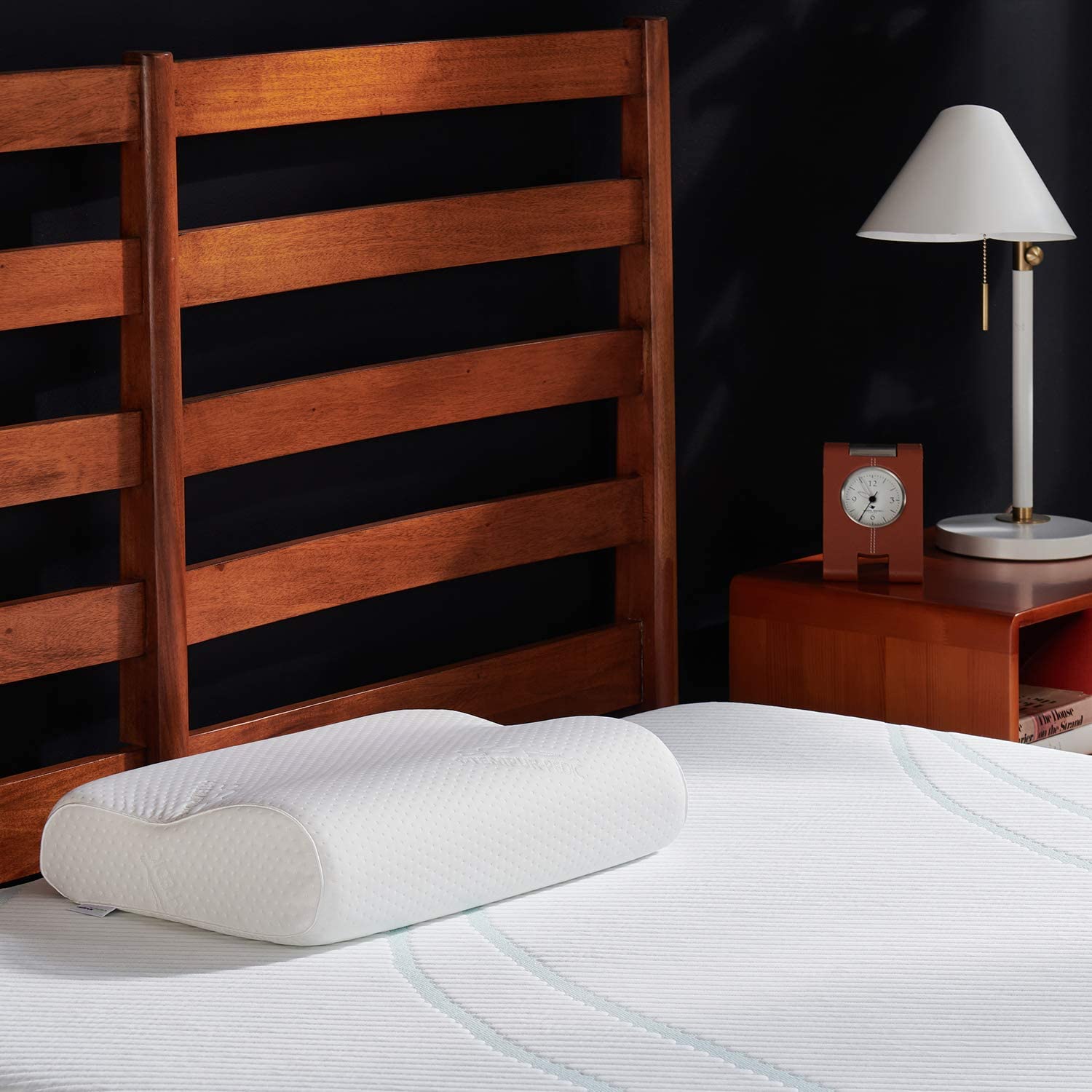
Best known for their mattresses, the Swedish company also has a great array of foam pillow products. It is ergonomically sound and made with memory foam in order to give you solid support when you’re on your side or back. Additionally, the pillow is contoured in order to curve naturally around your head, neck, and shoulders to prevent any unnecessary stress or pressure on pivotal joints. While the polyester outer layer can be removed and machine washed, it’s important to note that this product does have an odd time fitting into pillowcases.Read My Full Tempur-Pedic Review
This is a great pillow produced by a well-known company. You can tell by feeling the memory foam that it is high quality. This is a great pillow for side sleepers, but it isn’t as good for combination back and side sleepers. The primary reason for this is that the contour is merely a single “wave” — this wave doesn’t prevent your head from moving side to side as a back or combination sleeper, and so it doesn’t align your neck as well as other contoured memory foam pillows.
When I lay my head down on this pillow, it feels a bit too firm. While I feel supported, the foam kind of hurt my ears (especially when I slept on my side).
If you’re looking for a trusted name in the industry, this is a good option. However, we feel as though there are other, better designed pillows in the market. This company specializes in mattresses, and while their pillow offering is good, it isn’t the best available, especially for the price.
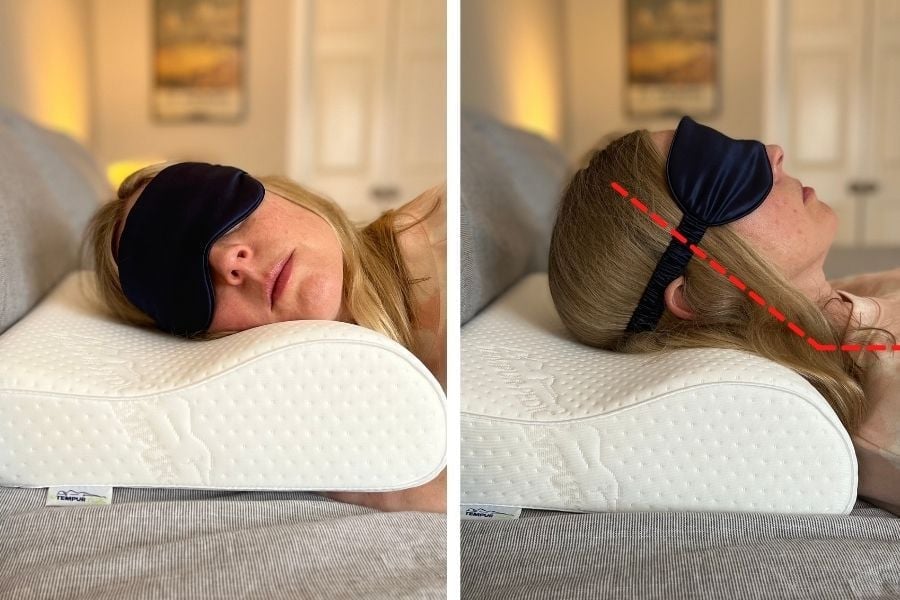
As you can see, this pillow was relatively aligned when I slept on my side, but it was too high when I slept on my back. This pillow has a “contour” which can be helpful, but because it is one consistent height throughout the pillow, it actually isn’t best for combination sleepers who require different heights when sleeping in different positions.
Testing Breakdown
Marlow Pillow
Pros
Cons
The Bottom Line
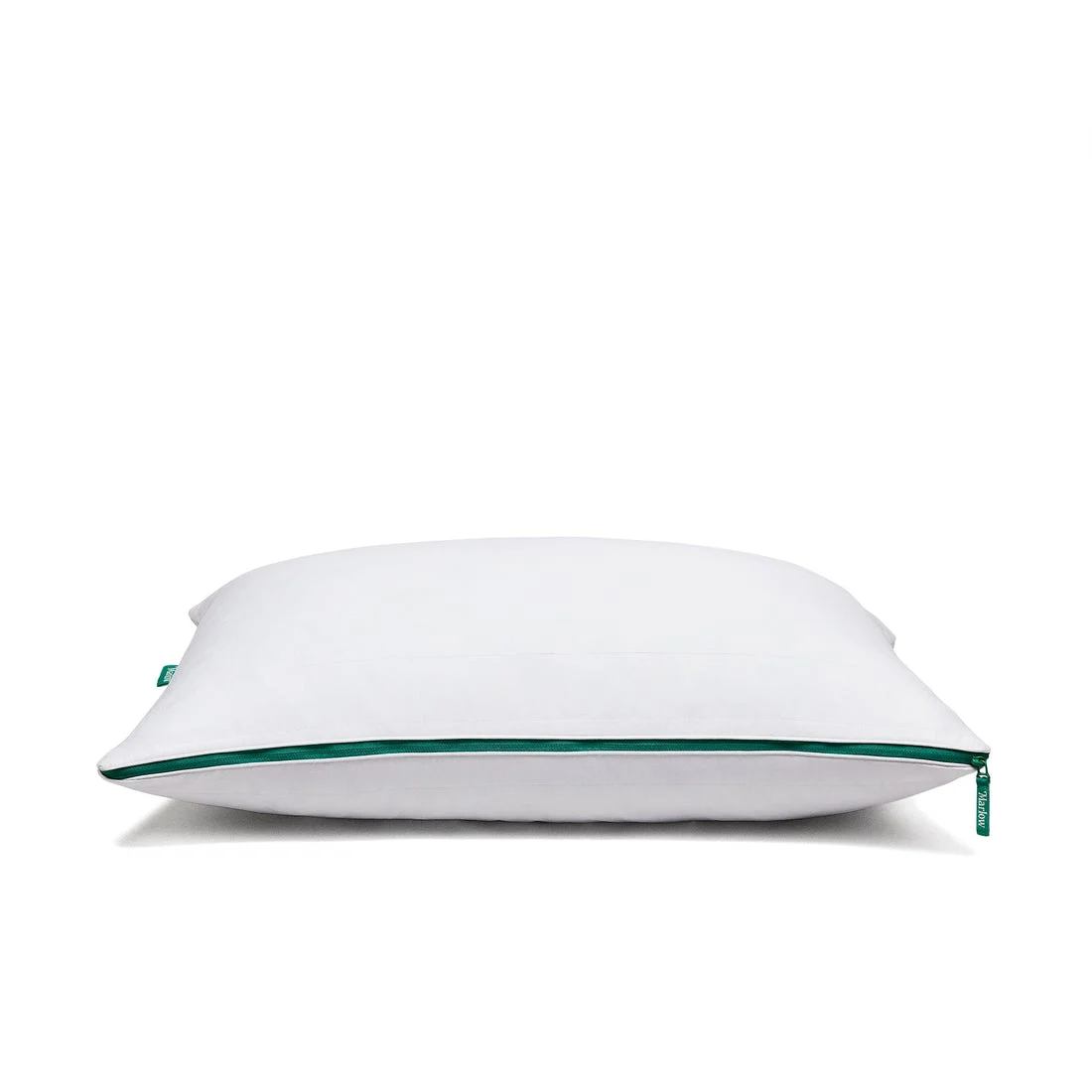
The Marlow pillow is a new pillow brought to market by the makers of Brooklinen, the sheets company. After sleeping on this pillow, I think it is a solid pillow for the right person.Read My Full Marlow Review
The way this pillow works is that there is a zipper that you can either zip or unzip to adjust the height/firmness of the pillow. If you happen to enjoy one of the two levels, then this pillow could be a good fit for you. However, if you don’t, then it might not work for you. That being said, it is easier and less messy to adjust this pillow than it is to adjust other adjustable pillows.
How often are you going to adjust your pillow once you get it? Once you find that ideal level of firmness, you probably don’t have to adjust it again. That also brings me to my next issue with the pillow — if you don’t happen to like one of these levels, then it will not help you at all. These levels might be too high or too low for you.
Another issue I have with this pillow (and most pillows, to be honest!) is that I am a combination side and back sleeper (as most people are!) and most pillows only have one height throughout the pillow. One consistent height might be okay if you only sleep on your back or side, but if you sleep on both, you need a pillow that has multiple heights. In my opinion, this is a great benefit of the contoured orthopedic pillows that have a dip in the middle (for back sleeping) and are higher on the edges (for side sleeping).
Marlow does offer an extremely generous return policy / warranty. You’re able to return the pillow within 365 days (so you can definitely try it for a long time to see if it suits you, although you’ll probably know sooner than that). And the pillow has a 2-year warranty in case it gets damaged.
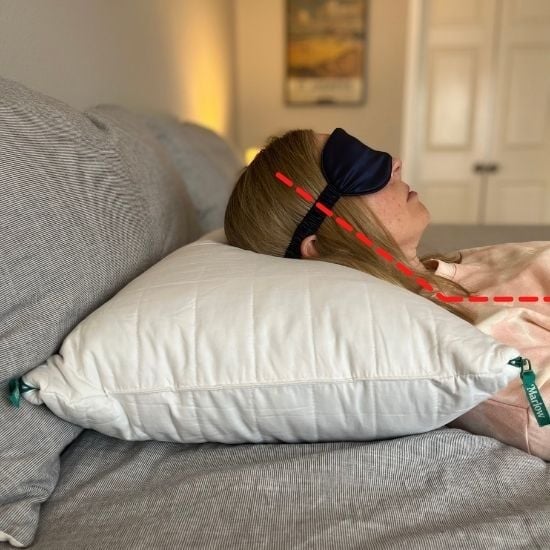
As you can see, this pillow (even when zipped) is clearly too high. It can work for some people, but definitely not everyone.
Testing Breakdown
Coop Home Goods Pillow
Pros
Cons
The Bottom Line
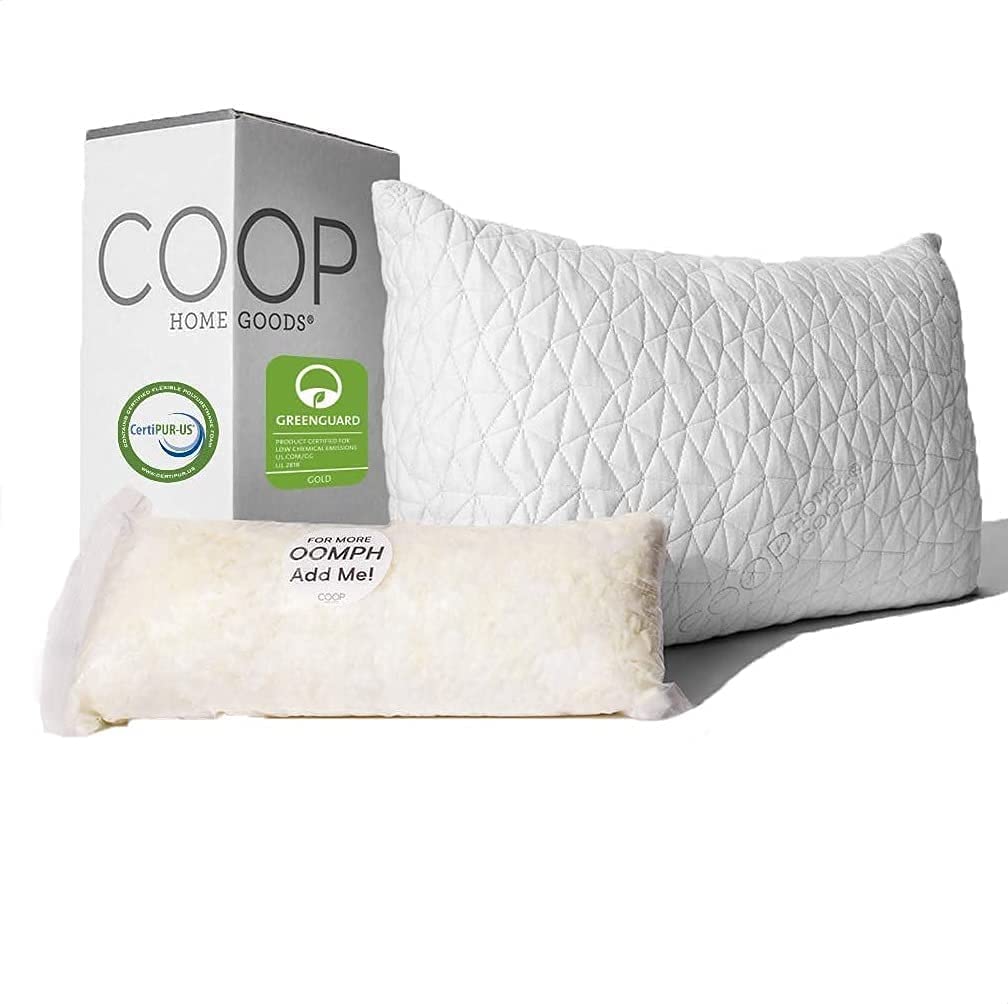
The Coop Adjustable Pillow is a very good pillow for general use — it is adjustable and can suit the needs of many different kinds of people. Our primary issue with this pillow is that it doesn’t specifically help with neck pain.Read My Full Coop Review
In my experience, neck pain is mostly due to incorrect alignment between your neck and back. Your neck and back can become misaligned vertically and horizontally. This pillow helps with the vertical misalignment — i.e., you can adjust the pillow so that it is the correct height for your neck and back. However, it does not do much to align your neck horizontally — i.e., while you sleep your neck can tilt left or right and this will cause strain to build up and you to wake up with neck pain.
I again would recommend this pillow for a general audience (or maybe for your guest room, if you really like your guests!), but not for someone who is specifically dealing with neck pain.
Some other minor complaints I had with the pillow are the following:
- Over time, it becomes harder to fluff
- The pillow isn’t 100% memory foam fill and you can tell vs. other adjustable fill pillows — this fill doesn’t provide as much support as 100% memory foam pillows.
- The adjustable fill can get messy
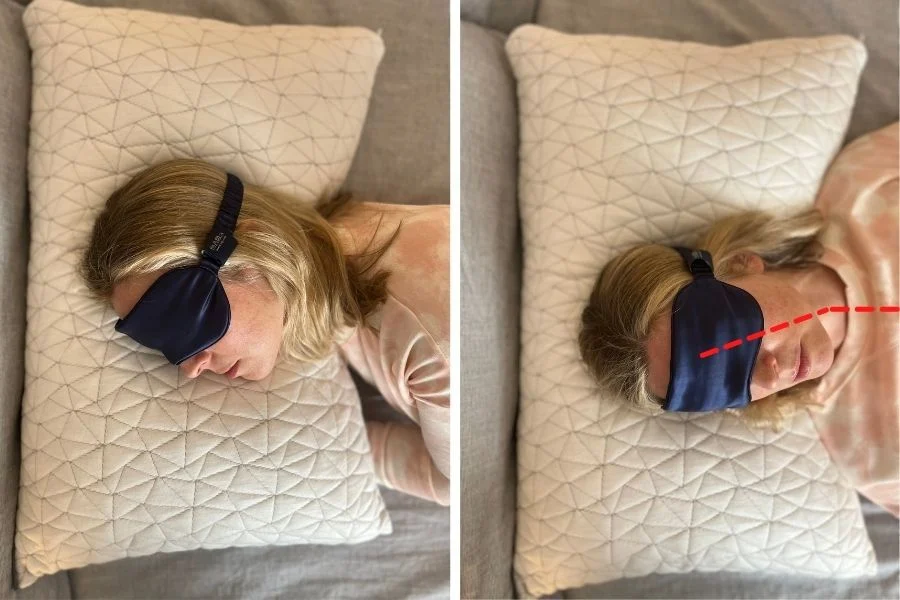
As you can see, this pillow doesn’t really align your neck horizontally — the difference might seem slight, but it is important and can be a cause of that “crink” in your neck when you wake up.
Testing Breakdown
Saatva Memory Foam Pillow
Pros
Cons
The Bottom Line
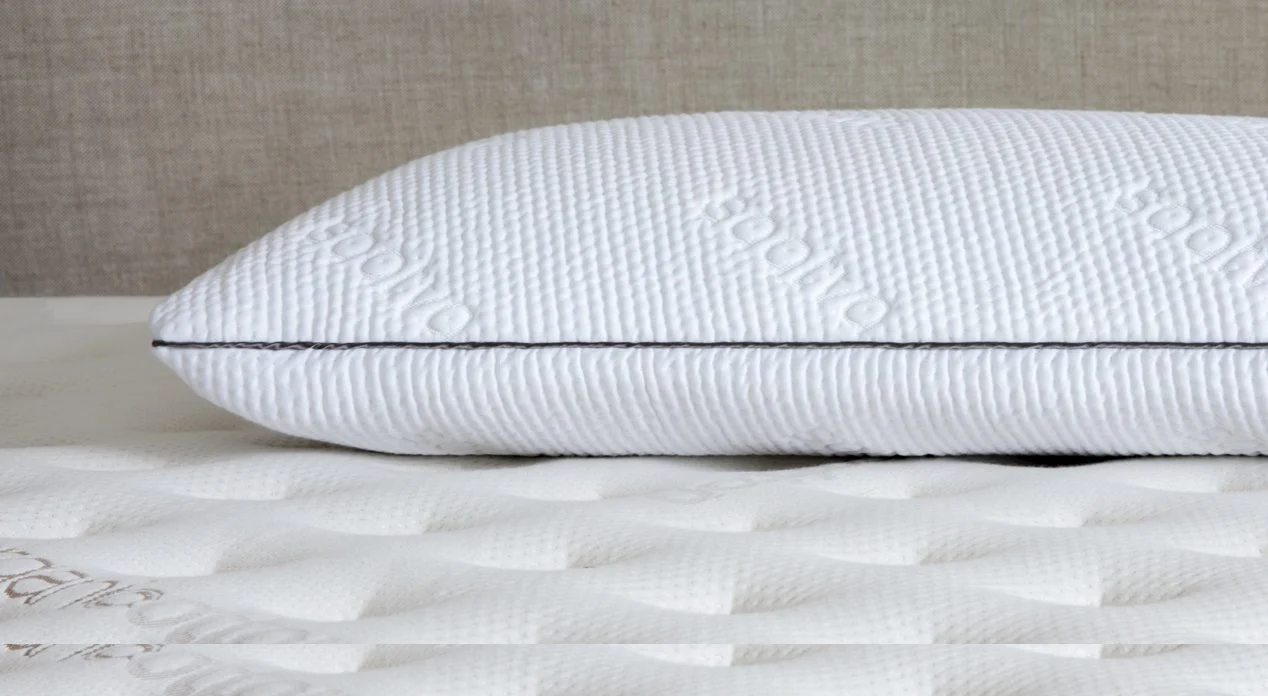
This graphite-infused memory foam pillow is a combination memory foam and latex foam pillow — you can definitely feel the quality of the fill when you sleep on it. The pillow is a good level of firmness — it isn’t too firm and it’s not too soft. It definitely provides enough support for your head.Read My Full Saatva Review
The pillow also sleeps relatively cool — the graphite-infused memory foam and the latex foam are generally cooler than most memory foams. It is overall a good pillow, but we had two primary issues with this pillow.
Price / Value — this pillow is expensive, there is simply no other way to put it. While the fill is good quality, we would have also expected a higher quality cover (than just cotton) for a pillow of this price. It is significantly more expensive than others on the market. We think the quality of this pillow justifies some price increase, but definitely not this large of a price increase.
Nothing extra to keep you aligned — this is a great overall pillow, but it doesn’t do too much to help reduce neck pain. It is not adjustable and does not have an innovative shape or design to help reduce neck pain, and you can tell by sleeping on this pillow. It definitely does not help reduce neck pain as much as other pillows do, but it is a high quality pillow nonetheless.
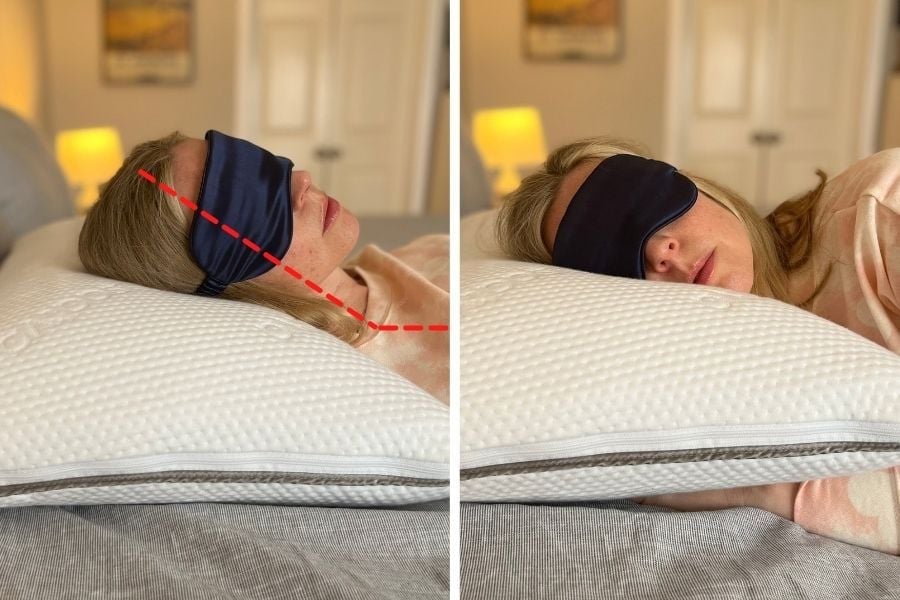
You can see that the pillow doesn’t do much to align your neck and back — it is a high quality pillow, but I didn’t find it the most comfortable. I didn’t really enjoy the feel of the latex, which was a bit too “springy” for me.
Testing Breakdown

Layla Kapok Pillow
Pros
Cons
The Bottom Line
The Layla Kapok pillow is another solid pillow for general use — it is adjustable and can suit the needs of many different kinds of people. Our primary issue with this pillow is that it doesn’t specifically help with neck pain.Read My Full Layla Review
I would recommend this pillow for a general audience (or maybe for your guest room, if you really like your guests!), but not for someone who is specifically dealing with neck pain.
I found that my neck was moving back and forth on this pillow, and so I would wake up with a “crink” in my neck. This was the case both when I was sleeping on my side and when I was sleeping on my back. For someone looking to alleviate neck pain, this pillow is probably not the best option.
Some other minor complaints I had with the pillow are the following:
- The gray cover is visible through most pillowcases, and looks a bit off
- While the cover does feel cool, it isn’t the most smooth, and you can feel the textured pattern on your skin when sleeping
- The adjustable fill can get messy and there isn’t a ready place to store it
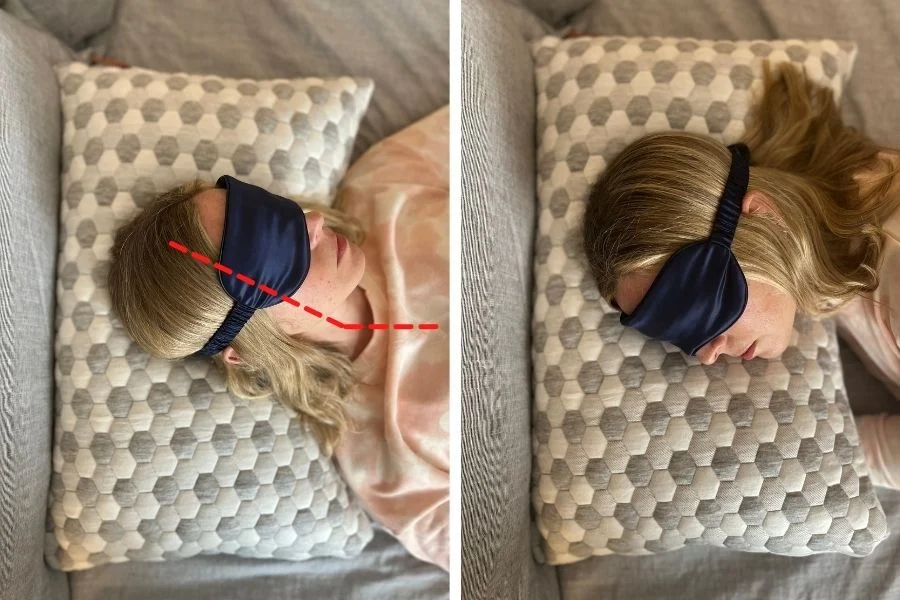
You can see that the pillow doesn’t do much to align your neck and back — if you are looking for a solid generic pillow, this is a good option, but might not be the best if you struggle with neck pain.
Testing Breakdown
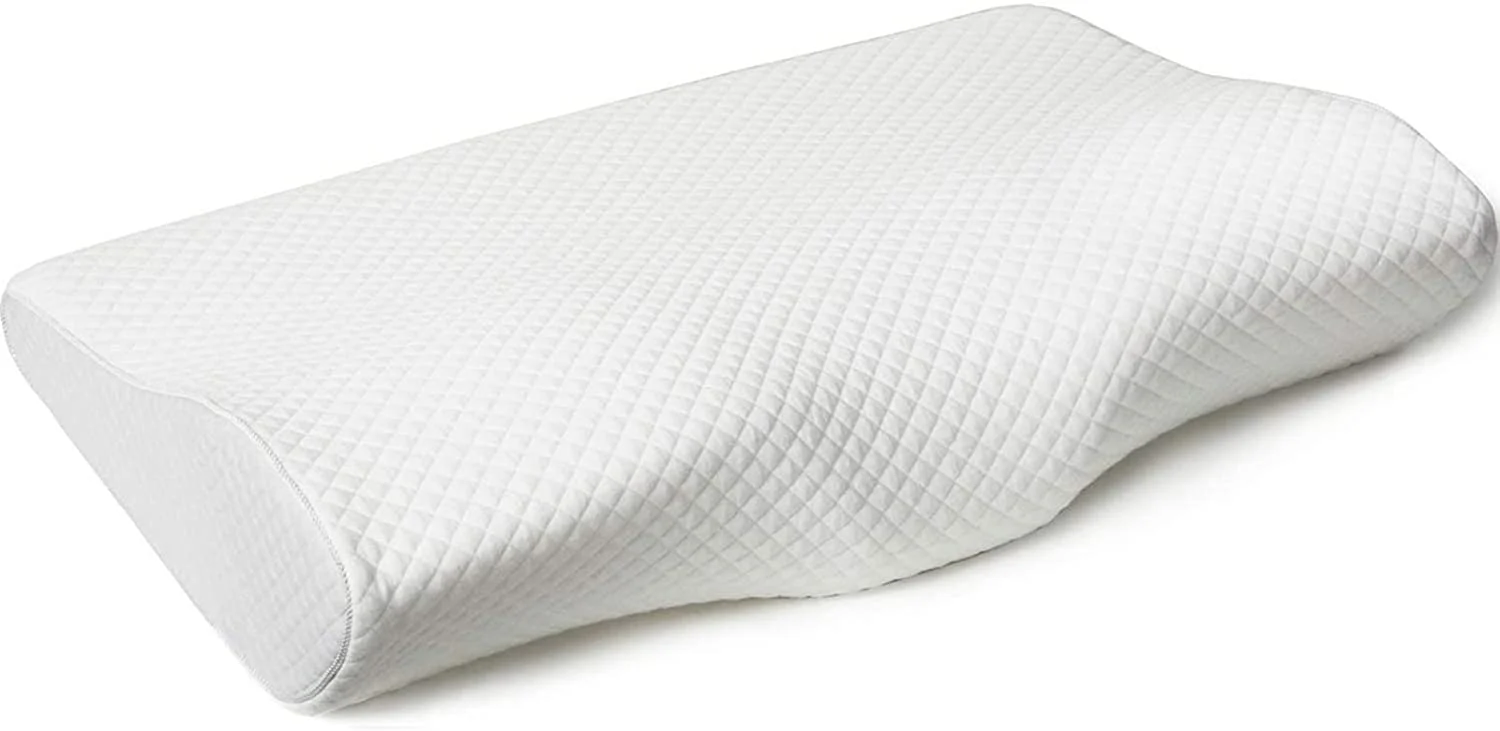
EPABO Contour Memory Foam Pillow
Pros
Cons
The Bottom Line
This pillow is a lower quality version of the Dosaze Contoured Orthopedic one. It is smaller, made of lower quality materials (fill and cover), and not as comfortable. I found that the memory foam in this pillow (which was not CertiPUR-US certified) was not as comfortable as the memory foam in other pillows. The cover is also a bit scratchy (as it is 100% polyester).Read My Full EPABO Review
I found that this pillow is okay for back sleeping, but less good for side sleeping. The contour of the pillow works okay if you sleep on your back (although again it was a bit too shallow for me), but when you sleep on your side the pillow is not thick enough to fill your shoulder gap, which can cause alignment issues. I also found that the foam on this pillow is noticeably firmer than that of other pillows. This does a lot for providing support, but does not do much in terms of providing comfort.
While this pillow is a bit cheaper than other alternatives, it is not the best product in terms of quality and might need to be replaced more quickly. The foam is not CertiPUR-US certified. Add to this the fact that the pillow only has a 30 day trial period (and sometimes it can take that long to really get used to a new pillow) and does not come with a warranty, and this pillow is kind of a gamble. This cheaper version might work for you and it might not — and you don’t have that much time to decide.

It’s a bit hard to tell in this photo, but I essentially felt like 100% of my body weight was on my shoulder when I slept on my side on the EPABO pillow. There was a lot of pressure on my shoulder as I kind of “sank” into my bed to meet the pillow. The memory foam wasn’t supportive (or high) enough for me.
Testing Breakdown
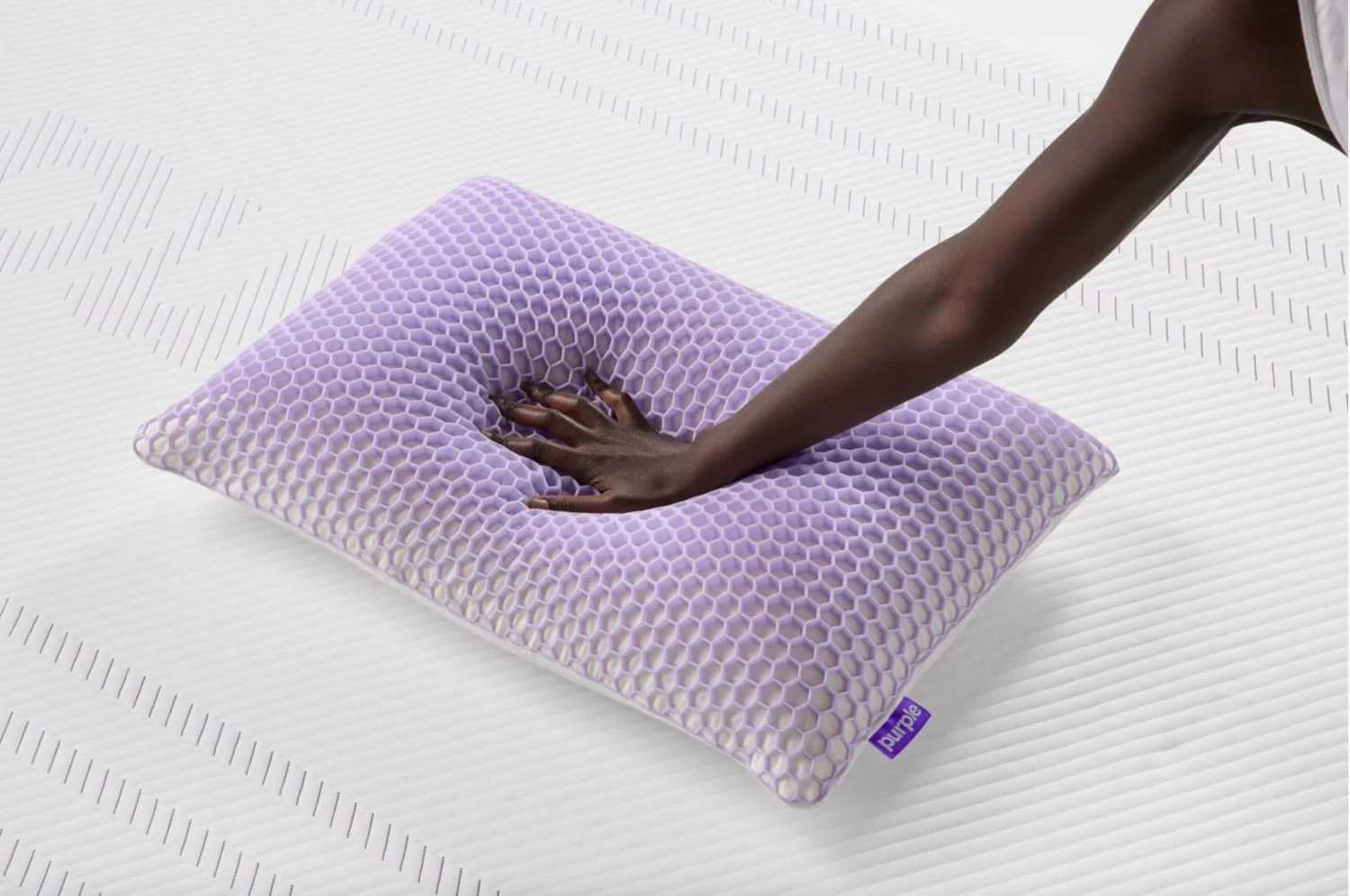
Purple Harmony Pillow
Pros
Cons
The Bottom Line
The Purple Harmony pillow is good for someone looking to try something new. It definitely takes some getting used to (and you may very well like it a lot), but it wasn’t for me. This pillow is probably better suited for someone who tends to sleep very hot — the grid is breathable, and I did notice that I slept cooler throughout the night.Read My Full Purple Review
However, the latex is pretty “springy” and honestly provides a bit too much resistance against your head — for me personally, this pressure was a bit too much to handle. The pillow is a bit “jiggly” as well, and the vibrations can make it challenging to fall asleep.
The pillow also does not promote alignment in any particular way, so your head, neck, and spine may get out of alignment. Some people also complain that the grid feels weird against their skin and can leave marks (although I didn’t have this issue).

This pillow does come in multiple sizes, so make sure you follow the guidelines based on your height and sleep style to get the pillow that suits you. I will say, however, that Purple does have a pretty good return policy — you have 100 days to make a return or exchange. So you can try this pillow and see if it suits you with little to no risk.
That being said, I would expect a generous return policy given the extremely high price point of this pillow ($229). For that much money, you could get two or more of a lot of other pillows.
Testing Breakdown
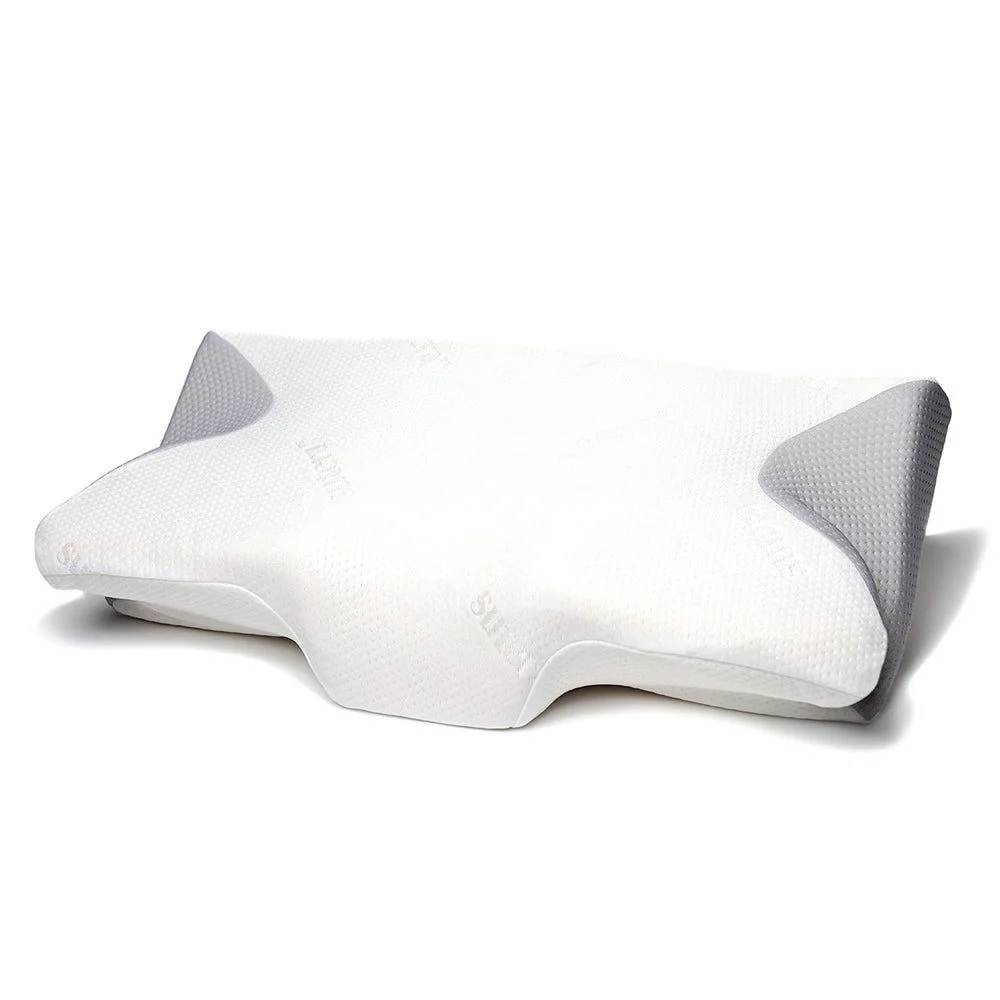
Sutera Dream Deep Pillow
Pros
Cons
The Bottom Line
This pillow is another spin on the ergonomic / contoured shaped pillow — I found in my testing that it has a couple of noticeable benefits and costs. The “supportive” neck nook, as they call it, is comfortable, but it lacks some support. Unlike the EPABO pillow, this pillow is a bit too soft and lacks the necessary support to properly align your neck and back.Read My Full Sutera Review
I also found that the “butterfly” wings were a bit unnecessary and kind of got in the way. In fact, they made it much more difficult to sleep on your side. A huge point about pillows and sleep positions is that different sleep positions require different heights — naturally, a stomach sleeper requires a lower height than a back sleeper, who requires a lower height than a side sleeper. In Sutera’s own sleep diagram, they recommend sleeping in the same “nook” whether you are a back, side, or stomach sleeper.
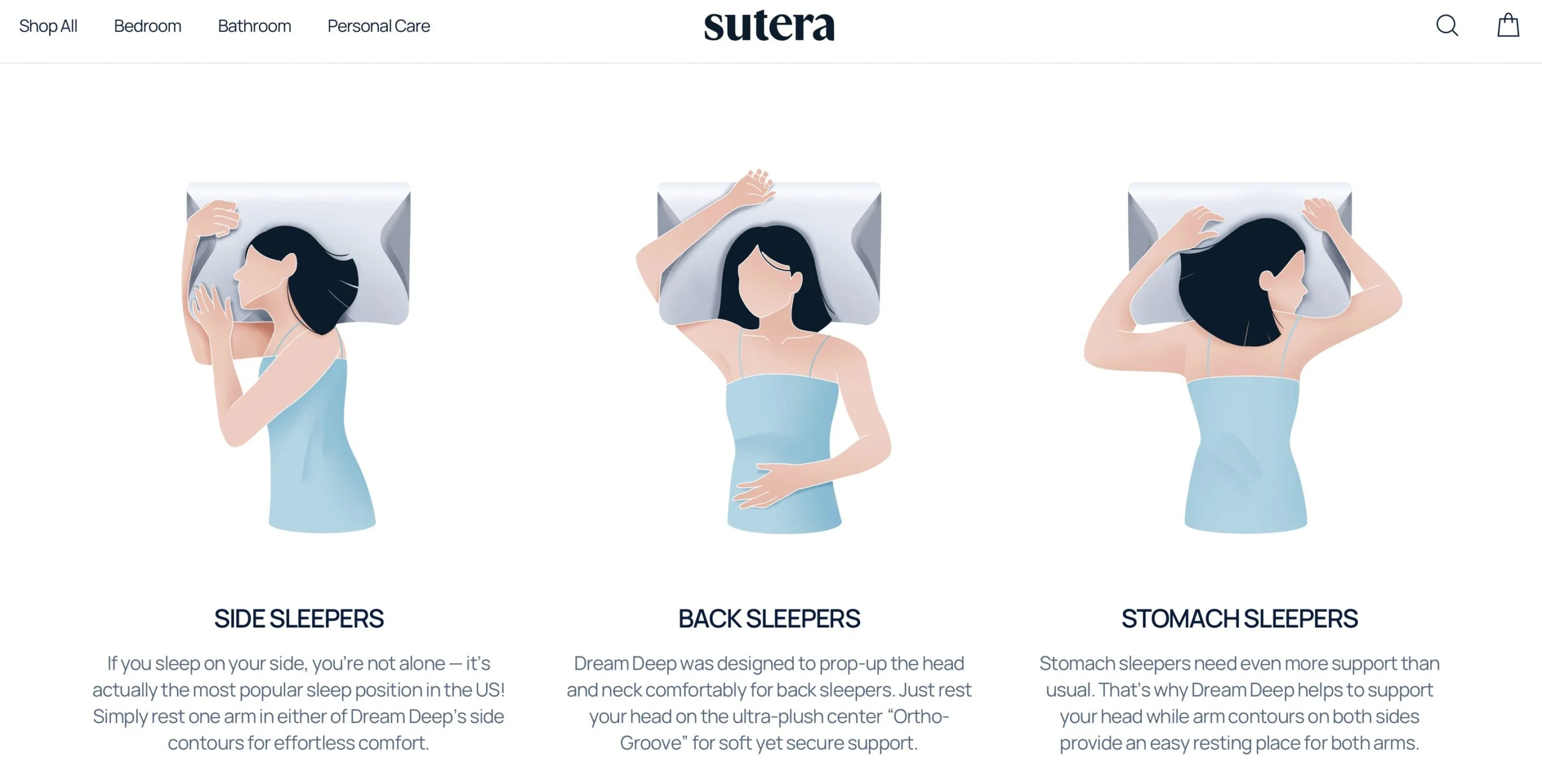
This is not the ideal position for all sleepers — in my opinion, the Dream Deep pillow is best for back sleepers. If you sleep on your side, the “nook” is not high enough. Unlike the Dosaze pillow, where as a side sleeper you can comfortably sleep on the edges of the pillow (which are higher and will fill your shoulder gap), the butterfly wings on the Sutera pillow actually get in the way if you try to sleep on the edges. And if you try to side sleep in the “nook” of the center of the pillow, it is not high enough.
The Sutera pillow is also one that is a bit of a risk — you can definitely try it out, but be aware that you don’t have that much time to test it. They only provide a 30 day trial period, and they don’t advertise this, but they do have a 15% processing fee to return the pillow — just look at the reviews online.

As you can see, this pillow is a decent solution for exclusively back sleepers, but it does not work as well for side sleepers. Add to that the fact that the return policy and warranty isn’t the best, and purchasing this pillow is a bit of a risk. That being said, it isn’t the most expensive and it could work for you if you try it out — just be sure you’re willing to keep it if it doesn’t work (or risk not being able to return it or having to pay a substantial fee to return it).
Testing Breakdown
How to Choose the Right Pillow
- Start with how you sleep. A huge point about pillows and sleep positions is that different sleep positions require different heights — naturally, a stomach sleeper requires a lower height than a back sleeper, who requires a lower height than a side sleeper.
- If you switch positions, skip one-height pillows. One consistent height might be okay if you only sleep on your back or side, but if you sleep on both, you need a pillow that has multiple heights — like the contoured orthopedic pillows that have a dip in the middle (for back sleeping) and are higher on the edges (for side sleeping).
- Height isn’t the whole story. Your neck and back can become misaligned vertically and horizontally. An adjustable pillow fixes the height, but if your neck can still tilt left or right while you sleep, strain builds up and you wake up with that “crink” in your neck.
- Check what it’s made of. CertiPUR-US certified foam is free of harmful chemicals like mercury, lead and formaldehyde. Graphite-infused foam, latex and Purple’s grid all sleep cooler than plain memory foam, and a bamboo cover beats 100% polyester or other scratchy materials.
- Read the return policy. It can take about 30 days to really get used to a new pillow, so a short trial — or a hidden return fee — makes any pillow a gamble.
Pillow FAQ
Is it worth buying a pillow under $50?
What’s the best pillow for combination sleepers?
Why do I still wake up with a stiff neck after adjusting my pillow?
How long of a trial should I look for?
Are expensive pillows always better?
Conclusions
